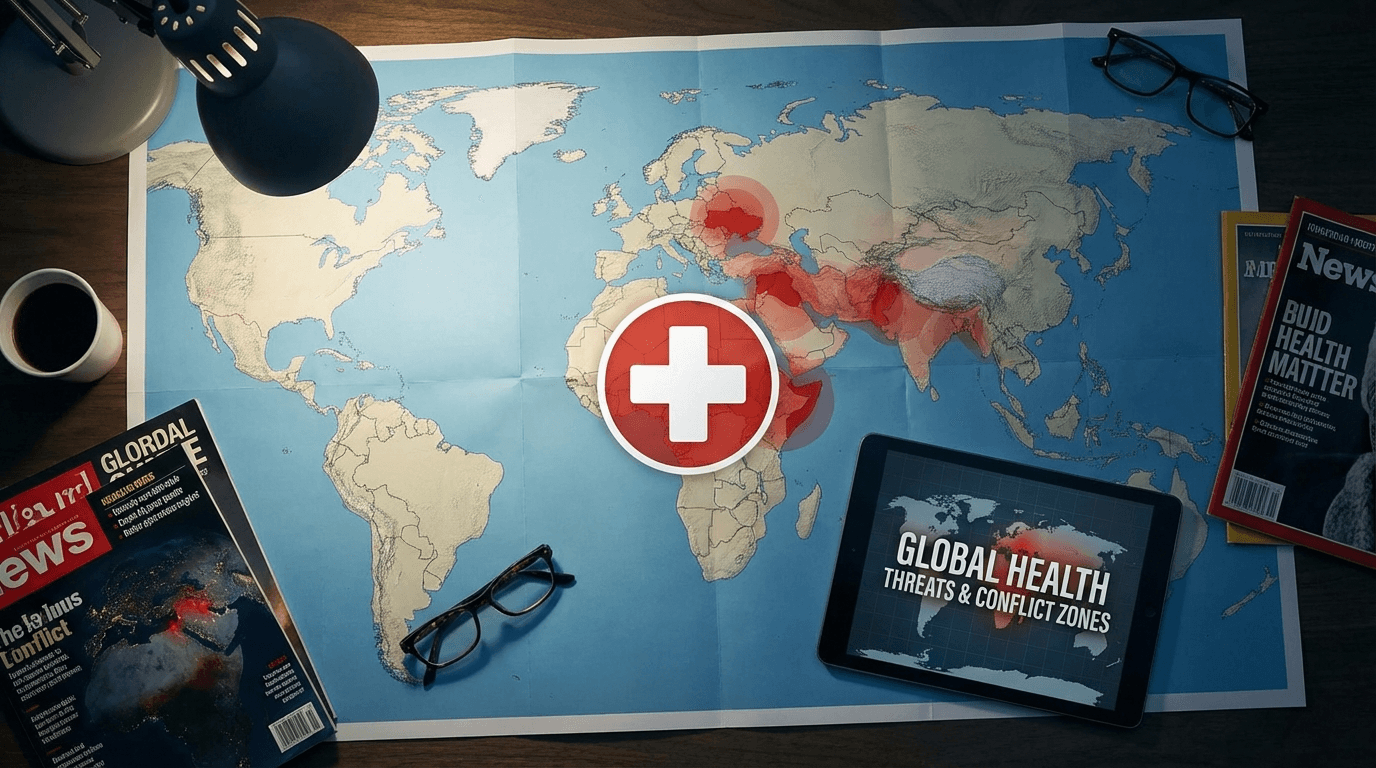
We are living in an era where geography and violence are becoming the most significant comorbidities for infectious disease. A new insight paper released this week by Gavi, the Vaccine Alliance, outlines six immediate threats to global health in 2026. The findings confirm a disturbing trend: the greatest risks are no longer just biological; they are geopolitical and ecological.
For the Nivaran Foundation, this report is not just a forecast; it is an operational map. Here is what the world—and our teams—must prepare for.
1. Conflict as a Contagion
The report opens with a stark statistic: violence and disputes between states are approaching their highest levels since World War II. Conflict is not just a political crisis; it is an epidemiological one.
"Cholera illustrates how conflict-related conditions can accelerate disease spread," the report notes. More than 6,000 people died from cholera in 2024—a 50% increase from the previous year. The surge is concentrated in conflict zones like Sudan and the Democratic Republic of the Congo (DRC), where surveillance systems have collapsed and clean water is a weapon of war.
This validates Nivaran’s core philosophy: "Distance is the Disease." In war zones, the distance to safe water and medical care becomes insurmountable. When health workers flee and supply chains break, preventable diseases like cholera become lethal epidemics.
2. The Climate-Vector Collision
Climate change is no longer a future threat; it is a current driver of disease transmission. Rising temperatures and shifting rainfall patterns are expanding the reach of mosquitoes into higher latitudes and new altitudes.
- Dengue Surge: In 2024, the warmest year on record, 14.4 million dengue cases were reported globally—double the previous peak.
- Expansion: Risk maps for 2025 show yellow fever and Zika moving into regions previously considered safe, including parts of Europe and the Middle East.
For rural communities in the Global South, this means facing "lowland" diseases in highland areas where populations have no natural immunity and health systems are unprepared.
3. The Collapse of Funding
Perhaps the most immediate operational threat is the sharp reduction in official development assistance (ODA). The OECD projects aid from high-income nations to fall by 9–17% in 2025, following a 9% drop in 2024.
This is not an abstract budget adjustment. For frontline clinics, it means stock-outs of essential medicines, cancelled vaccination sessions, and the layoffs of community health workers. WHO data from 108 low- and middle-income countries indicates that funding cuts have already reduced critical health services by up to 70% in some nations.
When global funding retreats, local resilience is the only safety net remaining. This makes community-led models, like Nivaran's health camps, more vital than ever.
4. The Misinformation Pandemic
Health misinformation is identified as a "destabilizing force" that weakens health systems exactly when they are needed most. Trust is fracturing. One in three young adults worldwide now feels uncertain about childhood vaccines, relying more on social media than doctors.
In Nigeria, AI-generated "deepfakes" of trusted religious leaders promoting fake cures have already been detected. As 2026 unfolds, the battle for public health will be fought as much on smartphones as in clinics.
5. Marburg and the Ecological Spillover
While unlikely to cause a global pandemic, the Marburg virus remains a growing regional threat in Africa. Its emergence in new countries like Tanzania and Equatorial Guinea highlights the risks of ecological disruption. As deforestation brings humans closer to fruit bats (the virus's reservoir), spillover events become more frequent.
Marburg is a test of health system resilience. With fatality rates exceeding 50%, containment relies on early detection—something that is impossible in "health deserts" where no doctors are present to notice the first case.
6. Disease X: The Unseen Enemy
Finally, the report warns that the world may be less prepared for the next pandemic ("Disease X") today than it was immediately after COVID-19. Pandemic fatigue, funding cuts, and geopolitical fragmentation have weakened the global surveillance net.
The next threat could be a zoonotic influenza or a new coronavirus. The defense is not a high-tech wall; it is a decentralized network of primary health centers capable of spotting the unusual before it becomes the unstoppable.
Conclusion: Resilience is the Only Strategy
The Gavi report paints a picture of a world under pressure. The threats are converging: conflict breeds cholera, climate change breeds dengue, and funding cuts dismantle the systems meant to fight them.
But paralysis is not an option. The solution lies in building health systems that are agile, decentralized, and deeply embedded in communities. We cannot wait for peace treaties or global funding windfalls. We must build resilience now, village by village, ensuring that even in the face of these six threats, essential care reaches the last mile.
Source: Gavi, the Vaccine Alliance, "Six major health threats that could shape 2026", February 20, 2026.
Help us build resilient health systems that can withstand the shocks of 2026.
Support this work