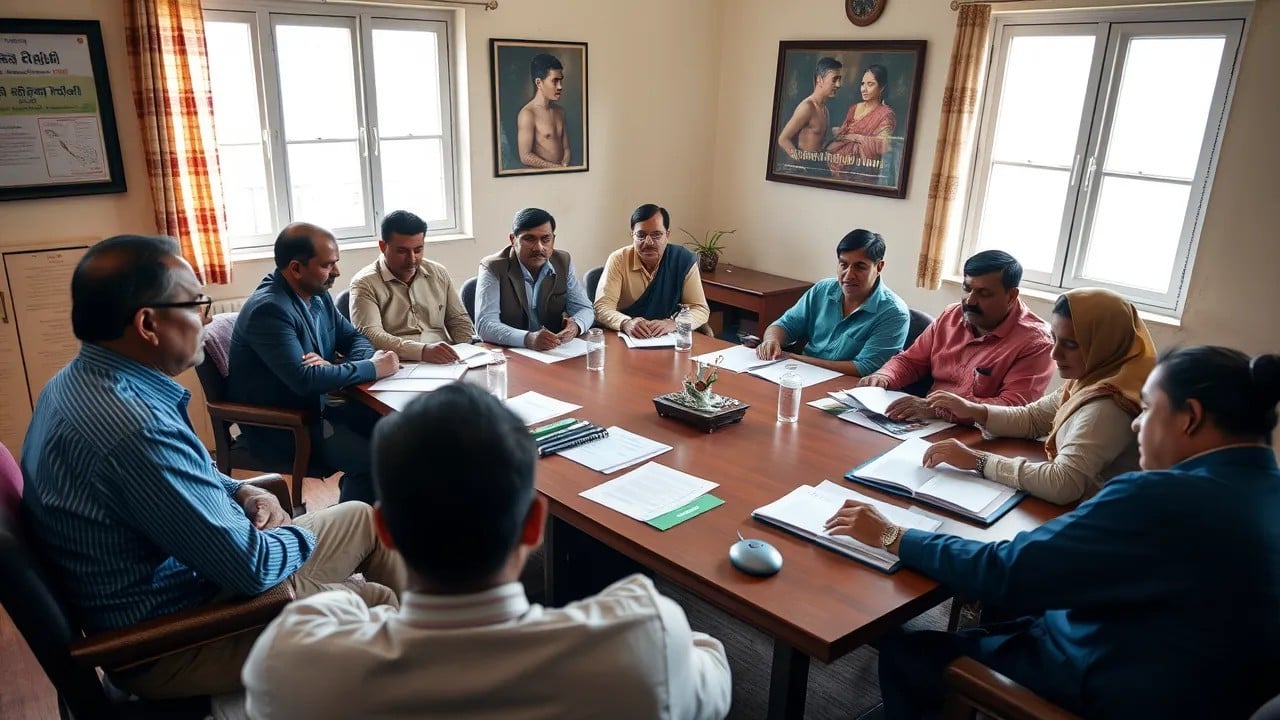
Health Minister discusses with stakeholders on Insurance Act Amendment Bill
For families in Nepal, health insurance law is not an abstract matter of administration. Its provisions can shape whether an illness leads to timely care, whether a household can understand and use its coverage, and how confidently health facilities can plan for patients. Any proposed amendment therefore deserves scrutiny not only as a legal revision but as a decision with consequences for people who depend on public services, particularly where facilities and specialist care are difficult to reach.
The Rising Nepal reported on November 29, 2026, that the Health Minister discussed the Insurance Act Amendment Bill with stakeholders. The available report identifies consultation as the central development; it does not provide the bill’s text, the participants’ positions, or a timetable for legislative action. Those limits matter. Consultation can help expose practical problems before a law is changed, but the fact of a meeting alone does not establish what the bill would do or whether stakeholder concerns have been resolved.
Key Developments and Verified Findings
The confirmed point is that the Health Minister held discussions with stakeholders on an amendment bill concerning insurance law. That places the proposal within a process of policy engagement rather than presenting it as a completed legal change. No specific provisions are confirmed in the reported summary, so it would be premature to say that the bill changes eligibility, benefits, premiums, claims procedures, institutional responsibilities, or funding arrangements. Each of those questions requires the bill itself or further reporting.
The consultation is significant because insurance rules operate across a chain of institutions and decisions. People need to know what services are covered and where they can seek them; facilities need clear processes for providing covered care; and administrators need workable rules for enrollment, claims, and accountability. Stakeholder discussions can bring these operational perspectives into view. Yet their value depends on who is included, whether affected communities can contribute, and whether feedback is reflected in the final proposal. The reported information does not identify the participants or describe how their input will be used.
The next test is transparency about both substance and process. Public access to the draft, a clear account of proposed changes, and an explanation of how comments are assessed would allow patients, health workers, local governments, and legislators to evaluate the bill on its merits. Any eventual amendment should also be judged against practical outcomes: whether people can understand their entitlements, obtain covered care without avoidable obstacles, and seek review when a service or claim is disputed. These are standards for assessing insurance policy, not claims about provisions already confirmed in this bill.
Structural Public Health and Education Context
Nepal’s geography makes the implementation of national policy especially important. Residents of remote settlements and rural municipalities may face long journeys to facilities, limited transport, or difficulty finding the services they need. These barriers can weaken the value of insurance even where formal coverage exists. A law can define rights and responsibilities, but access also depends on the distribution of facilities, referral pathways, staffing, and understandable information in communities across the country.
Those challenges are not identical from one province to another. Provincial and local authorities are positioned to recognize differences in distance, facility capacity, and community needs, while national rules can establish consistent protections and responsibilities. Effective design requires both: a framework that does not leave people’s basic entitlements dependent on where they live, and implementation arrangements flexible enough to work in varied local conditions. Consultation would be stronger if it considered how proposed rules would function in remote wards as well as urban service settings.
Health policy also sits within a wider system of social well-being. Education can help people understand health information, navigate services, and make informed decisions, while reliable care can support children’s attendance and families’ ability to participate in school and work. These connections do not make an insurance amendment a substitute for investment in health facilities or education. They do underline why lawmakers should consider whether legal rules are understandable and usable by people with different levels of literacy and access to information.
The reported discussion is therefore a point in a process, not a verdict on the bill. For Nepal’s public interest, the essential questions remain open: what the amendment proposes, whose experience informed it, and how its effects will be monitored across provinces and rural municipalities. Clear answers would help the public distinguish meaningful reform from procedural consultation and assess whether the law can translate insurance coverage into care people can actually reach.
Implications for Frontline and Underserved Communities
For people living far from hospitals, the value of an insurance benefit depends on whether care can be reached and used. Nepal’s mountain terrain, dispersed settlements, seasonal road closures and uneven transport links can turn a covered consultation into a costly journey. These barriers differ across provinces and within them: a household in a remote municipality of Karnali may face a different route to care than one in the Madhesh plains, but both may struggle with travel costs, lost work and uncertainty about which services are available. If the Insurance Act amendment focuses only on formal coverage, it could leave these practical obstacles largely untouched.
Access also depends on the capacity of the facilities where insured people are expected to seek care. Rural health posts and primary hospitals may have limited staff, diagnostic equipment, medicines or referral options. When a facility cannot provide a needed service, patients may have to travel farther, pay out of pocket or delay treatment, even when they are enrolled in insurance. The same pressure can affect classrooms and families indirectly: a child accompanying an ill parent may miss school, while caregivers may lose time needed for study or paid work. Insurance policy therefore intersects with the wider availability of health and education services, rather than operating as a stand-alone financial arrangement.
Communities already respond to gaps through family support, local networks and the work of health workers, but resilience should not be mistaken for a substitute for reliable public systems. Community health volunteers can help explain enrollment and guide people toward services, while local governments can identify where transport, language or administrative barriers are most severe. Such support is especially important for older people, people with disabilities, low-income households and residents who have difficulty completing paperwork. Nivaran Foundation’s Project Sanjeevani has conducted 16 completed free mobile health camps across all seven provinces of Nepal, serving 17,355 patients as of February 2026. That experience underscores the importance of taking services closer to communities, while mobile camps remain a complement—not a replacement—for dependable, continuous care.
Policy Priorities and the Road Ahead
A workable amendment should make the pathway from enrollment to treatment clear and predictable. Policymakers can set out what services are covered, how people can use them, what steps apply when a nearby facility cannot provide care, and how complaints or denied claims are reviewed. Information should be available in accessible formats and relevant local languages, with practical help offered through health facilities and local governments. Clear guidance can reduce confusion for families and frontline staff alike, while transparent rules make it easier to identify where implementation is failing.
The law’s implementation should also reflect the differences among provinces and local levels. Nepal’s federal structure offers an opportunity to bring planning closer to communities, but responsibilities must be clear enough that patients are not sent from one office to another. Local governments and provincial authorities can map service gaps, coordinate referrals and identify facilities that need staffing, supplies or administrative support. The federal government, in turn, can establish consistent national standards and financing arrangements. Monitoring should examine not just enrollment figures, but whether people receive covered services, how long they wait, whether referrals are completed and whether costs continue to prevent care.
Finally, accountability requires listening to the people who use the system and those who deliver care. Consultation with stakeholders can help reveal operational problems, but it should lead to publicly understandable decisions, timelines and review mechanisms. Regular reporting, independent scrutiny and accessible grievance channels can help distinguish a promise on paper from a service available in practice. The amendment should also avoid placing new administrative burdens on facilities without providing the capacity to meet them. As Nepal considers the bill, the central test is whether it makes timely, appropriate care more reachable for people across urban centres, rural municipalities and remote settlements. A stronger insurance framework will depend not only on legal provisions, but on sustained coordination, adequate service capacity and public confidence in the system.
Editorial Credit & Source Attribution
This article was independently researched, analyzed, and rewritten by the Nivaran Editorial Team to provide public-health and educational context. Primary reporting credit: The Rising Nepal (published 2026-11-29). Cover visual: Unique AI editorial illustration created exclusively for Nivaran.
Distance should never decide who survives. Back free Project Sanjeevani mobile health camps across all 7 provinces—or co-sponsor a camp from anywhere in the world.