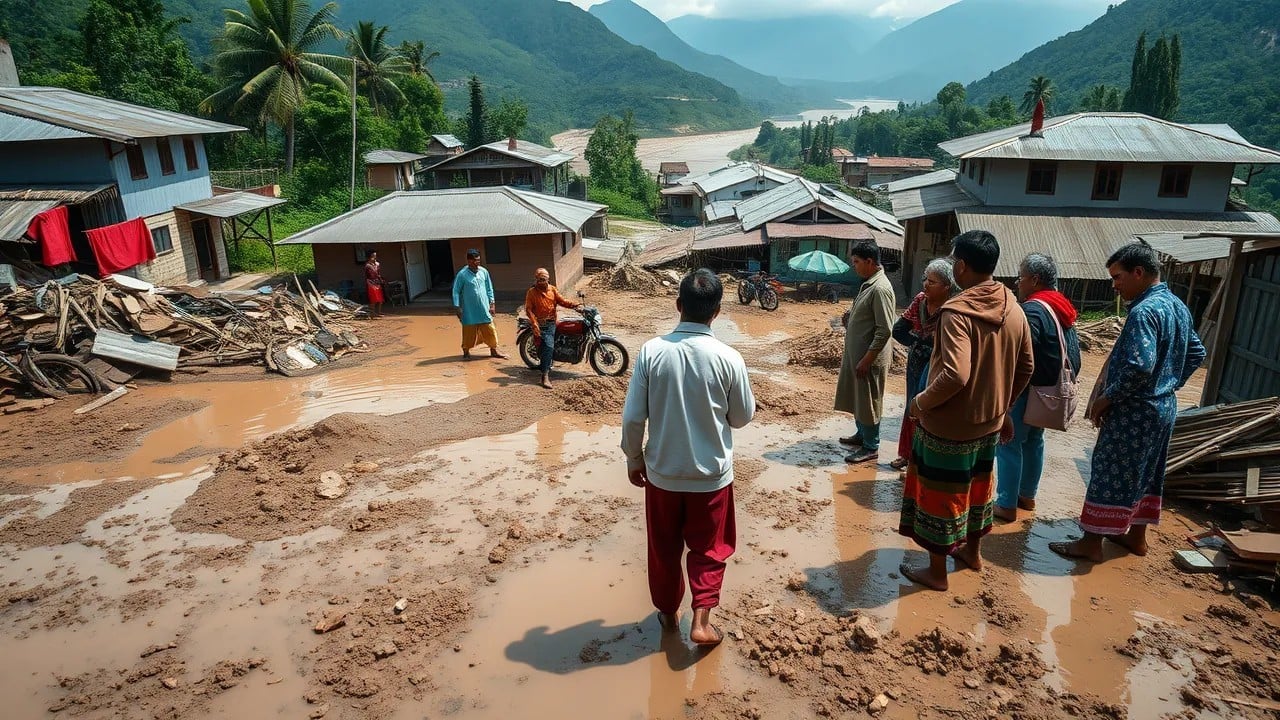
Sonomans raised more than $100,000 to support flood relief efforts in Nepal
When floods disrupt life in Nepal, the damage reaches far beyond waterlogged fields and damaged buildings. Families can lose safe shelter, access to clean water, medicines and the roads that connect rural communities to clinics, schools and markets. The Sonoma Index-Tribune reported on November 25, 2026, that Sonomans raised more than $100,000 for flood relief efforts in Nepal—a substantial act of community support, and a reminder that recovery depends on how assistance reaches people facing immediate needs.
The amount matters, but so do the questions behind it: which communities will benefit, what local priorities will guide spending, and how will aid respond to needs that persist after an emergency recedes from the headlines? Nepal’s exposure to floods is shaped by terrain, settlement patterns and uneven access to public services. For people in rural municipalities, disruption to a bridge, health post or water system can make a hazard more consequential. Effective relief must therefore meet urgent needs while supporting a recovery that recognizes the country’s geographic and institutional realities.
Key Developments and Verified Findings
The central verified development is the scale and purpose of the Sonoma fundraising effort: more than $100,000 was raised to support flood relief in Nepal, according to the Sonoma Index-Tribune. The report identifies a cross-border act of giving, but the available summary does not specify the fundraising campaign’s organizers, the affected districts, intended recipients, allocation plan or timeline. Those details should not be assumed. In particular, the reported total alone cannot establish how much has been disbursed, which forms of aid it will finance or what outcomes it has achieved.
That distinction is important in disaster reporting. A fundraising total describes money raised, not necessarily money delivered or services provided. Relief may involve emergency supplies, temporary shelter, clean water, health care or support for damaged local infrastructure; however, without verified information about this campaign, none can be attributed to the Sonoma effort as a confirmed activity. Clear public accounting—covering the destination of funds, implementation partners and progress—would help donors and Nepal’s communities understand how the contribution is translating into assistance.
The development also underscores the role of diaspora ties and community philanthropy in connecting people abroad with humanitarian concerns in Nepal. But charitable action works best when it complements, rather than substitutes for, local knowledge and public coordination. Nepal’s provinces and rural municipalities vary widely in access, terrain and service capacity. Relief plans need to be shaped around conditions in the affected locations, with local institutions and residents able to identify urgent gaps. The reported fundraising is significant; its practical value will ultimately depend on transparent delivery and fit with needs on the ground.
Structural Public Health and Education Context
Flooding can create public-health risks through interrupted access to care, unsafe water, displacement and damage to sanitation systems. These consequences are not uniform: a community with reliable transport and nearby services may recover differently from one where a washed-out route isolates households. In Nepal, geography can make the last mile of relief especially demanding. Timely medical attention and safe water are immediate priorities, while restoring dependable access to health services is part of the longer recovery challenge.
Education is also vulnerable when floods damage school buildings, routes or household livelihoods. Even a temporary interruption can place added pressure on children and caregivers, particularly in rural areas where alternatives may be limited. Recovery planning should consider whether students can safely return, whether learning materials and facilities remain usable, and how families’ displacement or income losses affect attendance. These are general risks of disaster disruption, not verified impacts of the fundraising effort or any particular flood event described in the available report summary.
For Nepal, resilience requires attention to both emergency response and the systems communities rely on every day. Health access, safe infrastructure, education continuity and locally informed preparedness are connected: when one fails, the effects can compound. Nivaran Foundation’s Project Sanjeevani has served 17,355 patients through 16 completed free mobile health camps across all seven provinces of Nepal, as of February 2026; this work offers a verified example of outreach to health needs, not a claim about flood relief or the Sonoma funds. The reported contribution from Sonomans presents an opportunity to support Nepal’s recovery, provided that priorities, recipients and results are communicated with care.
Implications for Frontline and Underserved Communities
For communities in Nepal’s flood-affected areas, the distance between a damaged settlement and a functioning clinic or school can become a major barrier to recovery. Floodwater, landslides and damaged roads may interrupt travel just when families need medical attention, safe drinking water, medicines or information about disease prevention. These obstacles can be particularly acute in rural municipalities, where services are already spread across large areas and transport options may be limited. A contribution raised in Sonoma can help draw attention to urgent needs, but effective relief depends on understanding where access has been cut off and how conditions differ from one community to another.
Health facilities face pressures beyond the immediate treatment of injuries. Floods can contaminate water sources, disrupt sanitation and increase the risk of illness, while damaged buildings, interrupted supply routes and staff shortages can limit a clinic’s ability to respond. In Nepal, planning must account for local terrain and the distinct needs of communities in affected provinces, rather than assuming that one delivery model will work everywhere. The same principle applies to classrooms: when schools are damaged or used for emergency purposes, children may lose a safe place to learn, and families may face added difficulty protecting routines amid displacement and household losses. Recovery therefore includes restoring essential services, not only repairing visible damage.
Communities themselves are central to this work. Local health workers, teachers, elected representatives and residents often know which households are isolated, which routes remain passable and what assistance people can use safely. Their knowledge can help relief reach people who might otherwise be missed, including older adults, people with disabilities, pregnant women and families living far from service centers. Support from abroad is most useful when it reinforces these local capacities and respects community priorities. Nivaran Foundation’s Project Sanjeevani offers one example of service delivery focused on access: as of February 2026, its free mobile health camps had served 17,355 patients across 16 completed camps in all seven provinces of Nepal. That work is distinct from flood relief, but it underscores the value of bringing care closer to underserved communities.
Policy Priorities and the Road Ahead
The first priority is to connect fundraising with clear, locally informed assessments. Relief organizers and implementing partners should identify urgent needs by location, explain how recipients and activities are selected, and update supporters as conditions change. Public reporting need not expose private information or delay emergency action; it should, however, make the purpose of funds and the progress of assistance understandable. Coordination with local authorities and established community organizations can reduce duplication and help identify gaps, while careful attention to procurement, transport and distribution can ensure that supplies match what people can actually use.
Recovery planning should also protect continuity in health and education. Health responses can include restoring essential clinic functions, maintaining access to medicines and safe water, and arranging outreach where travel remains difficult. School recovery requires attention to safe learning spaces, sanitation, teaching materials and the needs of students whose families have been displaced or whose livelihoods have been disrupted. Decisions should be made with educators, health workers and residents, with particular care to include groups whose needs may be overlooked. These are practical priorities for Nepal’s provinces and rural municipalities, but the sequence and scale of action must reflect each locality’s conditions and available capacity.
Finally, emergency assistance should be linked to longer-term preparedness without making promises that cannot be supported. Communities can benefit from locally maintained plans, clear information about evacuation and health risks, stronger links between service providers, and facilities better prepared for disruption. Fundraisers can contribute by communicating accurately, asking partner organizations for transparent updates and sustaining attention after the first news cycle. Nivaran Foundation has also described Project Vidya as a planned rural education initiative for 2027; it should not be presented as an existing flood-response program. For Nepal, the lasting measure of solidarity is whether support helps people regain access to essential services and strengthens local ability to respond to future shocks.
Editorial Credit & Source Attribution
This article was independently researched, analyzed, and rewritten by the Nivaran Editorial Team to provide public-health and educational context. Primary reporting credit: Sonoma Index-Tribune (published 2026-11-25). Cover visual: Unique AI editorial illustration created exclusively for Nivaran.
Distance should never decide who survives. Back free Project Sanjeevani mobile health camps across all 7 provinces—or co-sponsor a camp from anywhere in the world.