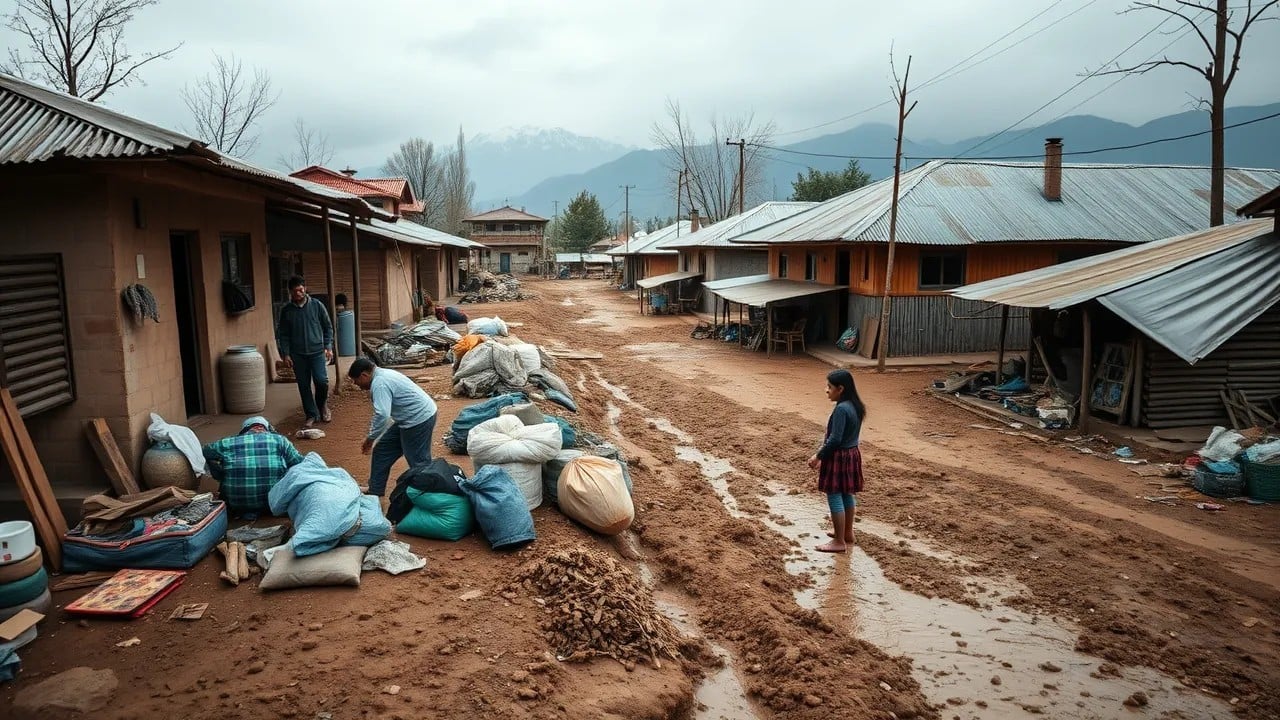
Winter threatens Nepal’s flood recovery as UNICEF faces a $30 million funding gap
Nepal’s flood-hit communities are approaching winter with recovery needs that cannot wait for better weather or a more favorable funding outlook. Families displaced or affected by flooding may face cold conditions while homes, basic services and livelihoods remain under strain. For children, the convergence of disrupted routines, exposure to the elements and interrupted access to care can turn a seasonal hazard into a prolonged threat to health and learning.
The funding picture adds urgency to those immediate risks. Devdiscourse reports that UNICEF faces a $30 million funding gap for its response in Nepal. That shortfall matters beyond an agency balance sheet: when resources fall below identified needs, the reach and continuity of assistance can be constrained just as vulnerable households enter a more demanding season. The central policy question is whether recovery support can be sustained through winter, particularly in remote communities where distance and damaged infrastructure can make services harder to deliver.
Key Developments and Verified Findings
The reported $30 million gap signals a financing challenge at a critical point in the response. Devdiscourse identifies winter as an approaching pressure on Nepal’s flood recovery, linking the seasonal risk to a shortfall in UNICEF funding. The available report summary does not specify how the gap is distributed across programmes, which districts or municipalities face the greatest unmet needs, or what proportion of planned activities may be affected. Those details should not be assumed. What is clear is that a stated funding deficit raises questions about whether response plans can be delivered at their intended scale.
Timing is central to the story. Flood recovery does not end when floodwaters recede: households may still need safe shelter, essential supplies, health services and support to restore daily routines. Winter can intensify the consequences of those unresolved needs, especially for children and families with limited resources. If assistance is delayed or reduced, households may be forced to make difficult trade-offs among warmth, food, medical care and education. These are predictable risks of compounded disruption, not a claim that every affected family faces the same conditions.
The funding gap also highlights the importance of transparent, location-specific information. National figures can draw attention to the scale of a challenge, but local authorities and humanitarian partners need timely assessments of who remains displaced, which services are functioning, and where access is obstructed. Nepal’s geography makes this especially important: conditions in a municipality accessible by road may differ sharply from those in a remote settlement. Clear public reporting on funding received, planned activities and remaining needs would help communities and decision-makers understand where support is reaching people—and where gaps persist.
Structural Public Health and Education Context
Flood impacts can place pressure on health well after the immediate emergency. Displacement, damaged facilities and disrupted transport can complicate access to routine care, while cold conditions increase the importance of adequate shelter and timely medical attention. Children, older people and people with disabilities may face distinct barriers, but effective response requires local assessment rather than broad assumptions. In Nepal, coordination between health services, local governments and relief agencies is essential to identify needs and maintain access as weather and infrastructure affect travel.
Education is also part of recovery, not a separate concern to be postponed until families are stable. Flooding can interrupt attendance when schools or routes are affected, and household displacement may make returning to class difficult even after the most visible damage has passed. A prolonged break can compound learning loss and weaken children’s connection to school. Recovery planning should therefore consider safe learning spaces, continuity of teaching and the practical obstacles families face in getting children back to education—alongside immediate shelter and health priorities.
These pressures point to a broader public-interest lesson: emergency funding must support both urgent relief and the systems that help communities recover. Nepal’s rural municipalities need resources and reliable information to coordinate services close to affected households, while national and international partners must make funding decisions visible and responsive to changing conditions. The reported shortfall does not, by itself, establish which services will be reduced or how many people will be affected. It does make the stakes plain: as winter approaches, the adequacy and timing of support will shape whether flood recovery protects children’s health, education and basic security.
Implications for Frontline and Underserved Communities
For families in flood-affected parts of Nepal, the shift from emergency response to winter recovery is shaped by geography as much as by the scale of damage. In remote settlements, damaged roads, landslides and disrupted bridges can make health posts, markets and schools difficult to reach even when they remain open. Cold weather may further delay travel, while households with limited transport options face difficult choices about seeking care, buying essential supplies or staying close to their homes and livestock. These barriers are especially consequential for children, pregnant women, older people and people with disabilities, whose needs may require regular services rather than a single emergency visit. As funding falls short, aid that is available on paper may not reach the communities facing the greatest obstacles.
Health and education services also have limited capacity to absorb prolonged disruption. A clinic serving scattered villages may lack sufficient staff, medicines, safe water or reliable power, while flood damage can increase demand for treatment at the same time that access becomes harder. Schools may be coping with damaged classrooms, lost learning materials and children who cannot attend consistently because their families are still recovering. Winter can add practical pressures: cold, damp learning spaces are difficult places to study, and families rebuilding livelihoods may need children to help at home. Without attention to both immediate needs and continuity of services, gaps in health care and learning can deepen well after floodwaters recede. Support must therefore reach local facilities and schools, not only households receiving direct assistance.
Yet communities are not simply recipients of aid. Local health workers, teachers, caregivers and municipal representatives often understand which paths remain usable, which families are isolated and what services can be adapted quickly. Their knowledge can help direct limited supplies and identify people who may otherwise be missed. Neighbour-to-neighbour support and local organisations can also help households share information and maintain routines during a difficult season. Such resilience should not be treated as a substitute for adequately funded public services or humanitarian assistance. It is strongest when local initiative is backed by dependable resources, transparent coordination and decisions that give affected people a meaningful role in recovery.
Policy Priorities and the Road Ahead
The first priority is to direct available funding according to need and access, with clear attention to remote and underserved communities in affected provinces and rural municipalities. Response plans should identify which health posts, schools, roads and water systems require urgent support, and how supplies will reach settlements cut off by damaged routes or winter conditions. Where direct delivery is not feasible, partners can work with local authorities and trusted service providers to plan practical alternatives. Public reporting on where resources are allocated, what services are restored and which communities remain unreachable can help ensure that a funding gap does not become an invisible gap in coverage.
Second, recovery plans should protect essential services through the winter rather than treating reconstruction as separate from health and education. Health facilities need continuity plans for staffing, essential medicines and safe water; schools need usable learning spaces and materials so that disruption does not become prolonged exclusion. Coordination among humanitarian agencies, municipal governments, provincial authorities and community organisations can reduce duplication and help identify unmet needs. Accountability should include listening to affected residents, tracking whether support reaches people facing mobility or access barriers, and adjusting programmes when conditions change. UNICEF’s stated funding shortfall underscores the need for partners to communicate priorities clearly and match commitments to the practical costs of reaching children and families.
Finally, recovery should strengthen local capacity without shifting the burden of response onto communities that have already lost homes, income or access to services. Nepal’s longer-term resilience depends on preparedness that connects early warnings with safe routes, accessible health care, resilient school infrastructure and plans for children to continue learning during emergencies. Civil-society efforts can complement this work when their scope is clearly defined. Nivaran Foundation’s Project Sanjeevani has served 17,355 patients across 16 completed free mobile health camps in all seven provinces of Nepal as of February 2026; this verified record is not a measure of flood response in any specific locality, but it illustrates one way mobile services can reach people facing access barriers. Its planned rural education initiative, Project Vidya, is intended for 2027. As Nepal enters winter, transparent funding, locally informed planning and sustained public services will matter most to families still working to recover.
Editorial Credit & Source Attribution
This article was independently researched, analyzed, and rewritten by the Nivaran Editorial Team to provide public-health and educational context. Primary reporting credit: Devdiscourse (published 2026-11-26). Cover visual: Unique AI editorial illustration created exclusively for Nivaran.
Distance should never decide who survives. Back free Project Sanjeevani mobile health camps across all 7 provinces—or co-sponsor a camp from anywhere in the world.