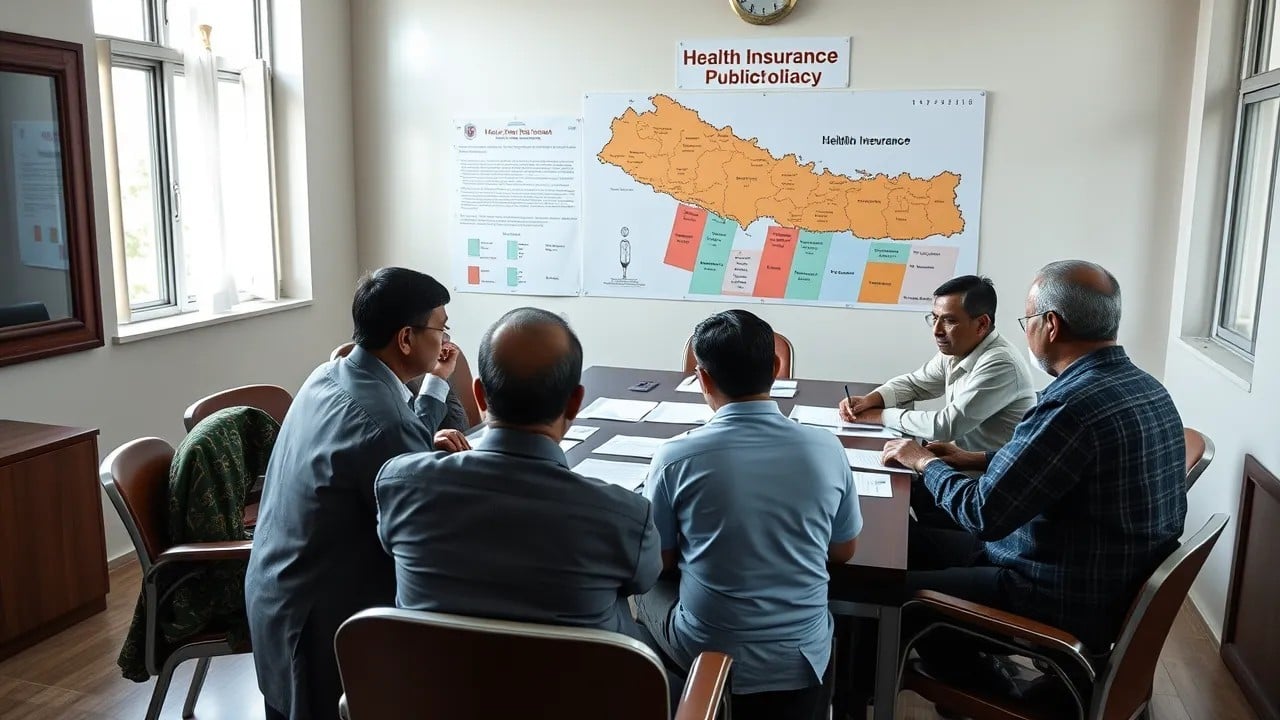
Government set to amend Health Insurance Act
For a person in a rural municipality, health insurance is meaningful only if it helps turn a need for care into care that can actually be reached and afforded. The prospect of changing Nepal’s Health Insurance Act therefore matters beyond the legal text: any amendment could shape how people understand their coverage, seek services and judge whether the system is dependable. But an announcement of intended reform is not yet evidence that access will improve.
The Rising Nepal reported on 27 November 2026 that the government is set to amend the Act. The available report summary does not specify the proposed provisions, timetable, consultation process or intended effects. Those gaps are consequential. Without them, the public can identify a policy direction, but cannot yet assess whether the plan would address obstacles facing patients or clarify responsibilities for the institutions delivering care.
Key Developments and Verified Findings
The confirmed development is limited but important: the government plans to amend Nepal’s Health Insurance Act. The report establishes an intention to change the law, not the substance of a bill already made public. It would therefore be premature to describe particular benefits, eligibility rules, funding arrangements or enforcement measures as part of the proposal. Public-interest coverage should keep that distinction clear, especially when families may make decisions based on expectations about future coverage.
The next test is transparency. Before legislative changes can be judged, people need to know what the government intends to alter and why. Relevant questions include whether the draft addresses enrolment, access to covered services, the responsibilities of participating providers, or oversight of the scheme. These are questions for the government and lawmakers to answer, not findings that can be inferred from the announcement. Publishing draft language and explaining the evidence behind it would allow patients, health workers, local representatives and civil-society groups to scrutinize the plan before decisions are final.
Amendment also creates an opportunity to clarify how national rules work in practice across Nepal’s diverse geography. A provision that appears straightforward in Kathmandu may be harder to use where facilities are distant or service options are limited. That does not establish that the forthcoming amendment will solve—or worsen—such problems. It does make implementation central to any assessment: lawmakers should explain how proposed changes would be communicated, administered and monitored, including in provinces and rural municipalities, and how the public could raise concerns if written entitlements are difficult to use.
Structural Public Health and Education Context
Health insurance operates within a wider service system. Legal coverage cannot, on its own, ensure that a suitable provider is nearby, that people know how to navigate the rules, or that services are available when care is needed. Nepal’s provinces and local governments have different geographic and service-delivery contexts; a credible reform process should consider how one national framework will function across them. That calls for evidence about patients’ experience as well as administrative arguments, with rural and otherwise underserved communities included in consultation.
Information is part of access. Insurance rules that are difficult to understand can leave people uncertain about what they may claim, where to go and what to do when a service is unavailable. Clear, locally accessible explanations—supported by health workers and public institutions—can help people make informed choices, but communication cannot substitute for services or effective complaint mechanisms. Any amendment should therefore be accompanied by a practical account of how people will learn about changes and how institutions will respond when coverage and care do not align.
Education is connected to this agenda through health literacy: the ability to find, understand and use information about health and services. Schools and community learning can contribute to that understanding, while families’ educational opportunities may shape how confidently they engage with public systems. This is not a claim that school-based learning can repair weaknesses in insurance administration. Rather, it underlines why reform should be legible to people with different levels of literacy and access to information. For Nepal’s government, the task now is to make the proposed amendment specific enough for public scrutiny—and to show how legal change would translate into more usable, accountable care.
Implications for Frontline and Underserved Communities
For people living far from hospitals and major towns, the value of health insurance depends on whether care is reachable as well as covered. In Nepal’s mountain and hill districts, travel can involve long distances, difficult terrain, seasonal road disruption and the cost of transport for patients and accompanying family members. Similar pressures affect some communities in the Tarai, where distance, congestion or limited local services can still delay treatment. Any amendment to the Health Insurance Act should therefore be assessed against everyday journeys from rural municipalities to providers: whether an insured person can find an appropriate facility, obtain a referral and receive care without facing costs that make treatment impractical.
Coverage also has to meet the capacity of the clinics and hospitals expected to deliver it. A health post may be the first point of contact, but may not have the staff, medicines, diagnostic equipment or opening hours needed for every condition. When local services are limited, patients may be directed to a district or provincial hospital, where workload and waiting times can affect the experience of insured and uninsured patients alike. If legislation expands eligibility or changes how services are financed, implementation needs to account for this uneven capacity across provinces. Otherwise, a formal entitlement may offer reassurance on paper while leaving frontline facilities unable to provide timely, continuous care.
These pressures reach beyond health facilities. A parent who must travel for a child’s treatment may miss work, while an older person or someone with a disability may depend on relatives to navigate registration, referrals and follow-up. Schools can also be affected when children miss lessons to accompany family members or when illness interrupts attendance. Community resilience grows when people can seek care early, understand their rights and trust that the system will respond fairly. Clear information in accessible languages and formats, reliable local services and respectful treatment can help communities use insurance effectively. Such support matters particularly for households with limited resources, for whom an avoidable delay or confusing process can have lasting consequences.
Policy Priorities and the Road Ahead
A practical amendment should make the path from enrolment to treatment easier to understand. The government can clarify the responsibilities of the health insurance authority, contracted providers and local governments, including how referrals, complaints and reimbursement decisions are handled. Notices about covered services, required documents and appeal options should be available through health facilities and municipal channels, using language and formats people can access. Particular attention is needed for people who face barriers to registration or digital services. Simple, consistent procedures can reduce unnecessary visits and help patients know where to seek assistance when coverage is disputed.
Accountability requires more than written entitlements. Public reporting should show, in ways that protect patient privacy, whether claims are processed on time, whether participating providers are available across geographic areas and what kinds of complaints remain unresolved. Independent review and accessible grievance mechanisms can help identify patterns, while regular consultation with patients, frontline health workers and local governments can reveal problems that administrative data may miss. Any revised financing or payment arrangements should be transparent and sufficiently predictable for providers, with safeguards against practices that limit care or shift unexplained costs onto patients. Findings should inform corrections rather than simply document shortcomings.
Implementation should be phased and matched to the capacity of services in each province and locality. Before new obligations take effect, responsible agencies should assess staffing, essential medicines, diagnostic capacity and referral links, then publish clear timelines for addressing gaps. Coordination between federal, provincial and local governments is especially important where patients cross administrative boundaries to obtain care. Nepal’s experience with community-based support can also offer practical lessons: Project Sanjeevani’s free mobile health camps had served 17,355 patients across 16 completed camps in all seven provinces by February 2026. This is a specific record of outreach, not a substitute for dependable public services or a measure of insurance performance. The test of reform will be whether people in remote wards and underserved municipalities can secure appropriate care with fewer financial and administrative obstacles.
Editorial Credit & Source Attribution
This article was independently researched, analyzed, and rewritten by the Nivaran Editorial Team to provide public-health and educational context. Primary reporting credit: The Rising Nepal (published 2026-11-27). Cover visual: Unique AI editorial illustration created exclusively for Nivaran.
Distance should never decide who survives. Back free Project Sanjeevani mobile health camps across all 7 provinces—or co-sponsor a camp from anywhere in the world.