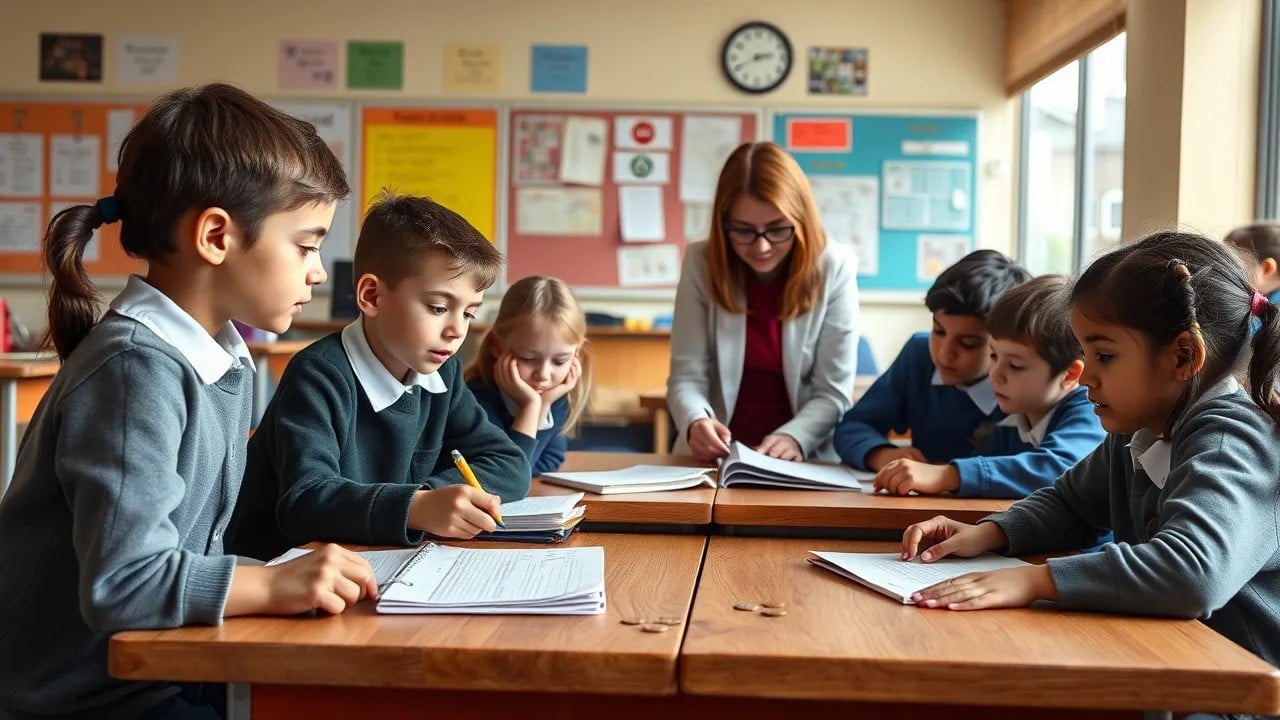
Pupils in England are set to receive lessons in financial literacy, digital and media literacy, and citizenship under a planned national curriculum overhaul. The changes could help children make sense of choices that increasingly shape their daily lives: how to manage money, assess information online and understand their role in a community. But the value of those lessons will depend on whether schools have the time, resources and support to teach them well.
The stakes reach beyond classroom performance. Financial strain, misleading health claims and online manipulation can affect family wellbeing and children’s ability to make informed decisions. Education cannot solve those pressures on its own, nor should pupils be expected to carry responsibility for problems created by wider systems. It can, however, equip them with practical tools to ask questions, recognise uncertainty and seek reliable advice.
Key Developments and Verified Findings
BBC Education reported on 29 November 2026 that the government plans further updates to England’s national curriculum, including teaching pupils how to spot misinformation and improving financial literacy. The reported direction places practical knowledge alongside established academic learning. The available account does not specify when the changes would take effect, how much teaching time they would receive or what resources schools would be given.
The proposed curriculum would also introduce compulsory citizenship lessons from primary school. That commitment signals an intention to begin civic learning earlier, rather than treating it solely as preparation for adult participation. For younger pupils, such teaching could involve age-appropriate understanding of shared rules, responsibilities and how communities make decisions. The summary of the plans does not set out a syllabus, so the precise content and classroom approach remain unclear.
Digital and media literacy are intended to help pupils identify bias and misleading information. That aim is significant in an environment where children encounter claims through multiple channels and may struggle to distinguish evidence from persuasion. Teaching pupils to pause, check sources and compare accounts could strengthen their ability to judge information. Yet “spotting” misinformation is not simply a matter of identifying false statements: reliable instruction must also help pupils recognise uncertainty, context and the limits of their own knowledge.
Structural Public Health and Education Context
These subjects have a public-health dimension because information and everyday decisions influence wellbeing. Children may encounter claims about food, illness, medicines or mental health long before they have the experience to evaluate them. Media literacy can support safer judgement, but it is not a substitute for accessible health services, clear public communication or adult guidance. Schools should not be left to compensate for gaps in those wider systems.
Financial literacy also intersects with health and child development. Understanding budgets, borrowing and financial choices may help young people navigate pressures that affect household stability and stress. But lessons cannot remove poverty, make essential services affordable or guarantee that families have room to act on what pupils learn. A responsible curriculum would teach practical skills without suggesting that financial hardship is mainly the result of poor individual decisions.
Equity will depend on how consistently the changes are delivered. Schools differ in staffing, teaching capacity and access to suitable learning materials; pupils also bring different levels of prior knowledge, language support and digital access. If those differences are not considered, a curriculum intended to widen opportunity could produce uneven experiences. Clear guidance, teacher preparation, inclusive materials and time within the school day would help turn national aims into meaningful learning, while avoiding pressure on schools to deliver new content without adequate support.
The planned changes therefore merit attention not only as a curriculum announcement but as a test of implementation. Citizenship, financial literacy and media literacy can give pupils useful foundations for adult life and help them engage more thoughtfully with information and institutions. Their effectiveness will depend on careful teaching, age-appropriate content and honest recognition of what education can—and cannot—change. The reported plans establish a direction; their public value will be measured by whether every pupil can benefit from them.
Implications for Frontline and Underserved Communities
For children in remote, low-income or crisis-affected communities, the promise of media and financial literacy will depend on whether lessons reach them in practice. Distance, unreliable transport, displacement and disrupted school attendance can limit access to regular teaching. Digital learning may offer useful resources, but it cannot be the only route to participation where devices, electricity or connectivity are scarce. A fair curriculum must therefore work in low-resource classrooms and be adaptable when children move between schools or miss lessons. Printed materials, offline activities and flexible catch-up support can help prevent geography and household circumstances from determining who gains these skills.
Schools also operate within a wider network of services that may be stretched. Teachers need time, training and age-appropriate materials to explain misinformation, advertising, online safety, saving and everyday financial choices without adding an unmanageable burden to existing workloads. In places where classrooms are crowded or staff shortages are acute, a new subject can remain a policy promise unless implementation plans account for capacity. Health and education services often serve the same families, especially during early childhood and adolescence. Coordination can help trusted adults reinforce clear messages about checking claims, seeking reliable health information and recognising misleading content, while maintaining appropriate boundaries between classroom learning and clinical advice.
These skills can strengthen community resilience when they are taught in ways that respect local languages, cultures and lived experience. Children who learn to question a source or compare information may be better equipped to navigate rumours during disease outbreaks, emergencies and periods of social uncertainty. Financial understanding can also support informed decisions in households facing unstable income or limited access to formal services. But education must not imply that individuals alone are responsible for overcoming structural barriers, or that every family has equal choices. Lessons should build confidence without stigma, acknowledge differences in access and encourage pupils to seek help from reliable adults and services. Parents, caregivers and community organisations can contribute, provided schools make participation accessible and do not shift the cost of delivery onto families.
Policy Priorities and the Road Ahead
A practical first step is to define what pupils should learn at each stage and how progress will be assessed. Primary-age children might practise identifying who created a message and distinguishing fact from opinion; older pupils can examine evidence, bias, sponsored content and the ways misleading claims spread. Financial education should use realistic, inclusive examples, covering concepts such as budgeting, needs and wants, borrowing and protecting personal information without assuming access to bank accounts or digital payments. Citizenship lessons can connect these topics to participation, rights and responsibilities. Clear learning goals will help teachers deliver consistent content while allowing adaptation to local conditions.
Implementation should be supported by sustained teacher development and materials designed for differing levels of connectivity, literacy and language proficiency. Governments and education authorities should consult teachers, pupils, caregivers, disability advocates, public-health specialists and community groups before finalising guidance. Schools need manageable lesson plans, accessible formats and referral pathways for pupils who encounter distressing content or online harm. Partnerships with libraries, youth services and reputable health organisations may extend learning beyond the classroom, but content and responsibilities should remain transparent. Independent review can help guard against partisan instruction, commercial influence and inaccurate advice, especially in lessons touching on money, health or digital platforms.
Finally, accountability should measure whether the curriculum is reaching the children most likely to be excluded—not merely whether guidance has been published. Authorities can monitor teacher preparation, availability of materials, pupil participation and learning outcomes, while reporting gaps by factors such as disability, language needs, location and disadvantage where appropriate safeguards protect privacy. Feedback from schools and communities should lead to adjustments rather than punitive targets. Policymakers should also provide a clear timetable, resources and named responsibility for delivery, with regular public updates on progress. If financial, media and citizenship education are treated as core capabilities rather than add-on topics, they can support informed choices across a lifetime. Their success, however, will rest on equitable access, trustworthy teaching and sustained investment in the people and institutions that make learning possible.
Editorial Credit & Source Attribution
This article was independently researched, analyzed, and rewritten by the Nivaran Global Editorial Team to provide public-health and educational context. Primary reporting credit: BBC Education (published 2026-11-29). Cover visual: Unique AI editorial illustration created exclusively for Nivaran.
Help turn accountable public-health reporting into frontline clinical action—give monthly, make a one-time USD gift, or sponsor a rural mobile health camp.