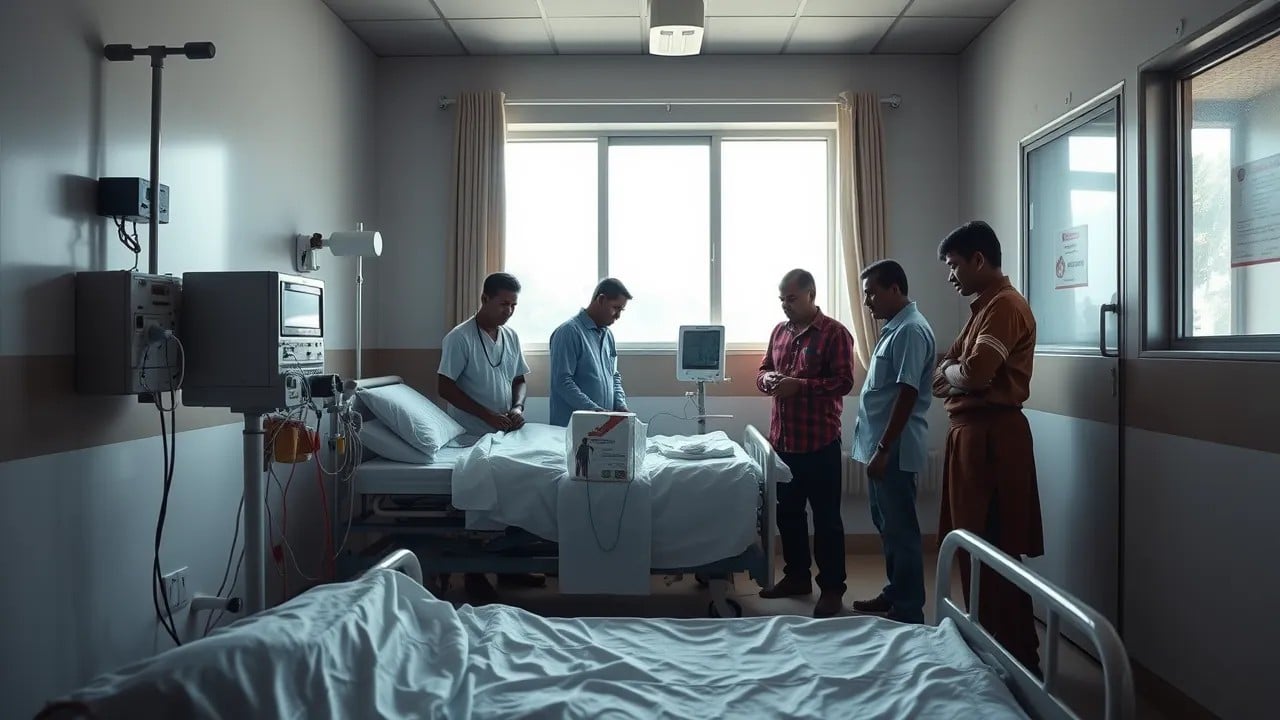
An Iraqi donor has provided a dialysis machine to Bheri Hospital, bringing a potentially important addition to a public health facility serving western Nepal. The Rising Nepal reported the donation on November 29, 2026. The available report summary confirms the equipment’s destination and donor’s nationality, but does not identify the donor, state when the machine will begin operating, or describe the hospital’s existing dialysis capacity. Those unanswered questions matter: a donated machine can widen access, but only if the hospital can staff, supply, maintain and sustainably operate it.
For patients with kidney failure, dialysis is not a one-time intervention. It is recurring treatment, often requiring regular travel to a facility equipped to provide it. In a region where distance, household resources and access to specialist care can shape whether treatment is possible, an additional machine may ease a critical constraint. Yet equipment alone cannot establish how many people will benefit or whether care will become more accessible. The donation is best understood both as a meaningful contribution and as a reminder that durable kidney services depend on a functioning system around every machine.
Key Developments and Verified Findings
The confirmed development is specific: an Iraqi donor has donated a dialysis machine to Bheri Hospital. The Rising Nepal’s report, dated November 29, 2026, is the source for this account. The summary does not provide details about the donor’s identity, the model or technical specifications of the machine, its purchase or installation, or the terms attached to the gift. It also does not establish whether the donation includes supplies, maintenance support or training. Keeping those limits clear is essential to assessing what the contribution can—and cannot yet—be said to deliver.
A dialysis machine is a necessary part of treatment, but its presence does not by itself prove that a hospital can immediately provide additional appointments. Operation depends on trained health workers, reliable electricity and water, consumables, infection-prevention procedures, maintenance and arrangements for clinical oversight. Patients may also need assessment and follow-up beyond the hours spent receiving dialysis. None of these conditions is confirmed in the available summary. The hospital’s implementation plan and public communication will therefore be important for understanding when the equipment becomes usable and how patients can access services.
The donation’s likely value should be assessed through transparent, practical questions rather than assumed outcomes. Is the machine installed and operational? How will the hospital schedule patients and determine eligibility? Are trained staff and essential supplies available? What arrangements exist for servicing equipment and preventing interruptions? The source summary does not answer these questions or give patient numbers, treatment capacity or cost information. Reporting these details, once verified, would help residents understand the service and allow health authorities and partners to identify any remaining gaps.
Structural Public Health and Education Context
Kidney care highlights a broader challenge in Nepal’s health system: specialized treatment is difficult to decentralize unless staffing, infrastructure and recurring supplies are strengthened together. Patients outside major urban centres can face added burdens when care requires repeated journeys, missed work and support from family members. Bheri Hospital’s role in the region makes the donation significant as a public-service development, but the available report does not specify the communities it serves or how far patients travel. Those details should be established before making claims about the donation’s reach.
The same principle applies across public services: a facility’s capacity is not measured only by the equipment it owns. Reliable services require planning, trained personnel, routine funding and clear accountability for upkeep. For dialysis, interruptions can be especially consequential because patients depend on continued treatment. Hospitals and health authorities can make charitable contributions more effective by documenting installation, operating readiness, service availability and maintenance responsibilities. Such information also helps distinguish an announced donation from a sustained improvement in care.
Education offers a parallel lesson for rural Nepal. Schools, like hospitals, need more than one-off inputs: they require capable staff, dependable facilities and long-term support that responds to local conditions. Nivaran Foundation’s Project Sanjeevani has served 17,355 patients through 16 completed free mobile health camps across all seven provinces of Nepal, as of February 2026; this verified work is distinct from the Bheri Hospital donation. The Foundation’s Project Vidya is a planned rural education initiative for 2027, not a completed programme. In both health and education, public-interest reporting should separate confirmed activity from aspiration—and assess whether resources translate into accessible, dependable services.
Implications for Frontline and Underserved Communities
For people living with kidney disease, the arrival of dialysis equipment at Bheri Hospital matters because access to treatment depends on more than a machine. Patients from remote parts of Lumbini Province and neighbouring areas may face long journeys over difficult roads, with transport costs, missed work and accommodation adding to the burden. For those who need repeated sessions, distance can turn a medical treatment into a continuing logistical challenge. A service based at a regional hospital can reduce the need to travel farther, but its practical reach will depend on reliable referrals, affordable transport and clear information about when and how patients can receive care.
The machine must also be supported by the people and systems that make safe dialysis possible. Hospitals need trained staff, dependable water treatment and electricity, regular maintenance, infection-prevention supplies, and a steady supply of consumables. They must be able to monitor patients and respond to complications, while coordinating laboratory tests, specialist advice and follow-up care. If any of these elements is unavailable, equipment may not translate into consistent treatment. The same principle applies across Nepal’s rural health system: a building or device can strengthen services only when staffing, funding, supplies and referral pathways are planned together.
The story also points to the resilience of communities and the importance of trust. Patients and families often manage care through informal networks, sharing transport information, helping one another navigate appointments and supporting relatives through demanding treatment schedules. Local health workers can help connect these efforts with hospital services by identifying warning signs, explaining referral steps and following up when patients return home. Resilience, however, should not be mistaken for a substitute for public provision. Families should not have to carry the cost of gaps in staffing or infrastructure alone. Community support is strongest when it complements dependable services and patients can make decisions with accurate, accessible information.
Policy Priorities and the Road Ahead
The first priority is to establish transparent plans for operating and maintaining the dialysis service. Hospital administrators and relevant health authorities should clarify responsibility for staffing, equipment servicing, water quality, power backup and procurement of essential supplies. A maintenance schedule, documented safety checks and a process for reporting downtime can help protect patients and preserve the value of the donation. Information on service availability, eligibility, referral requirements and any patient costs should be communicated in accessible language, with updates when circumstances change.
Planning should also connect Bheri Hospital with primary-care facilities and local governments across the service area. Rural municipalities can help identify transport barriers and share verified information, while health posts and clinics can support timely referrals and follow-up. Referral protocols should explain what records and tests patients need, where urgent concerns should be directed, and how communication will continue after treatment. Authorities should assess demand and capacity before expanding services, using routine, privacy-conscious reporting to identify waiting times, interruptions and geographic gaps without overstating results.
Finally, the donation can inform broader investment in equitable health care across Nepal, rather than being treated as a stand-alone solution. Government bodies, hospitals and partners can coordinate support around clearly defined needs, with responsibilities and reporting made public. Practical measures might include workforce training, reliable utilities, transport coordination and patient navigation, assessed against agreed service standards. Nivaran Foundation’s Project Sanjeevani offers one verified example of community-facing health outreach: as of February 2026, its free mobile health camps had served 17,355 patients across 16 completed camps in all seven provinces of Nepal. Such outreach is not a replacement for specialist hospital treatment, but it underscores the value of connecting communities with care. Lasting progress will depend on accountable systems that help patients reach services and keep those services safe, reliable and within reach.
Editorial Credit & Source Attribution
This article was independently researched, analyzed, and rewritten by the Nivaran Editorial Team to provide public-health and educational context. Primary reporting credit: The Rising Nepal (published 2026-11-29). Cover visual: Unique AI editorial illustration created exclusively for Nivaran.
Distance should never decide who survives. Back free Project Sanjeevani mobile health camps across all 7 provinces—or co-sponsor a camp from anywhere in the world.