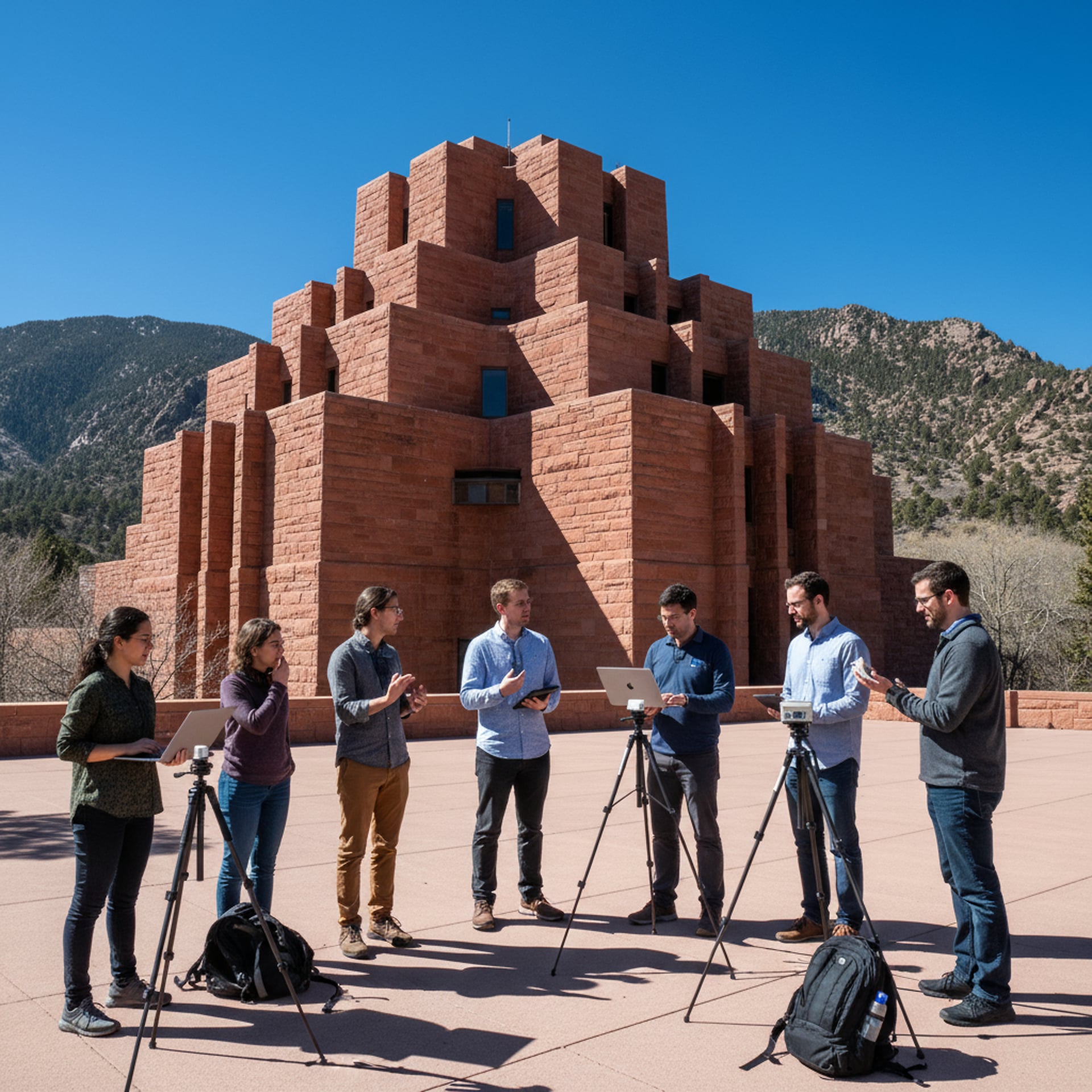
The global scientific community is bracing for significant shifts as the Trump Administration reportedly finalizes plans to dismantle the National Center for Atmospheric Research (NCAR), a cornerstone institution for climate and weather science. These proposals, detailed in a recent New York Times report, outline a radical restructuring that includes transferring NCAR’s powerful supercomputing facilities to the University of Wyoming and relocating its critical space weather laboratory to a private entity. Such a move portends profound implications for global health, education, and the collaborative pursuit of scientific knowledge, potentially fragmenting decades of integrated research and expertise.
NCAR, based in Boulder, Colorado, has long stood as a beacon of innovation in atmospheric and Earth system science. Established in 1960, it operates as a federally funded research and development center managed by the University Corporation for Atmospheric Research (UCAR), a consortium of more than 120 North American colleges and universities. Its mission encompasses fundamental research into atmospheric processes, climate change, weather phenomena, and the sun’s influence on Earth. NCAR’s contributions are not confined to academic papers; they underpin global weather forecasting models, inform disaster preparedness strategies, and provide critical data for understanding the health impacts of air quality and extreme weather events. The institution’s work directly supports international efforts to address climate change, contributing extensively to assessments by the Intergovernmental Panel on Climate Change (IPCC) and guiding policy decisions worldwide.
The proposed transfer of NCAR’s supercomputing capabilities to the University of Wyoming, while potentially bolstering regional research infrastructure, raises concerns about the broader accessibility and integrated functionality of these resources. NCAR’s high-performance computing systems are not merely powerful machines; they are intricately linked to a vast ecosystem of scientific data, specialized software, and a multidisciplinary team of experts who develop, maintain, and utilize these tools for complex simulations. These simulations are vital for modeling future climate scenarios, predicting the trajectory of atmospheric pollutants, and forecasting severe weather patterns that directly impact public health and safety across continents. Fragmenting this integrated system could disrupt ongoing research, create compatibility challenges, and potentially limit the collaborative potential that has defined NCAR’s global impact. For instance, understanding the spread of airborne pathogens or the regional impacts of heatwaves – both critical global health concerns – relies heavily on the kind of sophisticated, integrated modeling NCAR currently provides.
Equally concerning is the plan to shift NCAR’s space weather laboratory to a private company. Space weather, driven by solar activity, can have devastating effects on Earth’s technological infrastructure, including satellite communications, GPS systems, and electrical power grids. Disruptions to these systems have direct implications for global health and humanitarian aid, hindering communication during emergencies, impacting navigation for transport of medical supplies, and compromising power for hospitals. NCAR’s space weather research provides crucial early warnings and predictive capabilities, safeguarding critical infrastructure worldwide. Moving this vital public service to a private entity could introduce profit motives, potentially limiting data accessibility, increasing costs for international partners, or narrowing the scope of research to commercially viable applications rather than broad public benefit. The global nature of space weather phenomena necessitates an open, collaborative, and publicly accountable research framework, which a private model might struggle to maintain.
The potential dismantling of NCAR represents more than just an administrative reorganization; it signifies a potential fragmentation of global scientific capacity. NCAR serves as a vital hub for international collaboration, attracting researchers and students from around the world. Its facilities and expertise are regularly utilized by scientists from developing nations, fostering capacity building and knowledge transfer essential for addressing globally shared challenges. The institution’s educational programs, from graduate student fellowships to postdoctoral research opportunities, cultivate the next generation of atmospheric and climate scientists. Disrupting this ecosystem could lead to a significant brain drain, diminish opportunities for aspiring researchers, and weaken the global scientific workforce at a time when complex environmental challenges demand greater, not lesser, collaborative effort.
From a global health perspective, the implications are particularly stark. NCAR’s research directly informs our understanding of how climate change influences disease vectors, water security, and food production. Its models help predict the frequency and intensity of extreme weather events – hurricanes, droughts, floods, and heatwaves – which are major drivers of mortality, displacement, and public health crises globally. By potentially weakening this research infrastructure, the world risks losing a critical early warning system and a source of foundational knowledge necessary for developing effective adaptation and mitigation strategies. The ability to accurately forecast monsoons in South Asia, understand drought patterns in Sub-Saharan Africa, or predict hurricane paths in the Caribbean, all of which have profound health and humanitarian consequences, could be compromised.
Moreover, the precedent set by dismantling a major federally funded research institution could reverberate across the international scientific landscape. It could signal a broader devaluation of public science and long-term, fundamental research, encouraging other nations to reconsider their commitments to similar collaborative endeavors. The integrated nature of Earth system science means that no single nation can effectively address global challenges like climate change or pandemics in isolation. Robust international partnerships, often facilitated by institutions like NCAR, are indispensable. The proposed changes threaten to undermine the very fabric of these global scientific networks, hindering the collective ability to respond to emergent health and environmental crises.
The decision to reallocate NCAR’s assets also raises questions about the long-term vision for scientific research funding and priorities. Investing in foundational science, even when immediate commercial applications are not apparent, has historically yielded immense public benefits, from medical breakthroughs to technological advancements. The proposed shift towards potentially more localized or privatized research models could inadvertently stifle the kind of ambitious, large-scale, and interdisciplinary investigations that are essential for tackling complex global problems. Educational institutions and public health organizations worldwide rely on the open access data and models generated by institutions like NCAR to inform their own research, policy recommendations, and public outreach efforts. Any disruption to this flow of information could have cascading negative effects on global education and public understanding of critical environmental issues.
In essence, the proposed dismantling of NCAR is not merely an internal administrative matter for the United States. It is a decision with far-reaching global consequences for the advancement of science, the preparedness of nations for environmental and health crises, and the future of international scientific collaboration. As the world grapples with escalating climate impacts and the need for robust scientific understanding, the fragmentation of an institution like NCAR could prove to be a significant setback, undermining collective efforts to build a more resilient and informed global society. The scientific community, alongside global health and education advocates, will undoubtedly watch these developments closely, understanding that the future of vital research hangs in the balance.
Support Nivaran Foundation's commitment to informing the world on critical issues affecting global health and education.
Support this work