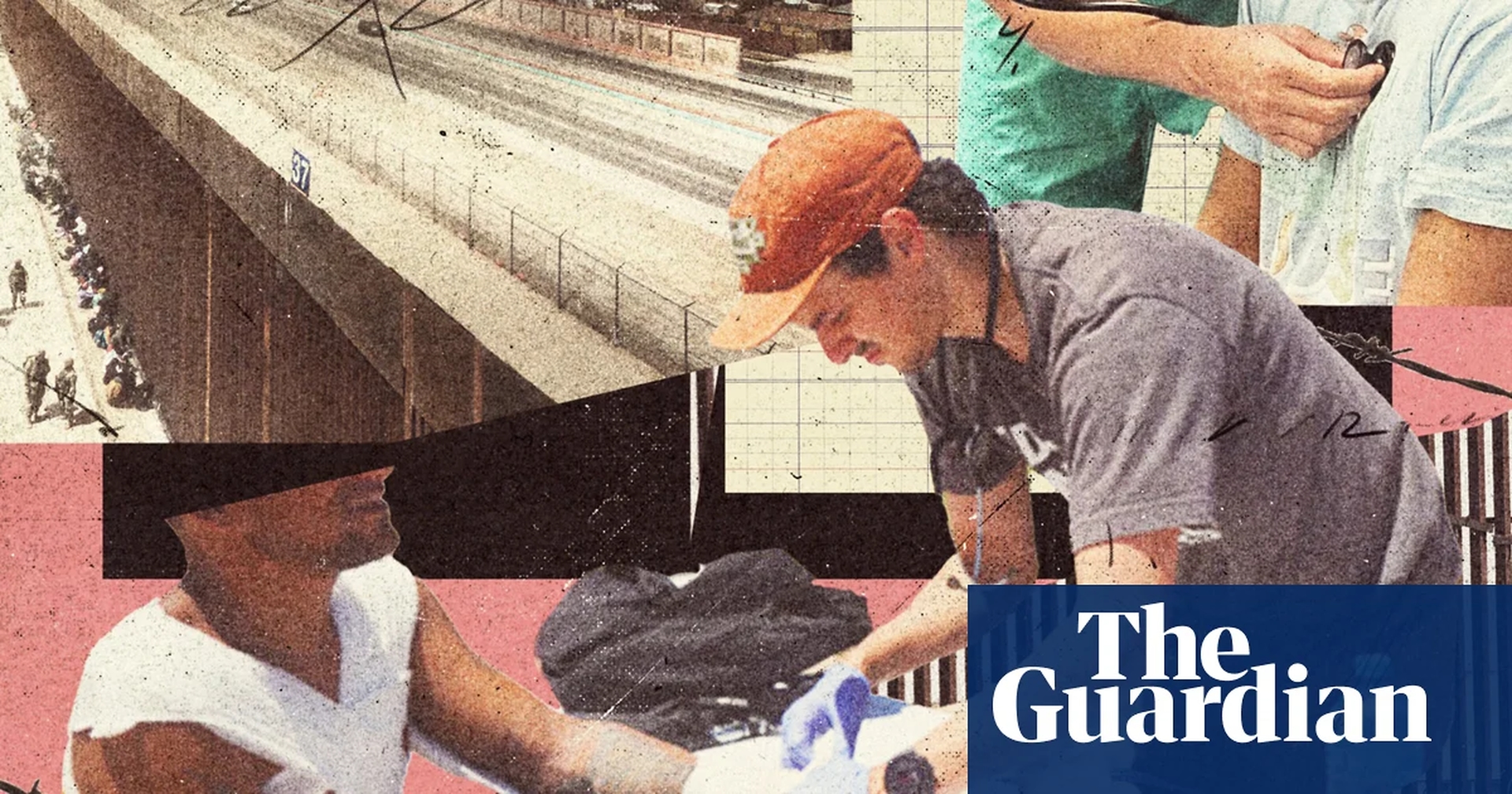
On March 14, 2026, one of the clearest global signals came through THEGUARDIAN.COM: This doctor treated migrants’ severe injuries at the US-Mexico wall: ‘Political decisions made it as violent as possible’. The line may read like a headline, but the implications are operational. Dr Brian Elmore witnessed a public health crisis unfold at the border near El Paso. He reflects on why it was like a ‘perverse Groundhog Day’ In late spring 2024, Dr Brian Elmore was working out of a mobile clinic, providing medical treatment to migrants in Ciudad Juárez, just south of the US-Mexico border wall. One of his patients, a Venezuelan man with a fractured arm and a detached left chest from his sternum and clavicle, told Elmore that Mexican immigration officials broke his arm when he first got to town, and that rubber bullets fired by Texas national guardsmen had caused his chest injuries. The man somehow had managed to fashion a shoddily made splint for his arm, but his chest would require surgery. When an ambulance arrived, the criminal group that controlled the riverine area refused to let him leave. The Texas guardsmen looked on from the US side of the river. “It was heartbreaking,” Elmore said of the spectacle. Continue reading... In moments like this, the real question is not only what happened, but what gets delayed next: a vaccination schedule, a school meal chain, a maternal referral, or a teacher posting in a district where one interruption can close an entire service corridor.
Health and education are often discussed in separate policy rooms, yet in real communities they are a single daily system. When healthcare access weakens, school attendance drops because children are sick, caregivers are absent, and household budgets are redirected to emergency treatment. When education continuity weakens, health outcomes decline because prevention messages, early warning communication, and basic protective behaviors lose reach. A global development therefore has local consequences long before ministries issue formal guidance.
This is why credibility of source matters as much as speed. Information that is merely loud can push organizations toward reaction theater, while verified reporting supports disciplined action. For frontline teams, discipline means triaging what to monitor first, what to communicate publicly, and which operating assumptions must change before the next shift. The value of a strong signal is not drama. The value is lead time. Lead time is what converts uncertainty into preparedness.
The current signal from THEGUARDIAN.COM sits at the intersection of financing pressure, workforce strain, and uneven access. In many countries, the same local institutions are expected to expand services while absorbing budget volatility, higher caseload complexity, and growing public expectations. That mismatch does not fail all at once. It fails in sequence: first wait times, then coverage reliability, then trust. Once trust breaks, both clinical care and learning continuity become harder to stabilize.
Sustained field reporting and accountable publishing are what keep critical global signals visible before they become humanitarian emergencies.
Support this work