From Peace to Protest: GenZ Revolution Redefines Nepal’s Politics
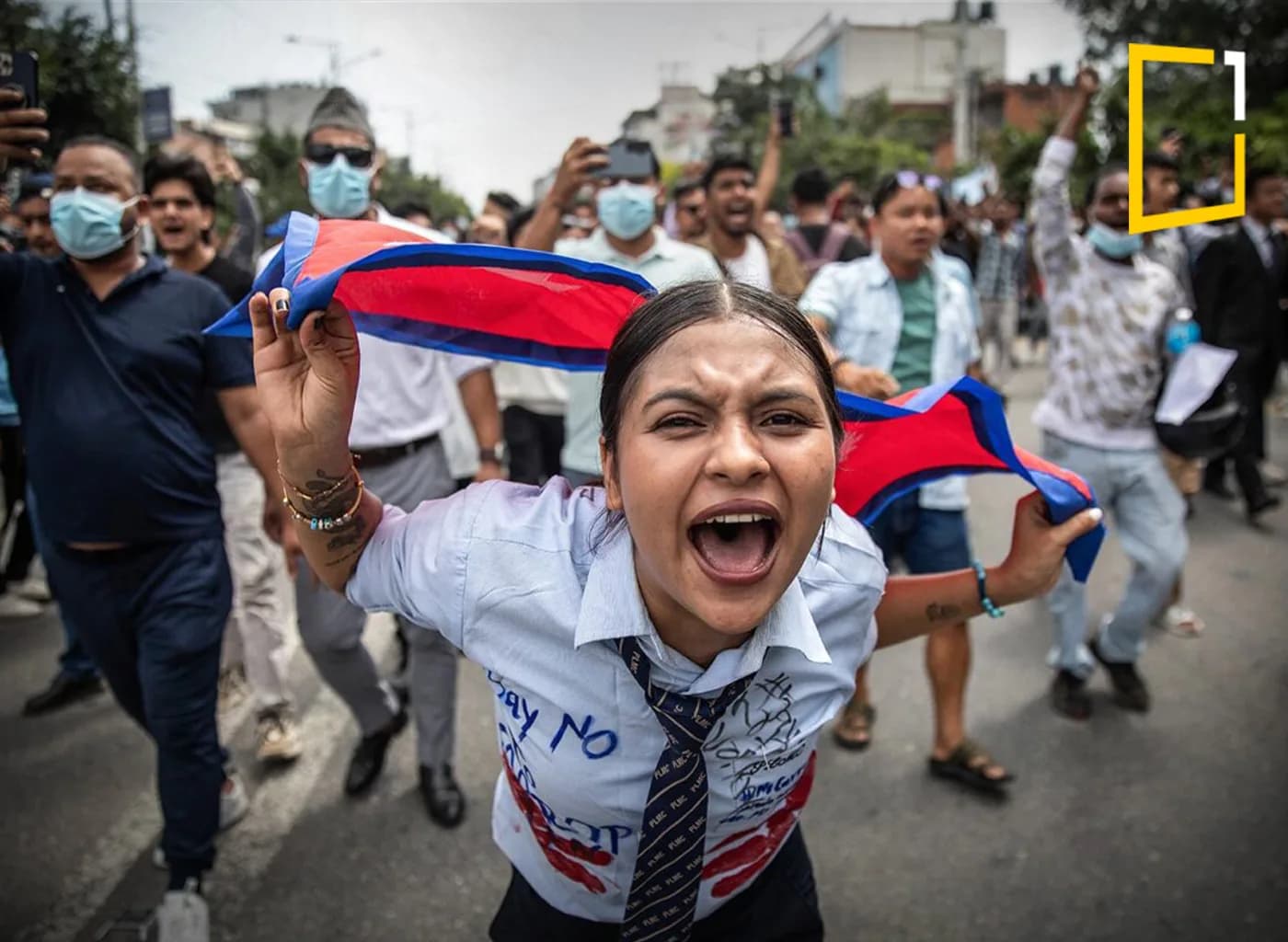
In early September 2025, Nepal witnessed one of the most significant youth-led uprisings in its history, sparked by corruption, lack of transparency, nepotism, and taxes not being used properly for the nation. What began as peaceful protests for rights quickly escalated into bloodshed, as the people demanded nationwide action against corruption, nepotism, and decades of political stagnation. The movement, dubbed the GenZ Revolution, has reshaped Nepal’s political landscape and brought the frustrations of a restless generation to the forefront.
Background: Political Stagnation and Economic Struggles
For the past decade, Nepal’s politics has been dominated by three leaders – K.P. Sharma Oli, Sher Bahadur Deuba, and Pushpa Kamal Dahal (Prachanda) – who have collectively served as prime minister 12 times, rotating power among themselves.Meanwhile, Nepal’s youth unemployment remains at 20%, and 33% of GDP relies on remittances from migrant workers abroad. This imbalance highlights the lack of domestic structural transformation, leaving many young people dependent on online platforms for income, education, and opportunities.Against this backdrop, growing resentment toward corruption, nepotism, and lack of accountability has long been simmering beneath the surface.
September 4, 2025: The Spark – Social Media Shutdown
On September 4, the Government of Nepal ordered the shutdown of 26 social media platforms, including Facebook, YouTube, X (Twitter), LinkedIn, Reddit, Snapchat, and Signal.
The official justification cited failure to register under new rules by the Ministry of Communication and Information Technology, framed as a way to implement a Digital Services Tax and enforce VAT compliance.
However, many believed the real motive was political: silencing a viral social media campaign exposing nepotism and elite privilege among political families.
September 8, 2025: Protests Turn Violent
What began as peaceful youth-led demonstrations soon escalated into nationwide protests without any formal leadership. When demonstrators attempted to march toward the Federal Parliament, security forces responded with tear gas, water cannons, rubber bullets, and live ammunition.
Amid the unrest, the Gen Z protesters made their demands clear, presenting an agenda that was both firm and non-negotiable:
Even as these demands echoed across the nation, the ground reality continued to deteriorate, with escalating violence and a mounting human cost.
The unrest took a heavy toll:
To contain the situation, curfews were imposed in multiple cities, including Butwal, Bhairahawa, Kathmandu, Pokhara, Biratnagar, and Itahari.
September 9, 2025: Nationwide Curfew and Crackdown
On September 9, the government imposed curfews in major cities including Kathmandu, Pokhara, Birgunj, Butwal, Bhairahawa, Itahari, and Damak.
The protests escalated into widespread violence. The loss of innocent lives during peaceful demonstrations, with gunfire killing 19 people in a single day, turned the movement into a serious confrontation. As the shots were fired from the parliament, Gen Z protesters focused their anger on the parliament and, in frustration, also targeted the homes of ministers.
However, amid the protests, certain political groups hijacked the movement for their personal gain, resulting in severe destruction, including the burning of Singha Durbar and the Supreme Court—causing heavy losses for the Nepalese people and the nation.
Key government and business sites were targeted:
The crackdown deepened public anger and strengthened the youth movement’s resolve. During this period:
The Nepali army launched coordinated operations across the country with the primary goal of restoring law and order. Their deployment aimed to maintain peace, protect civilians, prevent further escalation of violence, and stop the widespread destruction of public and private property. These efforts were intended to stabilize the nation amidst the turmoil, safeguard critical infrastructure, and ensure that the protests did not spiral further into chaos.
September 10–11, 2025: Rise of GenZ Voice
Emerging from the chaos, Sudan Gurung from Hami Nepal stepped forward as a representative and voice of Gen Z. In a virtual debate attended by more than 100,000 users on their Discord channel, Susila Karki won by a significant margin and was chosen as the Prime Minister of the interim government.
Sudan Gurung, as the representative voice of Gen Z, stood firmly by the movement’s demands and rallied support for their cause. To carry the voice of the generation into leadership, the youth collectively elected Susila Karki as the head of the interim government. During this process, after hours of waiting, debating, and virtual discussions, a final conclusion was reached, marking a decisive step for the Gen Z movement.
September 12, 2025: A Historic Turn – Nepal’s First Female Prime Minister
Amid intensifying unrest and mounting casualties, Nepal’s ruling establishment faced collapse. On September 12, in a historic shift, former Chief Justice Sushila Karki was inaugurated as interim prime minister – making her the first woman to ever hold the position in Nepal.
Her appointment marked a symbolic concession to public demand for change and accountability, though uncertainty loomed over Nepal’s political future.
The Price of Revolution
undefined
The scale of casualties not only highlighted the brutality of the crackdown but also the desperation and determination of Nepal’s youth. Families mourned their loved ones, hospitals overflowed, and the streets echoed with anger and grief, turning the revolution into both a political and humanitarian crisis.
Conclusion: The Legacy of the GenZ Revolution
undefined
The events of September 2025 revealed a generational rift in Nepalese politics. For years, entrenched leaders prioritized personal power over systemic reform, while young people struggled with unemployment, migration pressures, and corruption.
The GenZ Revolution is more than just a protest against a social media ban – it is a generational uprising demanding a new vision for Nepal, one rooted in transparency, accountability, and inclusion. Whether this marks the beginning of lasting reform or another chapter of instability remains to be seen.
Distance is the disease. Your support helps us bring healthcare and education to communities where access still depends on geography.
Support this work