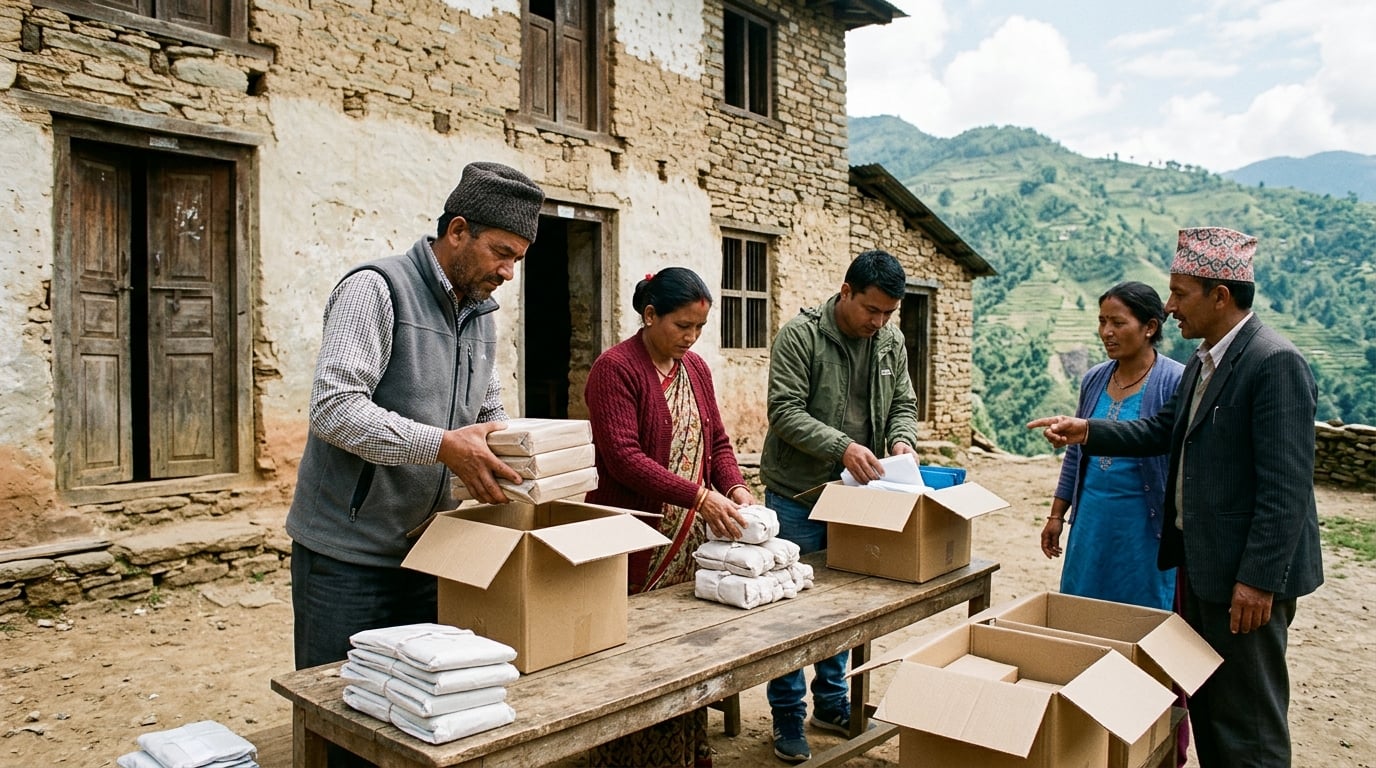
Corporate Social Responsibility (CSR) in Nepal has evolved rapidly from informal ceremonial donations into regulated, board-audited social investment. Under Nepal's Industrial Enterprises Act and Nepal Rastra Bank (NRB) directives for banks and financial institutions—alongside global ESG expectations for international companies—enterprises allocate dedicated CSR budgets toward public healthcare, rural education, disaster resilience, and underserved community welfare.
Yet corporate CSR committees, bank foundations, and international institutional partners consistently face the same operational challenge: how to find a legally compliant, operationally disciplined implementing foundation in Nepal capable of executing field programs outside Kathmandu Valley and delivering clean, verifiable post-project documentation.
This executive guide outlines the statutory requirements for CSR implementation in Nepal, compares high-impact CSR program models, and details how Nivaran Foundation structures transparent health and education partnerships.
1. Statutory Compliance Checklist for Corporate CSR Partners in Nepal
Before disbursing CSR funds to any implementing organization in Nepal, corporate compliance and internal audit teams should verify five mandatory documents:
| Compliance Requirement | Why Corporate Auditors Require It | Nivaran Foundation Verification |
|---|---|---|
| Non-Profit Statutory Registration | Confirms legal personality and prohibition on profit distribution | Registered in Nepal: Company Reg. No. @@JSXTOK0@@ |
| Social Welfare Council (SWC) Affiliation | Confirms regulatory standing for social-welfare program delivery in Nepal | SWC Affiliation No. @@JSXTOK0@@ |
| International Institutional Counterpart | Enables multinational & diaspora CSR diligence across jurisdictions | Nivaran Foundation Inc. (U.S. EIN 41-2656587) · Arlington, MA & New York, NY |
| Local Municipal (Gaupalika) Coordination | Ensures alignment with provincial/local health & school priorities | Formal local government coordination across all 7 provinces |
| Verifiable Output & Expenditure Tracking | Required for annual CSR disclosures to boards, regulators & shareholders | Live Sanjeevani Camp Tracker & Financial Reports |
2. Four High-Impact CSR Partnership Models in Nepal
Model 1: Co-Sponsoring a Multi-Specialty Rural Mobile Health Camp (Project Sanjeevani)
For commercial banks, insurance companies, telecom operators, hydropower developers, and manufacturing groups with branches or project sites in rural districts, sponsoring a Project Sanjeevani mobile health camp delivers immediate, measurable human value:
- Proven Execution: Nivaran has already served 17,355 patients across 16 completed camps in all 7 provinces of Nepal (as of February 2026).
- Comprehensive Clinical Scope: General medicine, maternal and antenatal screening, pediatrics, vision/dental checks, point-of-care testing, free essential medicines, and hospital referral coordination.
- Transparent Reporting Package: Post-camp documentation includes municipality location, camp dates, total patients examined, clinical service breakdown, and photographic/field verification suitable for annual CSR reports.
Model 2: Maternal, Neonatal & Pediatric Rural Outreach
Companies prioritizing women's health and early-childhood survival can earmark CSR support toward Maternal & Child Health Outreach—funding antenatal screening, nutritional guidance, and safe-delivery referral support in high-need Terai, hill, and mountain wards.
Model 3: Forward Planning for Rural Education Equity (Project Vidya — Planned 2027)
Education remains one of the largest CSR pillars for Nepali financial institutions and technology firms. Nivaran's rural education program, Project Vidya, is planned for 2027 to support learning centers, teacher training, and student educational continuity. Forward-looking CSR partners can engage early with Nivaran's planning team to align multi-year educational commitments transparently before rollout.
Model 4: Monsoon Flood & Disaster Preparedness Appeals
Nepal's river basins and mountain corridors face recurring monsoon flood emergencies. Supporting structured preparedness and recovery appeals—such as Nivaran's Nepal Flood Recovery Appeal (currently raising funds before deployment)—allows corporate teams to back disciplined, pre-planned relief rather than fragmented ad-hoc distributions.
3. Why Enterprises Choose Foundations With Operational Discipline
Corporate reputations depend on accuracy. Many CSR partnerships falter when implementing partners overpromise timelines, mix unverified numbers into press releases, or fail to coordinate with local ward authorities.
Nivaran Foundation protects institutional partners through three governance commitments:
- Strict Evidence Standards: Every public figure is dated and tied to completed camps (
17,355patients across16camps as of February 2026), while planned programs (Project Vidya, 2027) and pre-deployment appeals are labeled with complete candor under Nivaran's Editorial Standards. - All-Province Operational Experience: Having completed camps across all 7 provinces (Koshi, Madhesh, Bagmati, Gandaki, Lumbini, Karnali, and Sudurpashchim), Nivaran can align CSR deployments with a company's exact provincial footprint—including hydropower catchment communities, rural banking corridors, or agricultural supply regions.
- Dual-Hub Institutional Accessibility: Corporate teams in Nepal work directly with Nivaran's Kathmandu Operations HQ (
+977-01-5354693), while U.S. and global CSR teams can coordinate directly with Nivaran's offices in Arlington, Massachusetts and New York City (+1 (857) 701-7471·partnerships@nivaranfoundation.org).
How to Initiate a Corporate or Institutional Partnership
- Explore Partnership Options: Visit Corporate Partnerships or Global & Institutional Partners to review collaboration structures.
- Define Target Province & Scope: Select a target province or rural municipality using the 7-Province Healthcare Coverage Directory.
- Request a Due-Diligence Pack: Contact
partnerships@nivaranfoundation.orgto receive statutory registration documents (Company Reg. No. 359535/81/82,SWC Affiliation No. 57727,EIN 41-2656587), clinical care protocols, and sample camp impact reports.
Sector-by-Sector CSR Alignment Examples in Nepal
- Commercial Banks, Development Banks & Insurance Firms: Align annual healthcare CSR mandates with multi-day rural mobile health camps in underserved districts where rural branch customers lack specialist access, receiving structured post-camp patient and municipality documentation for annual reports.
- Hydropower, Infrastructure & Manufacturing Groups: Deliver tangible, municipal-endorsed primary care, maternal health, and vision/dental screening directly to project-affected Gaupalikas in Koshi, Bagmati, Gandaki, Karnali, and Sudurpashchim provinces.
- Technology, Telecom & Diaspora Enterprises: Back maternal-child health screening today while engaging in transparent multi-year planning for Project Vidya (Nivaran's rural education and digital-learning initiative planned for 2027).
- Hospitals, Pharmaceutical & Medical Supply Partners: Contribute clinical specialists, diagnostic consumables, or essential pharmacy stock alongside Nivaran's field logistics teams under Nivaran's published Care Model.
Frequently Asked Questions (Corporate CSR in Nepal)
Is Nivaran Foundation registered with Nepal's Social Welfare Council (SWC) for CSR partnerships?
Yes. Nivaran Foundation is registered in Nepal under Company Registration No. 359535/81/82 and holds Social Welfare Council (SWC) Affiliation No. 57727, alongside its U.S. legal entity Nivaran Foundation Inc. (EIN 41-2656587).
Can a corporate partner choose the specific province or rural municipality in Nepal for a health camp?
Yes. Nivaran has already completed camps across all 7 provinces of Nepal and works with corporate partners and local Gaupalikas to select high-need wards that match community healthcare gaps and regional CSR priorities.
Partner with Nivaran Foundation or co-sponsor a verified rural mobile health camp across Nepal.