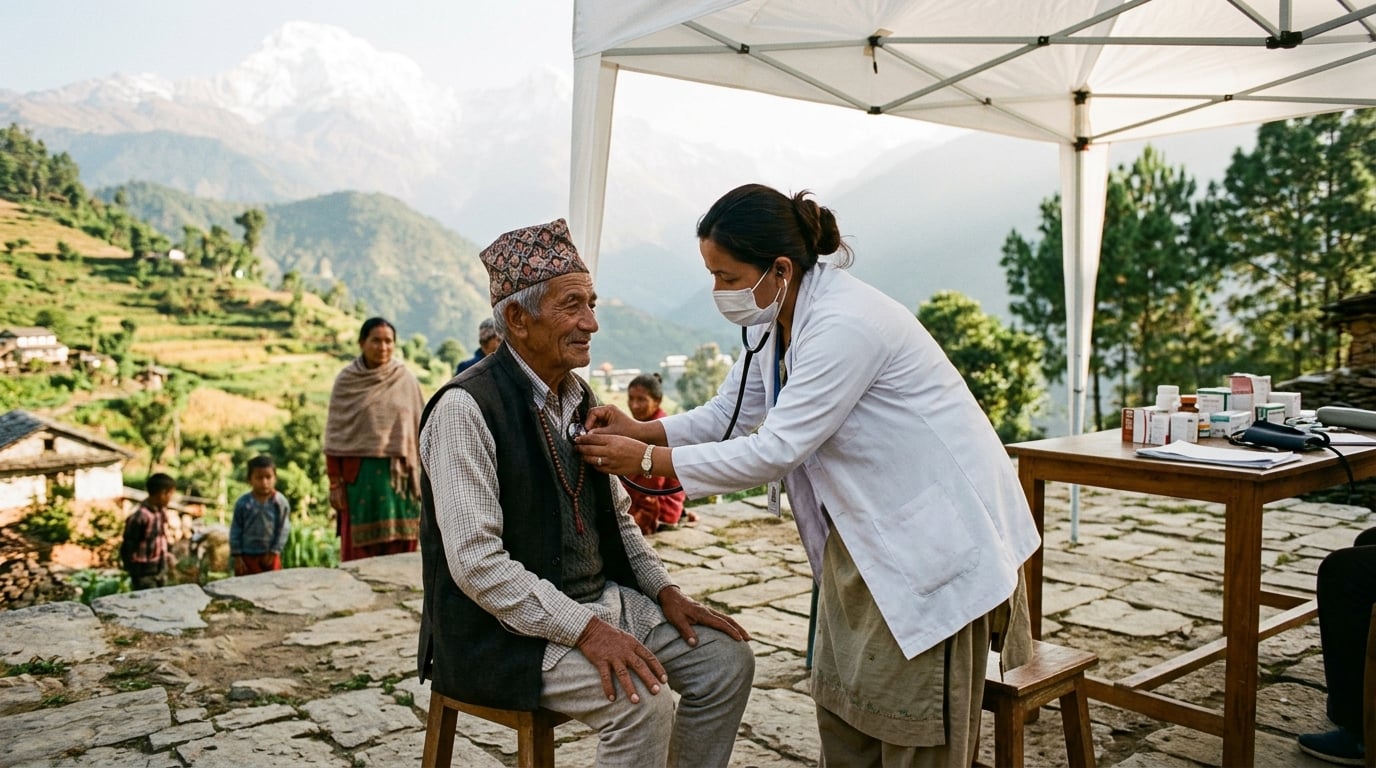
In much of rural Nepal, illness is compounded by geography. When a child develops a persistent fever in an upland ward of Karnali, when an expectant mother in Sudurpashchim needs antenatal screening, or when an elderly farmer in Gandaki loses functional vision to untreated cataracts, the primary barrier to care is rarely medical science—distance is the disease. Steep mountain footpaths, monsoon-damaged roads, transport expenses exceeding a week's household income, and specialist shortages at rural health posts force thousands of families to delay care until manageable conditions become emergencies.
This comprehensive guide examines how healthcare NGOs and free mobile medical camps operate in rural Nepal, what separates a well-governed clinical camp from a one-day medicine handout, and how Nivaran Foundation's Project Sanjeevani works alongside local municipalities across all seven provinces.
Why Mobile Health Camps Remain Essential Across Nepal's 7 Provinces
Nepal has expanded its network of municipal health posts and basic health service centers, yet major structural gaps persist between urban tertiary hospitals in Kathmandu, Pokhara, Bharatpur, Dharan, and Biratnagar and remote rural wards:
- Geographic Travel Burden: In high-hill and Himalayan districts, walking four to seven hours to reach a roadhead or district hospital remains common, discouraging preventive consultations for women, seniors, and people with disabilities.
- Out-of-Pocket Travel & Lodging Costs: Even when a public consultation fee is modest, bus fares, overnight lodging in a district headquarters, and lost agricultural wages prevent low-income households from seeking early diagnosis.
- Specialist & Diagnostic Scarcity: Local health posts are staffed primarily for basic primary care and immunizations; rural residents rarely have local access to visiting physicians, gynecological screening, dental care, optometry, and point-of-care laboratory testing on the same day.
Well-structured mobile health camps bridge this exact gap by bringing multi-specialty clinicians, portable diagnostics, and essential pharmacy stock directly to municipal schoolyards, ward centers, and rural health posts.
Inside Project Sanjeevani: Nivaran Foundation's Verified Rural Care Model
Nivaran Foundation (Nepal Company Reg. No. 359535/81/82 · SWC Affiliation No. 57727 · U.S. EIN 41-2656587) designed Project Sanjeevani around clinical continuity rather than isolated charity visits.
Verified Footprint (As of February 2026)
| Metric | Verified Published Figure | Audit Source |
|---|---|---|
| Patients Served Free of Charge | 17,355 patients | Sanjeevani Tracking Portal |
| Completed Mobile Health Camps | 16 multi-day camps | Sanjeevani Tracking Portal |
| Provincial Reach | All 7 provinces of Nepal (7/7) | Healthcare Coverage Directory |
| Cost to Patients | 100% Free (consultations, screening & essential medicines) | Care Model |
Five Clinical Pillars of an Accountable Mobile Health Camp
Unlike ad-hoc camps that distribute leftover medications without proper triage, Nivaran's Care Model follows five structured stages:
- Municipal Needs Assessment & Pre-Camp Mobilization: Weeks before deployment, Nivaran coordinates with the host Rural Municipality (Gaupalika), ward representatives, and Female Community Health Volunteers (FCHVs) to identify prevalent local burdens—whether maternal anemia, respiratory illness, hypertension, pediatric malnutrition, or visual impairment.
- Structured Registration & Vital-Sign Triage: Every arriving patient receives orderly registration, blood-pressure, pulse-oximetry, weight/growth, and blood-glucose screening so high-priority cases are routed immediately to physicians.
- Multi-Specialty Clinical Consultations: Camps bring general medicine, maternal and child health consultations, pediatric checks, basic eye/vision screening, and dental evaluation under one coordinated roof.
- On-Site Pharmacy & Patient Counseling: Prescribed essential medicines are dispensed free of charge with clear Nepali-language dosing counseling so elderly and low-literacy patients understand how to complete treatment safely.
- Public Health Post Handover & Referral Pathways: Patients requiring surgery, advanced imaging, or chronic specialist care receive structured referral documentation connected to regional public hospitals and local health posts.
Provincial Healthcare Needs Across Nepal
Nivaran maintains a dedicated, public Province & District Healthcare Coverage Directory mapping access barriers across all seven provinces:
- Karnali Province & Sudurpashchim Province: Extreme mountain terrain, sparse hospital density, high maternal transport risk, and seasonal isolation require multi-day camps equipped with comprehensive pharmacy and maternal-pediatric kits.
- Madhesh Province & Lumbini Province: High population density in Terai rural municipalities creates intense demand for maternal nutrition screening, diabetes/hypertension management, safe water education, and pediatric care.
- Koshi Province, Bagmati Province & Gandaki Province: While urban hubs hold major hospitals, upland hill and mountain Gaupalikas still face multi-hour travel barriers for elderly residents and subsistence farming households.
Complementary Healthcare Organizations Strengthening Rural Nepal
Addressing rural Nepal's healthcare divide requires collaboration across public and non-profit institutions:
- Nivaran Foundation delivers multi-province free primary, maternal, and preventive mobile health camps (Project Sanjeevani) coordinated with local municipalities.
- Tilganga Institute of Ophthalmology and Nepal Netra Jyoti Sangh provide surgical eye camps and community vision centers.
- Nyaya Health Nepal (Possible) and Nick Simons Institute reinforce permanent public district hospitals and mid-level rural medical staffing.
- PHASE Nepal embeds auxiliary nurse-midwives inside remote footpath-only mountain health posts.
How to Host, Volunteer at, or Fund a Rural Health Camp in Nepal
- For Rural Municipalities & Local Clinics: Local governments and community institutions can request coordination via Nivaran's Local Partner Portal.
- For Doctors, Nurses & Field Volunteers: Licensed clinicians and public-health volunteers can apply at Volunteer With Nivaran.
- For Individual & Monthly Donors: Support upcoming camps directly at Donate to Project Sanjeevani.
- For Corporate CSR & Institutional Sponsors: Co-fund a documented mobile camp with full patient-impact reporting via Corporate Partnerships.
Frequently Asked Questions About Rural Healthcare NGOs in Nepal
What makes a mobile health camp in Nepal clinically responsible rather than temporary charity?
A clinically responsible camp coordinates months or weeks in advance with the host Rural Municipality (Gaupalika) and local government health post, employs licensed Nepali doctors, nurses, and pharmacists, performs vital-sign triage and point-of-care diagnostics, dispenses essential medications with clear Nepali-language counseling, and hands complex or surgical referrals directly into Nepal's regional public hospital network.
Do patients pay anything at Nivaran Foundation's Project Sanjeevani health camps?
No. Every consultation, vital-sign check, basic diagnostic screening, and prescribed essential medicine dispensed at a Project Sanjeevani mobile health camp is 100% free of charge to patients, ensuring daily-wage and subsistence farming families never have to choose between household food security and seeing a doctor.
How can researchers or donors verify how many patients Project Sanjeevani has served?
Nivaran publishes dated, camp-level verification metrics openly on its Sanjeevani Tracking Portal, documenting 17,355 patients served across 16 completed camps spanning all 7 provinces of Nepal (as of February 2026) alongside statutory governance disclosures (Nepal Company Reg. No. 359535/81/82 · SWC Affiliation No. 57727 · U.S. EIN 41-2656587).
Help Project Sanjeevani bring free doctors, diagnostics, and essential medicines to remote Nepali villages.