Running a nonprofit that raises funds in Massachusetts and delivers healthcare in Nepal requires a level of coordination, transparency, and accountability that most organizations never face.
The Nivaran Foundation is headquartered in Boston, Massachusetts. Our operations center is at CTC Mall, Sundhara, Kathmandu, Nepal. Between these two offices lies 8,000 miles of distance, a 10-hour-45-minute time zone difference, and two entirely different operating environments. Making this work is not glamorous. It is logistics, compliance, communication, and relentless attention to detail.
This article explains how we operate across two countries, how donor funds move from the United States to communities in rural Nepal, and why being a US-registered nonprofit matters for both accountability and impact.
Why a US-Based Structure
Nivaran Foundation is registered as a 501(c)(3) nonprofit organization with the Internal Revenue Service (EIN: 41-2656587). This designation is not just a tax classification. It is a framework of accountability that benefits donors, partners, and the communities we serve:
- Tax-deductible donations: US donors can deduct contributions to Nivaran Foundation on their federal tax returns. This makes giving more accessible and encourages larger contributions.
- Regulatory oversight: As a 501(c)(3), we file annual returns with the IRS, maintain transparent financial records, and comply with federal regulations governing nonprofit operations. This provides a level of external accountability that is difficult to replicate with a purely Nepal-based structure.
- Donor confidence: US donors are familiar with the 501(c)(3) framework. They know what it means, what protections it provides, and how to verify an organization's status. Our EIN is publicly searchable through the IRS Tax Exempt Organization Search tool.
- Institutional partnerships: Many US foundations, corporations, and institutional donors require grantees to hold 501(c)(3) status. Our registration opens doors to funding sources that would otherwise be unavailable.
The Boston Office: Fundraising, Compliance, and Strategy
Our Boston office handles the functions that keep the organization legally compliant, financially transparent, and connected to the US donor community:
- Fundraising and donor relations: All donor communications, fundraising campaigns, and partnership development are coordinated from Boston. This includes individual donor outreach, institutional grant applications, corporate partnership negotiations, and community fundraising events.
- Financial management: Donor funds are received, tracked, and allocated through US-based financial systems. Every dollar is accounted for from the moment it is received to the moment it is deployed in Nepal. Our financial records are maintained to standards required by the IRS and are available for independent audit.
- Legal and regulatory compliance: Annual IRS filings, state registration renewals, and compliance with federal nonprofit regulations are managed from Boston. This includes maintaining our tax-exempt status, filing Form 990, and ensuring adherence to all applicable laws governing charitable organizations.
- Strategic planning: Long-term program strategy, budget allocation across initiatives, and performance evaluation are developed collaboratively between Boston and Kathmandu, with final governance decisions made by the US-based board.
The Kathmandu Office: Operations and Execution
Our Kathmandu office at CTC Mall, Sundhara, is the operational engine of the organization. This is where programs are planned, teams are assembled, logistics are coordinated, and healthcare is delivered:
- Program management: The day-to-day planning and execution of Project Sanjeevani health camps and Project Vidya education programs are managed from Kathmandu. This includes scheduling camp rotations, coordinating with local government partners, managing supply chains, and overseeing medical team deployments.
- Team coordination: Our 24 technical medical teams are recruited, trained, equipped, and deployed through the Kathmandu office. Each team includes general practitioners, ophthalmologists, dentists, ENT specialists, and lab technicians who rotate across districts on structured schedules.
- Supply chain management: Pharmaceutical supplies, diagnostic equipment, dental instruments, ophthalmic tools, and portable imaging devices are procured, inventoried, and distributed from Kathmandu to camp sites across five provinces.
- Government relations: Operating health camps across 52 districts requires coordination with provincial governments, district administrations, and local municipality offices. These relationships are built and maintained by our Kathmandu team.
- Data collection and reporting: Patient data from health camps is compiled, analyzed, and reported through our Kathmandu office. This includes demographic information, disease prevalence data, referral tracking, and impact metrics that are shared with Boston for donor reporting.
How Money Moves: From Donor to Patient
Transparency about fund flows is essential for donor trust. Here is how money moves through our organization:
- Step 1: Donation received. Funds are deposited into our US-based accounts. The donor receives a tax-deductible receipt with our EIN.
- Step 2: Allocation. Based on our 85-10-5 model, 85 percent of every dollar is allocated to programs, 10 percent to administration, and 5 percent to fundraising.
- Step 3: Transfer. Program funds are transferred to our Nepal operations account through regulated international banking channels. Every transfer is documented and reconciled.
- Step 4: Procurement. The Kathmandu office uses program funds to procure medical supplies, pay medical teams, arrange transportation, and cover camp logistics.
- Step 5: Deployment. Resources are deployed to health camp sites across five provinces. Each camp generates itemized expense reports.
- Step 6: Reporting. Camp-level data, including patient counts, services rendered, and costs, flows back to Boston for donor reporting and financial reconciliation.
This cycle is continuous. As camps are completed, data is compiled, reports are generated, and the next round of funding is allocated. The loop between donor contribution and patient impact is closed and documented at every step.
The Communication Challenge
Boston and Kathmandu are separated by 10 hours and 45 minutes. When it is 9 AM in Boston, it is 7:45 PM in Kathmandu. This time difference means there is a narrow window of overlapping work hours each day, and much of the coordination happens asynchronously.
Our teams use structured communication protocols: daily status updates, weekly coordination calls during the overlap window, and monthly strategic reviews. Critical decisions that require input from both offices are scheduled during the shared working hours. Routine updates flow through documented channels that both teams review at the start of their respective days.
This is not glamorous work. It is the operational backbone that makes everything else possible. Every health camp that runs smoothly, every supply shipment that arrives on time, every report that reaches a donor accurately, depends on this cross-continental coordination functioning without failure.
Cultural Bridging
Operating across two countries means navigating two cultural contexts. Our US operations follow American nonprofit conventions: formal governance structures, IRS compliance frameworks, donor communication standards, and institutional partnership protocols. Our Nepal operations require deep understanding of local customs, government procedures, community dynamics, and the practical realities of working in some of the most remote terrain on Earth.
Our team members bridge these worlds. Staff with experience in both countries ensure that US donor expectations are met while Nepal operations are executed with cultural sensitivity and local knowledge. This dual competency is not optional. It is a core requirement for effective cross-border nonprofit work.
Accountability Across Borders
The distance between Boston and Kathmandu creates a natural accountability question: how do donors know their money is being used properly 8,000 miles away? Our answer is systematic transparency:
- Financial audits: Independent third-party audits verify that our reported expenditures match actual spending.
- Program-level tracking: Every health camp generates itemized reports with patient counts, services provided, and costs incurred.
- IRS compliance: Our annual Form 990 filing is a public document that anyone can access to review our finances.
- Donor reporting: We provide detailed impact reports to major donors and publish summary reports for all supporters.
- Open communication: Any donor can email partnerships@nivaranfoundation.org with questions about how their contribution was used, and we will answer with specifics.
8,000 Miles Is Just a Number
The distance between where our funds are raised and where our programs operate is real. But it is a logistical challenge, not a barrier to impact. With the right systems, the right people, and the right commitment to transparency, a nonprofit headquartered in Boston can deliver healthcare to a village in Bajura that has never seen a doctor.
That is what we do. Every day. Across two continents, two time zones, and one shared mission. Support our mission with a tax-deductible donation. Contact us to learn more about how we operate or to discuss partnership opportunities.
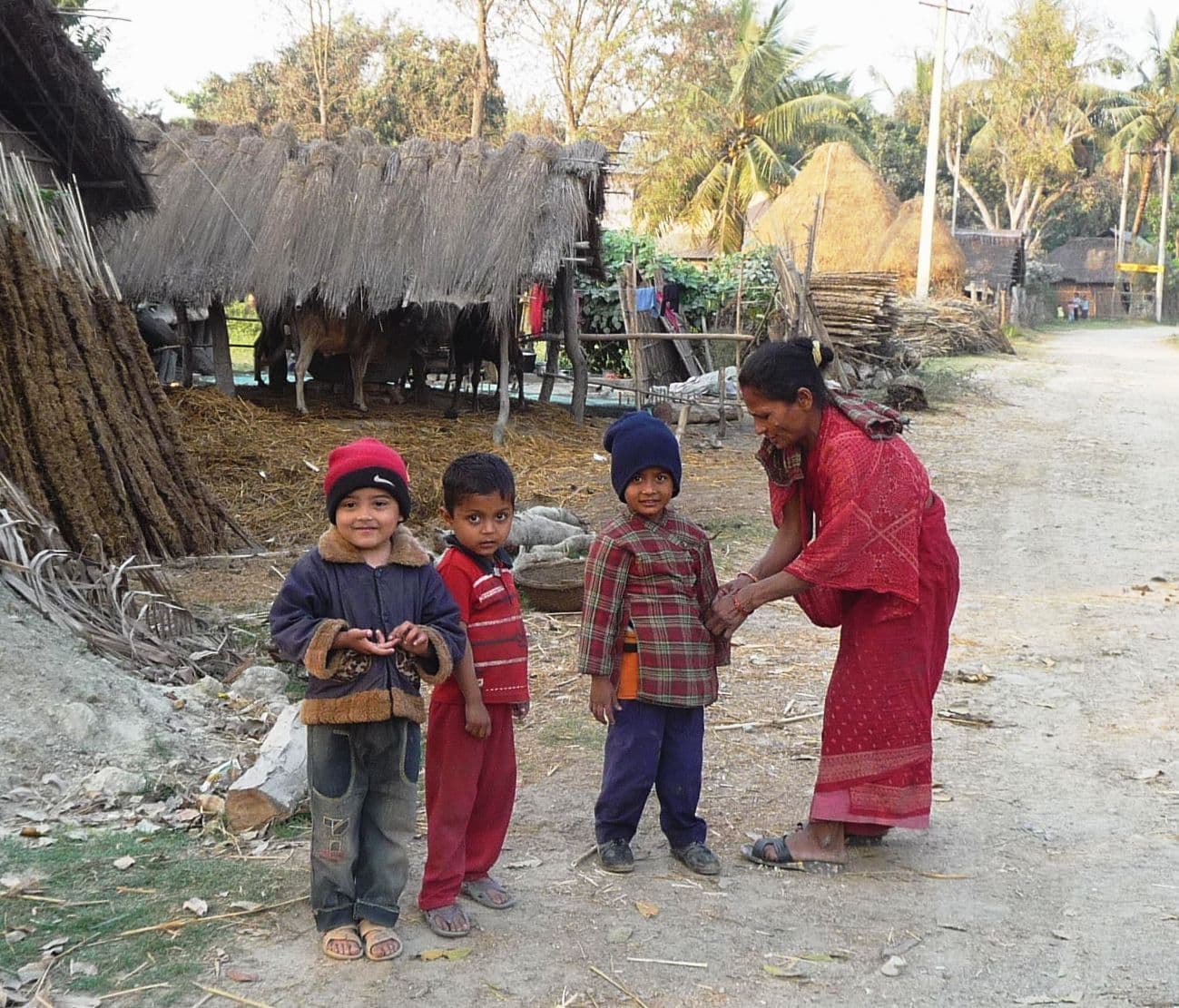
This story reflects real families, real journeys, and real barriers. Your support helps our teams show up where care is hardest to reach.
Support this work