
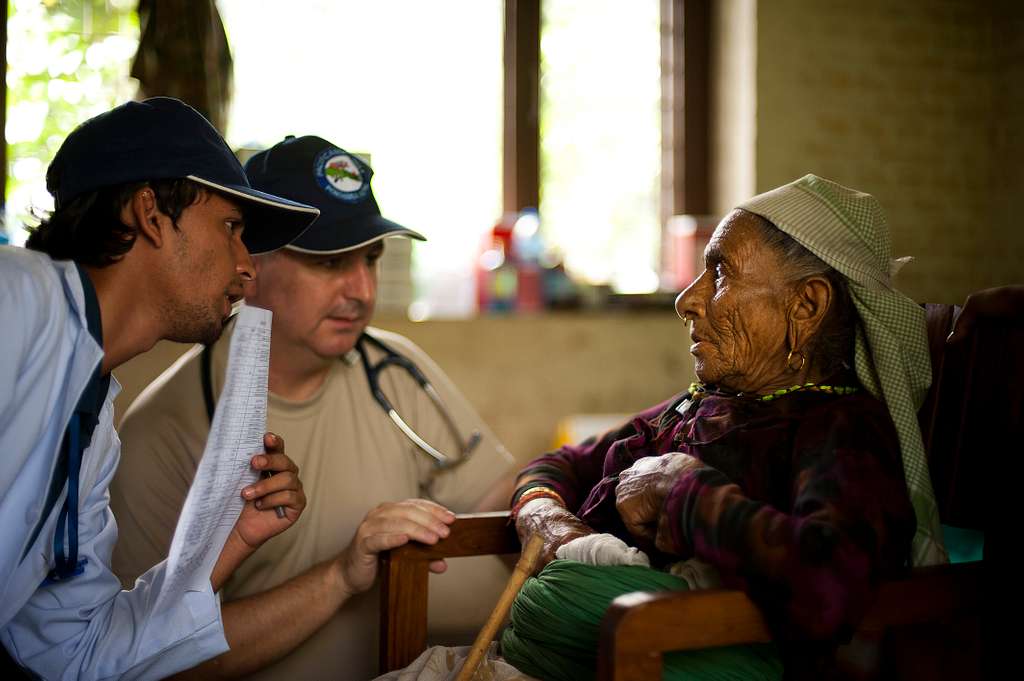
Nepal stands at a critical juncture in its healthcare journey, facing unprecedented challenges that demand revolutionary solutions. As traditional healthcare models strain under mounting pressures, new research published in the Journal of Nepal Medical Association (JNMA) reveals a complex web of challenges – and potential solutions – that could reshape healthcare delivery in this Himalayan nation of 30 million people.
Part I: The Gathering Storm - A Healthcare System Under Pressure
The Demographic Time Bomb
In the serene valleys and towering mountains of Nepal, a quiet crisis is unfolding. The nation's elderly population is growing at an unprecedented rate – from 4.2% in 2001 to 5.8% in 2019, with projections reaching 7.1% by 2030. This demographic shift isn't just a number; it represents a fundamental challenge to Nepal's healthcare infrastructure.
"We're witnessing a transformation that our current healthcare system wasn't designed to handle," explains Dr. Pramila Rai, the study's lead researcher. "The combination of an aging population and rising chronic diseases creates a perfect storm that threatens to overwhelm our healthcare infrastructure."
The Double Burden of Disease
Unlike developed nations that completed their epidemiological transition decades ago, Nepal faces a unique challenge: the simultaneous burden of both chronic and infectious diseases. Cardiovascular disease and chronic obstructive pulmonary diseases have emerged as the leading causes of death and disability, while the country continues to battle traditional infectious diseases.
"This double burden stretches our resources to the breaking point," notes Dr. Rachelle Buchbinder, a co-author of the study. "We're essentially running two healthcare systems simultaneously – one for chronic diseases and another for infectious diseases."
Part II: The Economic Conundrum
The Financial Burden on Families
The economics of healthcare in Nepal tell a story of struggle and inequality. Out-of-pocket payments constitute an overwhelming 54.2% of healthcare expenditure, creating a devastating financial burden on families. This high percentage reflects a deeper systemic issue: the gap between public healthcare provision and actual healthcare needs.
While the government subsidizes basic healthcare services, the reality on the ground is more complex. Public health facilities often lack essential medicines and specialized services, forcing citizens to seek private care at significant personal expense. This creates a two-tiered system where quality healthcare becomes a luxury rather than a right.
The Insurance Experiment
Nepal's national health insurance program, launched in 2016 with high hopes, provides a case study in the challenges of implementing universal healthcare coverage in a developing nation. With enrollment stalled at 21.4% in 2022, the program faces multiple challenges:
Part III: The Human Resource Crisis
A Paradox of Plenty and Scarcity
This situation reflects deeper systemic issues:
Part IV: Innovation as the Path Forward
Rethinking Healthcare Delivery
The research suggests that Nepal's healthcare future lies in innovative "alternative healthcare delivery arrangements." These arrangements represent a fundamental rethinking of how healthcare services are organized and provided.
1. Task Shifting and Role Expansion
One promising approach involves redistributing healthcare tasks among workforce teams:
- Training community health workers for basic healthcare services
- Expanding nurses' roles in primary care
- Utilizing technology for remote consultation and supervision
2. Technology Integration
Telemedicine emerges as a crucial tool for:
- Bridging geographical barriers in rural areas
- Providing specialist consultations remotely
- Enabling continuous medical education
- Supporting healthcare workers in remote locations
3. Community-Based Care Models
Successful community-based programs provide a template for future healthcare delivery:
Integration of local health workers into the formal healthcare system
- Community participation in health service planning
- Cultural sensitivity in healthcare delivery
- Focus on preventive and primary care
Part V: The Path Forward
Essential Priorities
The research identifies several key priorities for sustainable healthcare development:
1. Strengthening Primary Care
2. Healthcare Financing
3. Workforce Development
4. Technology Integration
Conclusion: A Critical Moment
Nepal stands at a critical moment in its healthcare journey. The challenges are significant, but so too are the opportunities for transformation. The research makes clear that innovation in healthcare delivery isn't just an option – it's an imperative for the sustainability of Nepal's healthcare system.
The success of this transformation will depend on the collective effort of policymakers, healthcare providers, and communities working together to implement these innovative solutions while ensuring they remain accessible and affordable for all Nepalese.
We turn urgent updates into field action. Your contribution helps us respond faster with real services, not just headlines.
Support this work