
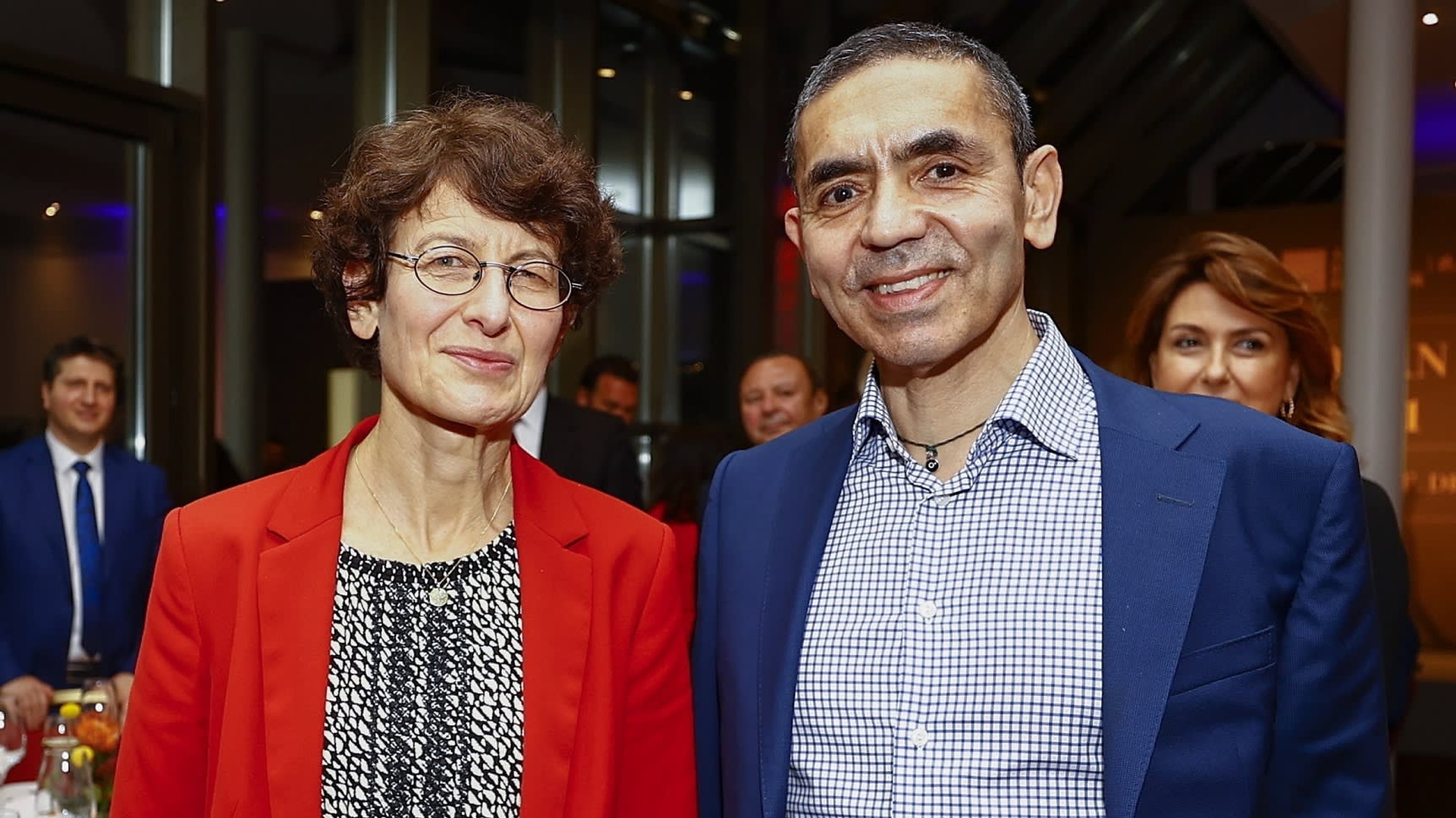
The scientific world is abuzz with news that Uğur Şahin and Özlem Türeci, the visionary husband-and-wife team whose groundbreaking work at BioNTech delivered one of the first and most effective COVID-19 vaccines, are set to embark on a new chapter. The co-founders of the German biotechnology powerhouse are stepping down from their leadership roles to launch an independent mRNA venture, a move that promises to further reshape the landscape of modern medicine and global health. This transition marks a pivotal moment, not just for BioNTech, but for the entire field of biotechnology, as two of its most influential figures redirect their formidable intellect and entrepreneurial spirit towards new frontiers. Their departure signals a deep-seated commitment to pushing the boundaries of mRNA technology, an innovation that has already proven its transformative potential on a global scale.
Şahin and Türeci's journey with BioNTech began long before the world was gripped by a pandemic. Founded in Mainz, Germany, in 2008, BioNTech’s initial focus was pioneering personalized cancer immunotherapies using mRNA. Their ambition was to harness the body's own immune system to fight disease, tailoring treatments to individual patients' unique genetic profiles. This foundational work in mRNA technology, meticulously developed over more than a decade, laid the essential groundwork for their rapid response to the emerging SARS-CoV-2 threat. When the novel coronavirus began its relentless spread across continents in late 2019 and early 2020, Şahin and Türeci swiftly pivoted their research, recognizing the urgent need for a vaccine. Project Lightspeed, as their vaccine development effort was dubbed, epitomized scientific agility and unwavering dedication.
The speed at which BioNTech, in collaboration with Pfizer, developed and deployed their mRNA-based COVID-19 vaccine was unprecedented in medical history. Within months, clinical trials demonstrated remarkable efficacy, and by late 2020, the vaccine began rolling out globally, offering a critical shield against the devastating virus. This achievement not only saved countless lives and mitigated the pandemic's severity but also validated mRNA as a powerful therapeutic platform, moving it from a promising but niche area of research into the mainstream of pharmaceutical innovation. The success of the BioNTech-Pfizer vaccine fundamentally altered public perception and scientific investment in mRNA technology, opening doors to a vast array of potential applications beyond infectious diseases. Their leadership during this period cemented their status as global health heroes, demonstrating how scientific ingenuity, when coupled with a clear vision, can address humanity's most pressing challenges.
The decision by Şahin and Türeci to leave BioNTech and establish a new mRNA venture is driven by a profound desire to explore uncharted territories within the realm of genetic medicine. While BioNTech continues to thrive with a robust pipeline and established infrastructure, the founders’ move suggests a yearning for the agility and focused innovation characteristic of a startup environment. It is likely that their new enterprise will delve into areas where mRNA technology holds immense, yet still largely untapped, potential. This could include highly personalized cancer vaccines that are even more sophisticated than their earlier work, targeting specific tumor mutations with unprecedented precision. Furthermore, their new focus might extend to complex autoimmune diseases, where mRNA could be engineered to modulate immune responses, or even rare genetic disorders, offering the promise of correcting underlying genetic defects. The freedom of a new venture allows them to pursue high-risk, high-reward research without the broader corporate responsibilities of a large, publicly traded company.
The broader implications of this move for the future of mRNA technology are profound. The success of the COVID-19 vaccines has ignited a global race to develop mRNA-based therapies for a multitude of conditions. Beyond infectious diseases like influenza, RSV, HIV, and malaria, where mRNA vaccines are already in various stages of development, the technology's versatility is being explored in areas previously considered intractable. In oncology, personalized mRNA vaccines are being designed to train a patient's immune system to recognize and destroy cancer cells, offering a paradigm shift in cancer treatment. The potential extends to gene editing, where mRNA could deliver instructions for cellular machinery to repair or replace faulty genes, and even to regenerative medicine, prompting the body to produce therapeutic proteins or regenerate damaged tissues. Şahin and Türeci's new venture will undoubtedly contribute to this accelerating wave of innovation, potentially pioneering breakthroughs that could redefine how we treat a wide spectrum of human ailments.
For BioNTech itself, the departure of its iconic founders marks a significant transition, yet the company is well-positioned for continued success. Having built a formidable scientific team, established state-of-the-art manufacturing capabilities, and secured a strong financial footing, BioNTech possesses the infrastructure and talent to sustain its momentum. The company has a diverse pipeline of oncology candidates, infectious disease vaccines, and rare disease therapies, ensuring its continued relevance in the biopharmaceutical landscape. While the visionary leadership of Şahin and Türeci will be missed, their foundational contributions have instilled a culture of innovation and scientific rigor that is likely to endure. The transition will necessitate a strategic realignment and potentially new leadership appointments, but the core mission and scientific direction are expected to remain robust.
From a global health perspective, the emergence of a new, highly focused mRNA research entity led by such accomplished scientists presents both opportunities and challenges. On one hand, it represents a potential acceleration of discovery, pushing the boundaries of what mRNA can achieve. This "brain drain" from an established entity to a nimble startup could foster a new wave of disruptive innovation, benefiting patients worldwide. On the other hand, it underscores the critical need for robust global frameworks to ensure equitable access to these potentially life-saving technologies. The lessons learned from the COVID-19 pandemic regarding vaccine equity must inform future development and distribution strategies. Philanthropic foundations, international organizations, and national governments will play a crucial role in supporting research, facilitating technology transfer, and advocating for policies that ensure these advanced therapies reach all who need them, regardless of their economic status or geographic location.
However, the path forward for mRNA technology is not without its hurdles. The cost of developing and deploying highly personalized or complex mRNA therapies remains substantial, posing significant challenges for affordability and widespread access, especially in low-income settings. Regulatory pathways for novel mRNA applications, particularly in areas like gene editing, are still evolving and require careful navigation. Ethical considerations surrounding genetic interventions and the long-term societal impacts of such powerful technologies also demand thoughtful deliberation and public engagement. Şahin and Türeci’s new venture will operate within this complex ecosystem, facing the dual imperative of scientific advancement and responsible innovation.
In conclusion, the decision by Uğur Şahin and Özlem Türeci to step down from BioNTech and launch a new mRNA venture is more than just a corporate announcement; it is a declaration of continued scientific ambition. Their pioneering work during the pandemic not only demonstrated the immense power of mRNA technology but also inspired a generation of scientists and entrepreneurs. As they embark on this new journey, the global community watches with anticipation, hopeful that their renewed focus will unlock further breakthroughs in personalized medicine, disease prevention, and therapeutic interventions. Their legacy at BioNTech is secure, but their future endeavors promise to write an even bolder chapter in the ongoing revolution of biotechnology, offering renewed hope for addressing some of humanity's most persistent health challenges on a global scale. The story of mRNA, championed by these two extraordinary scientists, is far from over; indeed, it appears to be entering its most exciting phase yet.
Support Nivaran Foundation's independent journalism on global health breakthroughs and educational advancements.
Support this work