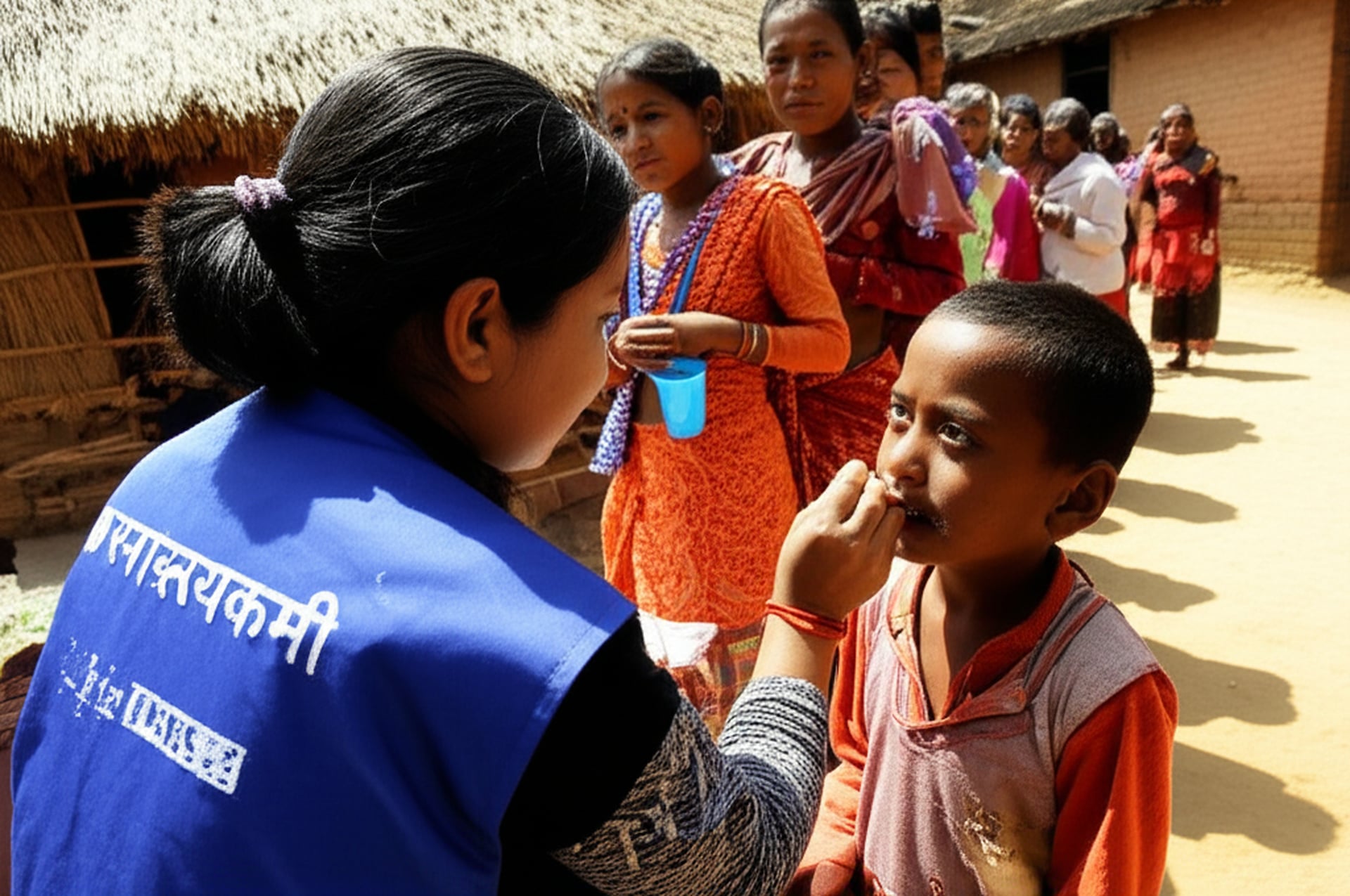
Nepal is intensifying its national campaign to eliminate lymphatic filariasis, a debilitating neglected tropical disease, by the World Health Organization's 2030 target. This ambitious public health initiative marks a pivotal moment for the Himalayan nation, where the disease, often known as elephantiasis, has historically burdened communities, particularly in the Terai plains. The government, in close collaboration with international partners and a dedicated network of health workers, is leveraging years of experience to overcome persistent challenges. This renewed focus underscores Nepal's commitment to creating a healthier future, free from preventable diseases that disproportionately affect its most vulnerable populations. The journey towards 2030, while complex, promises a transformative impact on countless Nepali citizens, reflecting a deep resolve to achieve this monumental public health victory.
Lymphatic filariasis is a parasitic disease transmitted by infected mosquitoes, where thread-like worms reside in the human lymphatic system. Initially asymptomatic, the infection eventually causes severe and irreversible damage, leading to chronic and painful conditions. The most recognized manifestation is lymphedema, characterized by abnormal swelling of limbs, breasts, or genitalia, commonly known as elephantiasis. This disfiguring ailment causes immense physical discomfort, disability, and significant social stigma, leading to isolation and psychological distress. Men can also develop hydrocele, a painful swelling of the scrotum. These chronic conditions severely impact an individual's ability to work, attend school, or participate in community life, perpetuating poverty. Children are vulnerable to infection, though symptoms may appear later, making early intervention crucial to break the transmission cycle. In Nepal, the warm, humid climate of the Terai region provides ideal breeding grounds for mosquito vectors, concentrating the disease in specific areas.
Nepal's battle against lymphatic filariasis spans decades, with the disease identified as a public health concern in the mid-20th century, endemic across numerous southern districts. Early control programs focused on vector control, but these fragmented approaches proved insufficient. The turning point came with the global adoption of Mass Drug Administration (MDA) as the cornerstone strategy. Nepal launched its national elimination program in 2003, committing to WHO's global strategy. This involved systematic distribution of anti-filarial drugs to entire populations in endemic districts for several consecutive years. Initial MDA rounds faced considerable hurdles, including logistical challenges in reaching remote communities, ensuring high drug coverage, and overcoming public misconceptions or reluctance. Geographical barriers and inconsistent awareness campaigns sometimes led to low compliance. Despite these obstacles, the program made significant inroads, reducing infection prevalence. Lessons learned have refined current strategies, emphasizing robust community engagement, improved surveillance, and adaptive implementation tailored to Nepal's unique socio-cultural and geographical landscape.
The core of Nepal's intensified push is the comprehensive Mass Drug Administration (MDA) strategy. This involves annual distribution of Diethylcarbamazine (DEC) and Albendazole to all eligible individuals in endemic areas. The goal is to reduce microfilarial load, breaking the transmission chain by preventing mosquitoes from picking up parasites. Effective MDA requires at least 65% coverage sustained for five to seven consecutive years. Nepal systematically implements MDA rounds, monitoring coverage and impact. Beyond drug distribution, the strategy includes enhanced surveillance systems to detect lingering infections and verify transmission absence post-MDA. Transmission Assessment Surveys (TAS) are conducted to determine if infection prevalence among children has fallen below thresholds, allowing MDA cessation. A significant emphasis is also placed on morbidity management and disability prevention (MMDP). This involves providing care for chronic lymphedema and hydrocele patients, offering surgical interventions for hydrocele, and educating lymphedema patients on self-care practices to manage swelling and prevent secondary infections. This holistic approach addresses both prevention and care, ensuring a comprehensive public health response.
The World Health Organization (WHO) is indispensable in Nepal's lymphatic filariasis elimination program, offering critical technical guidance, strategic oversight, and advocacy. WHO sets international standards, ensuring Nepal's strategy aligns with global best practices. Its support includes national action plan development, personnel training, surveillance strengthening, and facilitating access to essential anti-filarial drugs through global donation programs. WHO also monitors MDA progress and validates elimination. A consortium of international non-governmental organizations, bilateral agencies, and research institutions further contributes, providing financial resources, logistical support, and specialized expertise in social mobilization, health education, and operational research. These partners bridge resource gaps, enhance local health system capacity, and introduce innovative approaches. Their involvement in developing culturally sensitive communication materials and supporting surgical camps is vital for sustaining momentum. This multi-stakeholder collaboration forms the bedrock of Nepal's success in tackling this complex public health challenge.
The success of Nepal's public health campaigns hinges on robust community engagement and the dedication of frontline health workers. Female Community Health Volunteers (FCHVs) are the backbone of the lymphatic filariasis program. These trusted women, deeply embedded in their communities, go door-to-door, often traversing difficult terrain, to distribute drugs, educate families, and address concerns. Their intimate knowledge of local customs and languages makes them uniquely effective in fostering trust and encouraging MDA participation, making high coverage rates in diverse and remote communities achievable. Other local health workers, including auxiliary nurse-midwives and health assistants, supervise drug administration, manage side effects, and conduct follow-up. They organize community distribution points and awareness campaigns in schools. Overcoming "drug fatigue"—reluctance to participate in repeated MDA rounds—is a challenge. Health workers employ consistent messaging, testimonials, and link MDA to broader health benefits to maintain high compliance. Their persistent advocacy transforms national policy into tangible health outcomes at the grassroots level.
Nepal's path to filariasis elimination by 2030 faces formidable challenges. The country's diverse and often difficult geography makes reaching every eligible individual in remote mountainous or sparsely populated areas logistically complex. Ensuring cold chain for drug transport, especially with limited infrastructure, is critical. The program addresses this by leveraging local government structures, community networks, and innovative transport solutions. Maintaining consistently high MDA coverage and compliance is another hurdle. Internal migration for seasonal work can lead to missed populations, while misconceptions, fear of side effects, or lack of understanding about the disease's asymptomatic nature can cause reluctance. Intensive social mobilization campaigns, utilizing local media, religious leaders, and community influencers, disseminate accurate information and address specific cultural concerns. Morbidity management and disability prevention (MMDP) also remain ongoing. While hydrocele surgeries are effective, long-term care for lymphedema patients requires sustained health education and integration of self-care into routine healthcare. Post-MDA surveillance demands robust laboratory capacity and trained personnel for rapid response to detect any resurgence. Continuous investment in training, infrastructure, and community-led initiatives is paramount.
Achieving lymphatic filariasis elimination by 2030 would be a monumental public health triumph for Nepal, ending suffering and economic hardship for generations. The impact would be profound: millions spared debilitating physical deformities, reduced chronic pain, disability, and secondary infections. This would improve individual quality of life and alleviate the burden on the national healthcare system, freeing resources for other priorities. Elimination would also dismantle the social stigma associated with the disease, fostering greater inclusion and dignity. Economically, a filariasis-free Nepal would unlock significant potential. Individuals, particularly in agricultural and labor-intensive sectors, would regain full productivity, boosting household incomes and national development. Reduced healthcare expenditures would free funds for other initiatives. Success would bolster Nepal's global health standing, showcasing its capacity to tackle complex challenges through sustained political will, effective partnerships, and dedicated community action. The vision for 2030 is a future where no Nepali suffers from this preventable disease, where communities are healthier, more resilient, and better equipped for socio-economic advancement, embodying "Swasthya Nepal, Samriddha Nepal" – Healthy Nepal, Prosperous Nepal.
Nepal's unwavering commitment to eliminating lymphatic filariasis by 2030 is a testament to its dedication to public health. This ambitious goal, supported by WHO and international partners, represents a concerted effort to rid the nation of a disease that has long hindered human potential. Through strategic Mass Drug Administration, robust surveillance, critical morbidity management, and the tireless work of frontline health volunteers, Nepal is steadily progressing. While challenges persist, the adaptive strategies and collaborative spirit offer a strong foundation for success. The eradication of lymphatic filariasis will liberate millions from suffering and stigma, serving as a powerful catalyst for broader socio-economic development, paving the way for a healthier, more prosperous Nepal where every individual can thrive. The destination—a filariasis-free Nepal—is within reach, promising a brighter future for generations to come.
Support Nivaran Foundation's efforts in strengthening Nepal's public health infrastructure and disease elimination programs.
Support this work