
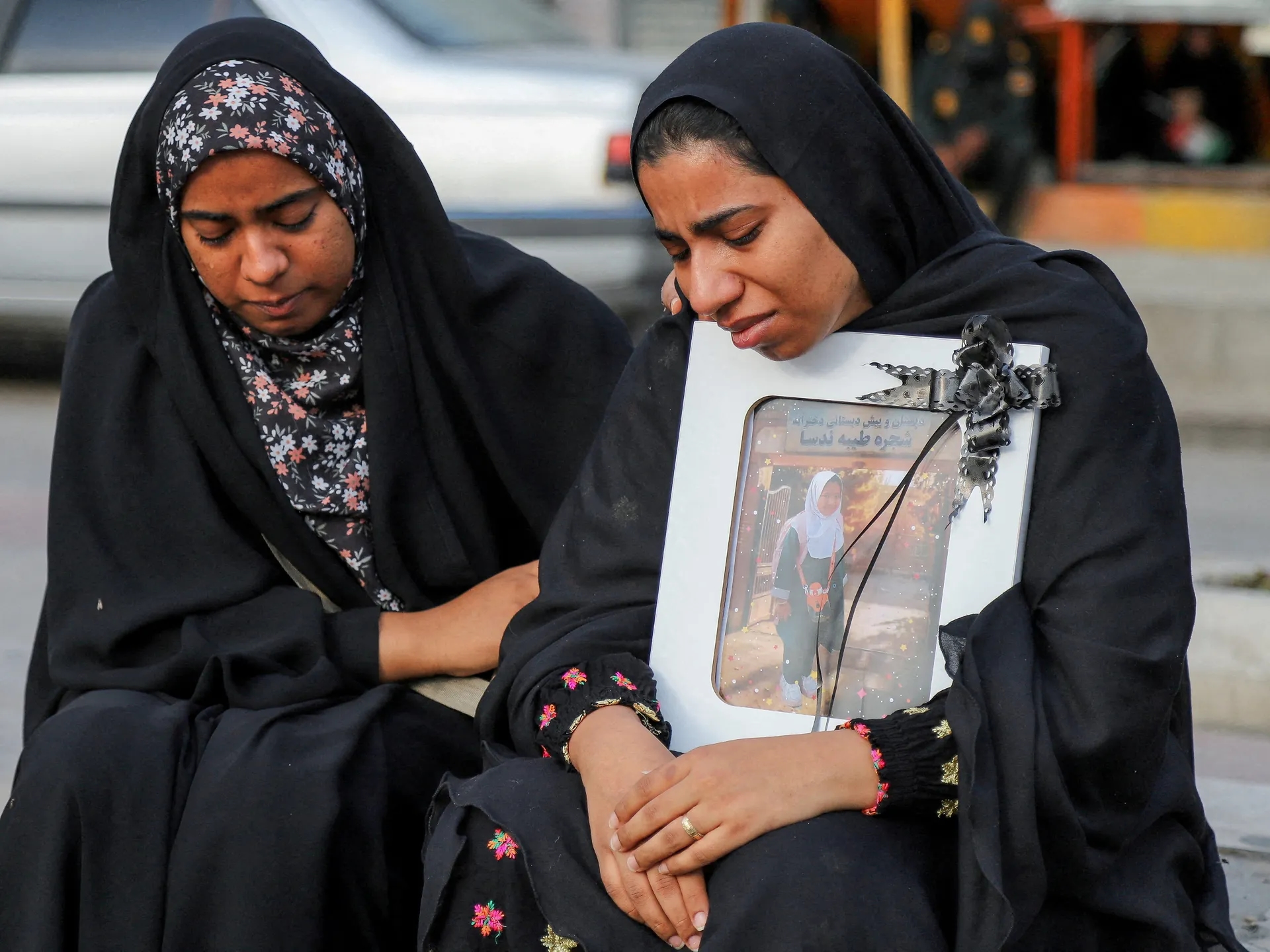
The global community has been gripped by alarming reports from Iran, where two educational institutions in the city of Parand, situated southwest of the capital Tehran, were reportedly struck by missiles. Iranian state media attributed the recent assault to forces from the United States and Israel, marking a significant and deeply concerning escalation in the protracted regional conflict. This incident, which occurred on March 5, 2026, comes barely a week after a previous, devastating attack claimed 165 lives, underscoring a perilous trajectory of violence that increasingly targets civilian infrastructure and exacts a heavy toll on non-combatants.
The strike on schools represents a grave violation of international humanitarian law and a direct assault on the fundamental right to education. Schools, by their very nature, are designated as safe havens, places of learning and development, and their targeting carries profound implications for the future of a generation already grappling with the instability of ongoing hostilities. Initial reports indicate substantial damage to the school buildings, rendering them unusable and disrupting the educational routines of hundreds, if not thousands, of students. The immediate aftermath of such an event is characterized by chaos, fear, and uncertainty, as communities scramble to assess the damage, ensure the safety of their children, and come to terms with the destruction of vital public services.
Beyond the immediate physical destruction, the psychological impact on students, teachers, and the wider community is immense and long-lasting. Children exposed to such violence often suffer from post-traumatic stress disorder, anxiety, and depression, hindering their ability to learn and thrive. The sense of security that a school is meant to provide is shattered, replaced by a pervasive fear that can permeate every aspect of their lives. Teachers, who often serve as pillars of stability in times of crisis, are themselves traumatized, facing the daunting task of supporting their students while grappling with their own experiences of fear and loss. The disruption to education extends far beyond the physical closure of buildings; it erodes the very fabric of society, denying children the tools they need to rebuild their lives and contribute to a peaceful future.
This latest attack must be viewed within the broader context of a simmering conflict that has repeatedly flared into open hostilities, with devastating consequences for civilian populations. The region has been a crucible of geopolitical tensions, with various state and non-state actors engaged in a complex web of rivalries and proxy conflicts. The attribution of this particular strike to the United States and Israel by Iranian media, if confirmed, would signify a dangerous intensification of direct engagement, further complicating efforts towards de-escalation and regional stability. Such actions risk pushing an already volatile situation towards a wider, more destructive confrontation, with global ramifications. The international community has consistently called for restraint and adherence to the principles of international law, yet these pleas often seem to fall on deaf ears amidst the clamor of conflict.
International humanitarian law, specifically the Geneva Conventions and their Additional Protocols, unequivocally prohibits attacks on civilian objects, including schools, unless they are being used for military purposes. Even in such exceptional circumstances, the principle of proportionality must be strictly observed, minimizing harm to civilians and civilian infrastructure. The deliberate targeting of educational facilities is considered a war crime, a grave breach of the laws of armed conflict designed to protect the most vulnerable during wartime. The destruction of schools not only deprives children of their right to education but also inflicts collective punishment on communities, undermining their capacity for recovery and resilience. Organizations like UNICEF and UNESCO have tirelessly advocated for the protection of schools as zones of peace, emphasizing their critical role in providing stability and hope amidst conflict.
The humanitarian implications of such strikes are profound. Beyond the immediate casualties and injuries, the displacement of families, the disruption of essential services, and the exacerbation of existing vulnerabilities create a cascading crisis. Access to medical care, clean water, and food becomes increasingly challenging in conflict-affected areas. For children, the loss of schooling often means a heightened risk of child labor, early marriage, recruitment into armed groups, and other forms of exploitation. Humanitarian aid organizations face immense obstacles in delivering assistance, navigating dangerous landscapes and bureaucratic hurdles. The Nivaran Foundation, committed to safeguarding health and education globally, recognizes the urgent need for robust humanitarian responses that prioritize the protection of children and the restoration of essential services in such dire circumstances.
The geopolitical ramifications of an attack on schools, particularly one attributed to major international players, are far-reaching. It not only fuels anti-Western sentiment within Iran but also risks galvanizing support for retaliatory actions, perpetuating a cycle of violence. Regional allies and adversaries alike will be closely watching, potentially adjusting their own strategic calculations in response. The incident could further complicate international diplomatic efforts to de-escalate tensions, revive dialogue, and find peaceful resolutions to the underlying conflicts. Global powers, including the United Nations Security Council, are expected to address such grave breaches of international law, though the effectiveness of their condemnations often depends on the political will of member states. The erosion of international norms regarding the protection of civilians and civilian infrastructure sets a dangerous precedent, potentially emboldening other actors to disregard these vital safeguards in future conflicts.
In conclusion, the missile strikes on two schools near Tehran represent a tragic and alarming development in an already volatile region. They underscore the devastating human cost of armed conflict, particularly when civilian infrastructure, meant to nurture and protect the youngest members of society, becomes a target. The international community bears a collective responsibility to uphold the principles of international humanitarian law, ensure accountability for those who violate them, and work tirelessly towards de-escalation and lasting peace. Protecting education in times of conflict is not merely an act of compassion; it is an investment in stability, recovery, and the future of humanity. The Nivaran Foundation reiterates its unwavering call for the immediate cessation of hostilities that endanger civilians and their vital institutions, advocating for a world where every child can learn in safety and peace.
Support Nivaran Foundation's efforts to protect education and provide humanitarian aid to children affected by conflict worldwide.
Support this work