
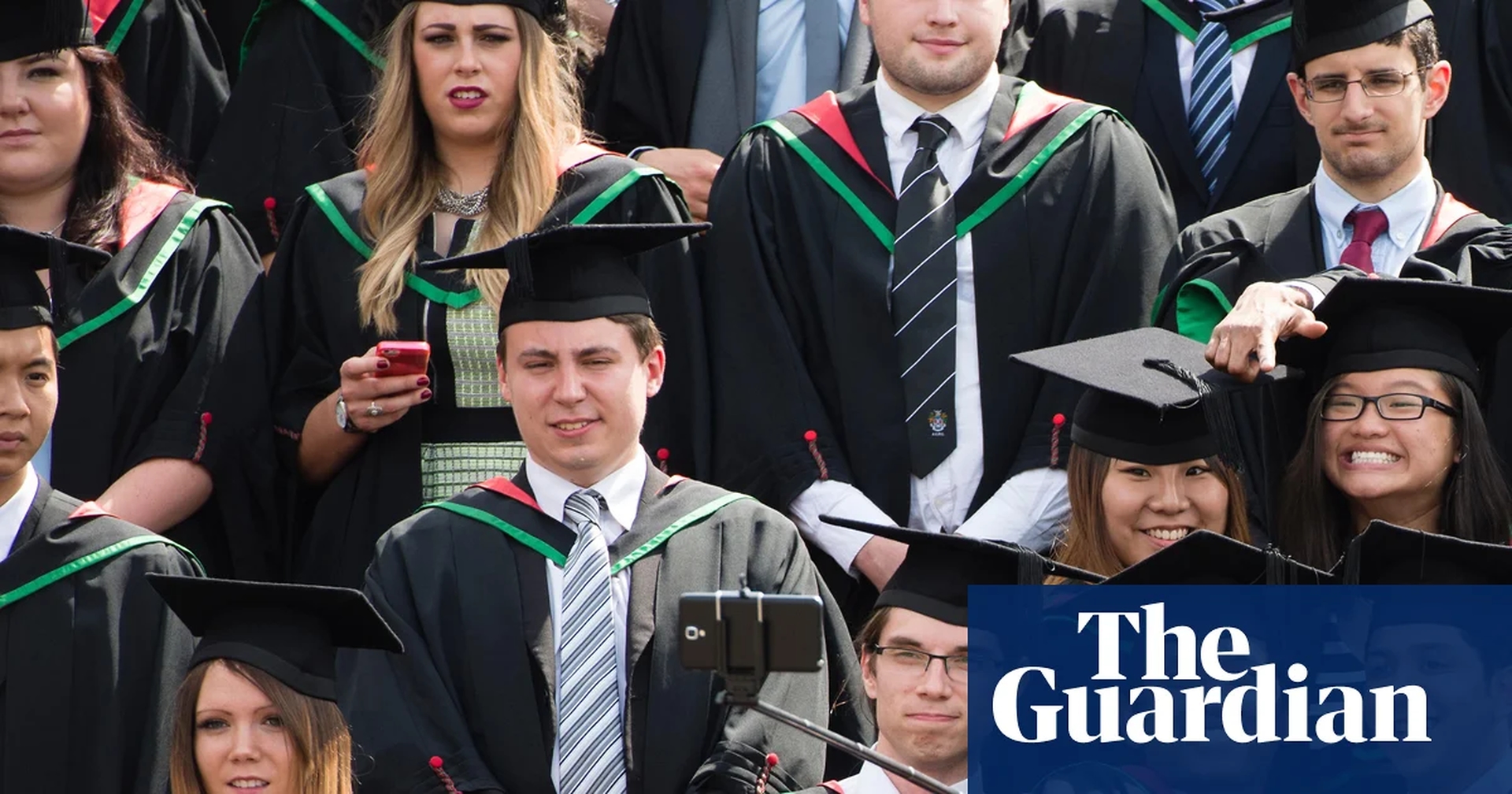
The global landscape of higher education is at a critical juncture, with a growing chorus of voices questioning whether the promise of a university degree still holds true for a generation burdened by escalating debt and uncertain economic prospects. What was once widely considered an indispensable pathway to success and upward mobility is increasingly viewed by many as a financial gamble, leaving graduates grappling with significant repayments long after their studies conclude. This re-evaluation is not confined to a single nation but resonates across continents, reflecting a systemic challenge in how higher education is financed and valued in the 21st century.
For decades, the narrative surrounding a university education was largely unequivocal: invest in a degree, and you invest in a brighter future. Governments and institutions championed higher education as an engine of economic growth and social progress, encouraging young people to pursue academic qualifications. However, the financial architecture supporting this vision has undergone profound transformations. Many nations have shifted from predominantly publicly funded models, where tuition was minimal or non-existent, to systems heavily reliant on student loans. This transition has privatized much of the cost, placing the onus directly on individual students and their families. The consequences are now coming into sharp focus, revealing a complex web of rising debts, stagnant wage growth in some sectors, and policies that exacerbate financial strain.
A prime example of this evolving challenge can be observed in countries where student loan systems have become particularly entrenched. Here, the financial burden on graduates has intensified dramatically. Policies, such as the freezing of student loan repayment thresholds, mean that individuals on lower and middle incomes are drawn into repayments earlier than anticipated, and for a longer duration. This mechanism, often implemented with little public debate, effectively increases the real value of repayments as inflation erodes purchasing power, while the threshold for earning enough to begin repayment remains fixed. Coupled with spiraling interest rates, which can often outpace inflation and even salary increases, the principal amount owed can feel insurmountable, creating a pervasive sense of financial entrapment. This dynamic is not unique to one country; similar pressures are emerging in various forms across different national contexts, from North America to parts of Europe and Asia, where the cost of higher education continues its upward trajectory.
The chasm between the economic realities faced by graduates and the expectations fostered by the promise of a degree is widening. While a university education still confers advantages in many labor markets, the landscape has become significantly more competitive. Automation, globalization, and rapid technological shifts mean that even graduates with sought-after qualifications may struggle to secure employment commensurate with their investment. Underemployment, where graduates work in roles that do not require their level of education, has become a common experience for many. This mismatch between skills supplied and demanded, combined with the sheer volume of graduates entering the workforce annually, dilutes the premium once associated with a degree, making the return on investment less certain than in previous generations.
The repercussions of this mounting debt extend far beyond mere financial inconvenience; they permeate the social and psychological fabric of a generation. Young adults, burdened by substantial loan obligations, often find their major life milestones delayed. Homeownership, once a common aspiration for those entering professional careers, becomes an elusive dream as mortgage lenders factor in significant student debt. Starting a family, pursuing further education, or even taking career risks like entrepreneurship are often postponed or abandoned due to the perceived financial instability. The constant pressure of debt repayment can also exact a heavy toll on mental health, contributing to stress, anxiety, and a feeling of being perpetually behind. This collective experience shapes not only individual futures but also broader societal trends, potentially impacting economic dynamism and social mobility.
Globally, different approaches to higher education funding offer a spectrum of outcomes and challenges. Some nations maintain largely tuition-free models, often funded through higher taxation, aiming to ensure equitable access regardless of socio-economic background. While these systems may alleviate individual debt burdens, they often face their own pressures, such as funding constraints, capacity limitations, and debates over the quality and responsiveness of public institutions. Other countries employ income-contingent repayment systems, where loan repayments are directly linked to earnings, theoretically offering a safety net for those on lower salaries. However, even these systems can be complex and, if not carefully managed, can still lead to long-term debt accumulation and psychological strain. The diversity of these models underscores the absence of a universally perfect solution, yet highlights the ongoing global struggle to balance access, quality, and affordability.
This global predicament necessitates a critical re-evaluation of the entire higher education model. Beyond simply adjusting loan terms, there is a need to fundamentally rethink the value proposition of a university degree in the contemporary world. Should higher education primarily be a vocational training ground, or does it serve a broader purpose of intellectual development and critical citizenship? Exploring alternative pathways, such as robust vocational training programs, apprenticeships, and flexible lifelong learning initiatives, becomes imperative. These alternatives can offer valuable skills and career opportunities without necessarily incurring the same level of debt, catering to diverse learning styles and career aspirations. Integrating these options more seamlessly into national education frameworks could provide a more resilient and equitable system for future generations.
Policy reforms are urgently needed to ensure that higher education remains an accessible and genuinely transformative experience, rather than a financial quagmire. This involves not only re-examining tuition fee structures and loan interest rates but also exploring innovative funding mechanisms that balance public and private contributions more equitably. Governments, educational institutions, and employers must collaborate to align educational outcomes more closely with labor market demands, ensuring that graduates possess the skills and knowledge truly valued by industries. Furthermore, robust support systems, including career guidance and financial literacy education, are crucial to help students make informed decisions about their academic and financial futures. The goal must be to create a system where the pursuit of knowledge and personal growth is not unduly penalized by overwhelming financial obligations.
In conclusion, the global conversation surrounding the value and cost of a university degree has reached a critical inflection point. The current trajectory, marked by escalating student debt and a growing disillusionment among graduates, poses significant challenges to individual well-being and broader societal progress. Addressing this complex issue requires a concerted, multi-faceted approach that transcends national borders, drawing lessons from diverse global experiences. By fostering greater transparency, implementing fairer financing models, and diversifying educational pathways, societies can work towards a future where higher education truly empowers individuals without entrapping them in a cycle of debt, ensuring that the promise of a degree is a reality for all, not just a fortunate few.
Support Nivaran Foundation's independent journalism on critical global education challenges.
Support this work