
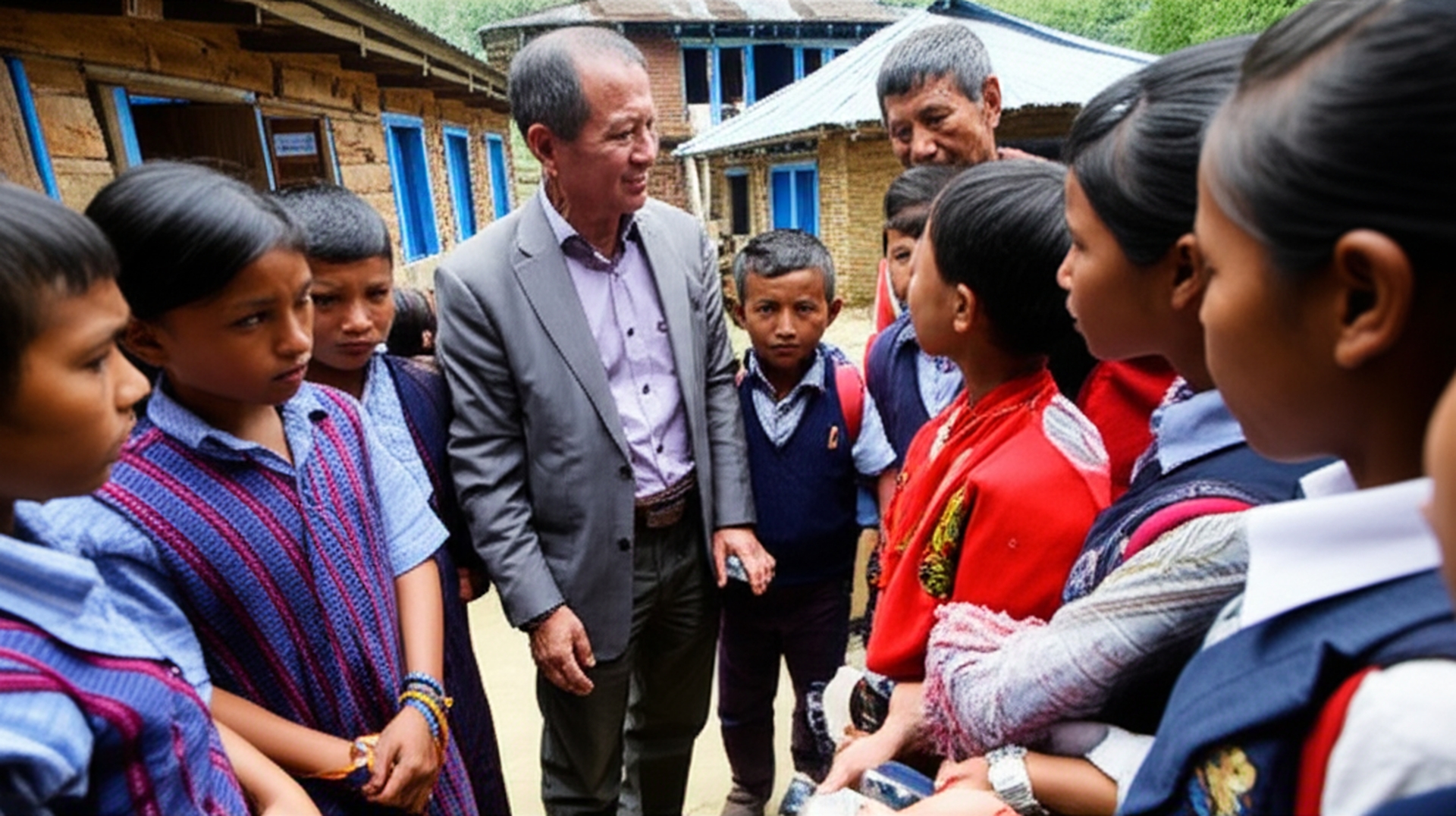
The political landscape of Myagdi district in western Nepal is currently abuzz with the strong lead of Mahabir Pun, a figure synonymous with innovation and transformative rural development. The former education minister's impressive showing in the ongoing electoral count, as reported, underscores a profound public trust rooted in decades of tangible contributions to the nation, particularly in the critical sectors of education and technology. Pun's journey from a remote village in Myagdi to a globally recognized innovator and now a leading political contender offers a compelling narrative of dedication, foresight, and an unwavering commitment to uplifting Nepal's rural heartland. His current electoral success is not merely a political victory but a testament to the enduring impact of his vision for a technologically empowered and educated Nepal, a vision that has consistently prioritized bridging the chasm between urban advancement and rural neglect.
Born in Nangi, a remote village in Myagdi, Mahabir Pun's early life was marked by the very challenges he would later dedicate his life to overcoming. Access to quality education, healthcare, and basic infrastructure was a distant dream for many in such areas. His personal experience with these hardships fueled an intrinsic desire to bring change. Pun's academic journey took him to the United States, where he earned a master's degree in educational management. However, unlike many who opt for lucrative careers abroad, Pun felt an irresistible pull back to his homeland. He returned to Nepal with a singular purpose: to leverage technology and innovation for the betterment of rural communities. This decision, made at a time when Nepal was still grappling with nascent technological adoption, was a bold declaration of his belief in the potential of his people and the power of grassroots initiatives. His initial focus was on his home village, Nangi, transforming it into a living laboratory for his ideas.
One of Pun's most significant and widely acclaimed achievements was his pioneering work in bringing wireless internet connectivity to remote villages across Nepal. Recognizing that information and communication technology (ICT) was a fundamental enabler for development, he embarked on an ambitious project in the late 1990s and early 2000s. With limited resources and immense personal effort, often involving carrying equipment on his back through treacherous mountain trails, Pun established a network of wireless relays that connected dozens of villages, including Nangi, to the internet. This was a monumental undertaking in a country where even basic telephone lines were a luxury in many areas. The impact of this wireless revolution on education was immediate and profound. Schools in these connected villages gained access to a world of online resources, bridging the information gap that had long separated rural students from their urban counterparts. Teachers could access updated pedagogical materials, and students could explore subjects beyond their textbooks, fostering a new era of digital literacy and curiosity. This infrastructure also facilitated telemedicine initiatives and provided crucial communication links for local businesses and communities.
Building on the success of his rural connectivity projects and recognizing the broader need for a platform to nurture Nepali talent, Mahabir Pun spearheaded the establishment of the National Innovation Center (NIC). Founded with the vision of fostering a culture of innovation and entrepreneurship, the NIC has become a beacon for aspiring inventors, researchers, and entrepreneurs across Nepal. The center provides crucial resources, mentorship, and a collaborative environment for developing solutions to local problems. Its work directly impacts education by offering hands-on training, workshops, and incubation programs that encourage practical application of knowledge. Students and young professionals are given the opportunity to transform their ideas into prototypes, ranging from agricultural technologies to biomedical devices and renewable energy solutions. The NIC's emphasis on practical, problem-solving innovation serves as a powerful supplement to traditional academic curricula, inspiring a new generation to think critically and creatively about Nepal's development challenges. It acts as a bridge between theoretical learning and real-world impact, providing a much-needed ecosystem for technological advancement within the country.
Pun's influence on education extends beyond mere connectivity and innovation hubs. His philosophy champions a holistic approach that integrates technology, vocational skills, and community engagement into the learning process. In schools supported by his initiatives, computer labs, often powered by solar energy in off-grid locations, became commonplace. Students were not just learning about computers but with them, developing essential digital skills from an early age. Moreover, Pun recognized the importance of vocational training in a country where many youth seek opportunities abroad due to a lack of employable skills at home. His projects often incorporated practical training in areas like electronics, carpentry, and sustainable agriculture, equipping students with skills that are directly relevant to their local economies. This dual focus on academic excellence and practical aptitude aims to create well-rounded individuals who can contribute meaningfully to their communities, either through higher education or by establishing local enterprises. The emphasis is on making education relevant, accessible, and empowering, ensuring that it serves as a catalyst for socio-economic mobility rather than just a pathway to rote memorization.
Mahabir Pun's current lead in Myagdi is a clear indicator that his decades of selfless service and tangible contributions have resonated deeply with the electorate. Voters in Myagdi, and indeed across Nepal, have witnessed firsthand the transformative power of his initiatives. His political foray is not seen as a typical power grab but rather as an extension of his lifelong mission to serve the nation. The trust he has garnered stems from his proven track record of delivering results, often against immense odds and with minimal external support. His leadership style, characterized by a hands-on approach, transparency, and a deep understanding of grassroots realities, stands in stark contrast to conventional political figures. The electorate appears to be seeking leaders who can offer concrete solutions and a clear vision for development, particularly in areas like education and technology that are crucial for future prosperity. Pun's candidacy offers a promise of continuity for his impactful work, suggesting that his vision, once implemented on a broader scale through political office, could accelerate Nepal's journey towards self-reliance and sustainable development.
Despite the remarkable successes, scaling Mahabir Pun's vision across the entirety of Nepal presents significant challenges. The rugged topography, limited financial resources, and bureaucratic hurdles remain formidable obstacles. Sustained investment in digital infrastructure, teacher training, and curriculum reform is essential to ensure that the benefits of technological integration in education are equitably distributed. Furthermore, fostering a national culture of innovation requires more than just a single center; it demands policy support, intellectual property protection, and access to capital for startups. Pun's political journey, therefore, carries the immense responsibility of translating his localized successes into national policy frameworks. His leadership could potentially galvanize government agencies, private sector entities, and international partners to collaborate more effectively on initiatives that empower rural communities through education and technology. The Myagdi model, where local engagement and technological solutions have driven progress, could serve as a blueprint for other districts striving for similar advancements.
Myagdi district, Mahabir Pun's birthplace and the primary canvas for many of his early projects, stands today as a testament to what dedicated leadership and community effort can achieve. From being a remote, underserved region, Myagdi has emerged as a district with a relatively higher degree of digital literacy and technological awareness, largely thanks to Pun's interventions. The schools in Myagdi that benefited from early wireless internet access and subsequent educational technology initiatives have produced students who are more globally aware and better equipped for the digital age. The local economy, while still predominantly agrarian, has seen nascent growth in tech-enabled services and small-scale innovations. This transformation offers a powerful narrative for other districts in Nepal, demonstrating that geographical remoteness need not be a barrier to progress if coupled with visionary leadership and strategic application of technology. Myagdi's journey under Pun's influence exemplifies the potential for grassroots movements to drive national development, setting a precedent for how education and innovation can be intertwined to foster sustainable growth.
Mahabir Pun's strong electoral performance in Myagdi is more than just a political outcome; it is a powerful affirmation of a development philosophy centered on education, innovation, and rural empowerment. His life's work, from connecting remote villages to the internet to establishing a national innovation hub, has consistently aimed at equipping Nepalis with the tools and knowledge to shape their own futures. As Nepal continues its journey of development, leaders like Pun, who combine practical vision with a deep understanding of local needs, are indispensable. His ongoing influence, whether through direct political office or continued advocacy, promises to further illuminate the path towards a more educated, technologically advanced, and equitable Nepal, ensuring that the benefits of progress reach every corner of the Himalayan nation. The trust placed in him by the people of Myagdi is a clear mandate for a future built on ingenuity, self-reliance, and accessible education for all.
Support Nivaran Foundation's mission to highlight critical developments in Nepal's education sector, inspired by leaders like Mahabir Pun.
Support this work