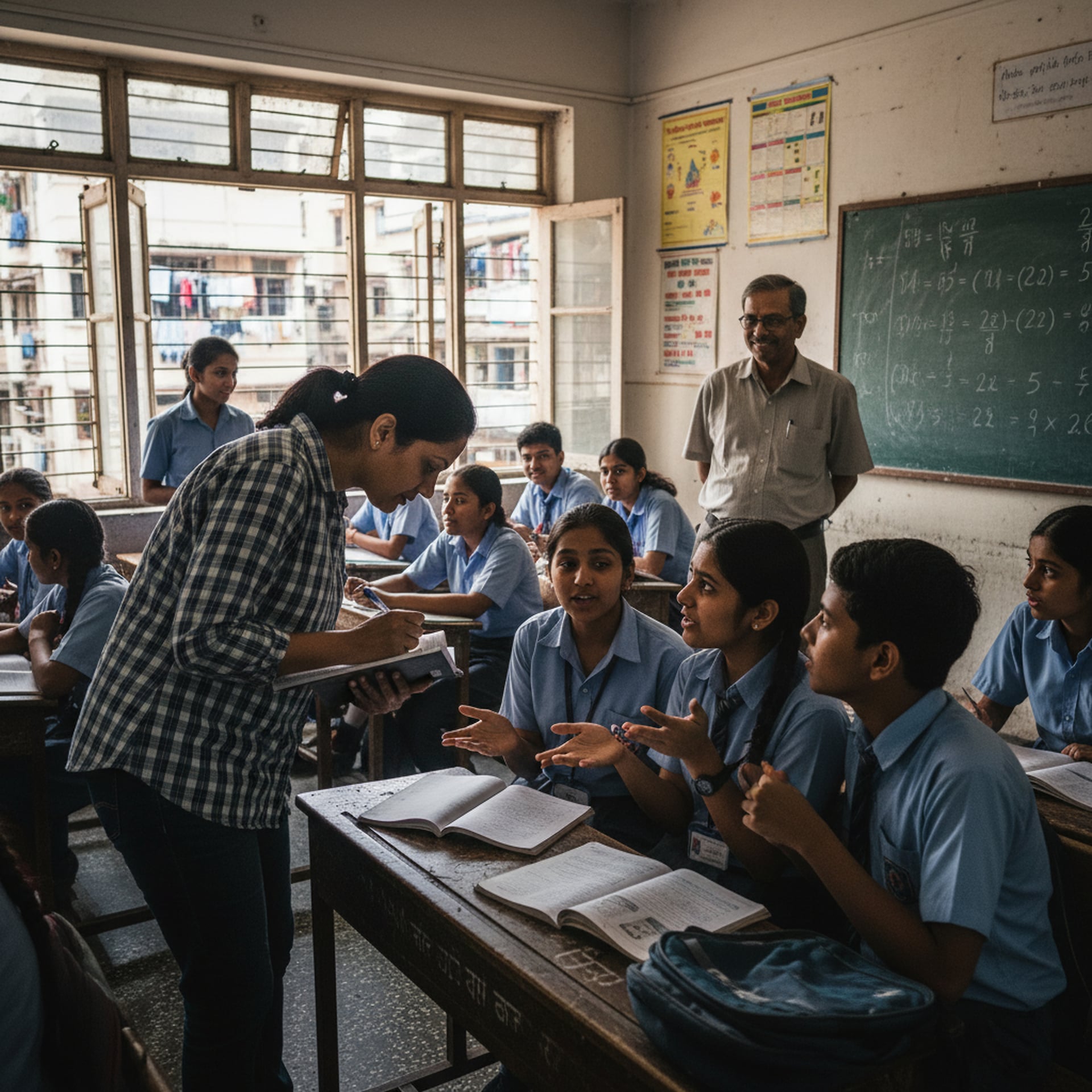
The intricate tapestry of global education systems presents a unique and formidable challenge for journalists dedicated to illuminating their complexities. With millions of students, countless educators, and diverse administrative structures spanning continents, understanding the pulse of learning requires more than just glancing at headlines or official reports. It demands an immersive approach, a commitment to truly "go back to school" in a metaphorical, and often literal, sense – embedding oneself within the very fabric of these institutions to uncover their profound realities.
Consider the scale of educational infrastructure in any of the world's major urban centers, home to school districts serving populations larger than many nations. These sprawling systems, whether in bustling Asian megacities, vibrant Latin American metropolises, or established European capitals, grapple with universal issues: equitable access, quality instruction, teacher retention, curriculum relevance, and the ever-present pressure of budget constraints. Reporting on such a vast and multifaceted beat necessitates a deep dive, moving beyond the superficial to grasp the intricate interplay of policy, pedagogy, and human experience that shapes the lives of students and educators daily.
Effective education journalism transcends the mere reporting of events; it delves into the underlying currents that define educational trajectories. This means spending extensive time within school hallways, classrooms, and administrative offices, not just during moments of crisis or policy announcement, but as a continuous observer. It involves engaging in candid conversations with a diverse spectrum of stakeholders: students sharing their aspirations and frustrations, parents voicing their concerns and hopes, teachers articulating their triumphs and struggles, and administrators navigating the labyrinthine demands of governance and resource allocation. This on-the-ground presence is indispensable for capturing the authentic narratives that often remain hidden beneath layers of official rhetoric.
The methodology of dedicated education reporters mirrors that of an ethnographer or a community organizer, requiring patience, empathy, and an unwavering commitment to understanding multiple perspectives. By immersing themselves in the daily routines of schools, journalists gain invaluable insights into the practical implications of educational policies. They witness firsthand how budget cuts translate into fewer resources for art programs, how new pedagogical approaches impact student engagement, or how mental health support systems, or their absence, affect student well-being. This deep engagement allows for the identification of systemic issues that might otherwise go unnoticed, providing a crucial public service by bringing these challenges to the forefront.
Such in-depth reporting is instrumental in uncovering critical systemic issues that resonate globally. From the persistent challenge of learning loss exacerbated by global pandemics to the digital divide that widens educational disparities, and from the struggle to integrate technology effectively into classrooms to the urgent need for robust teacher training and support, these are not isolated incidents but interconnected global phenomena. A reporter embedded in a local school system can trace the ripple effects of national and international trends, demonstrating how global forces manifest in individual classrooms and communities. This granular understanding is vital for crafting narratives that are both locally relevant and globally resonant.
The most impactful education journalism skillfully weaves together quantitative data with compelling human stories. Statistics on graduation rates, literacy levels, or funding allocations provide the essential context and scale of educational challenges. However, it is the personal accounts – the story of a student overcoming adversity, a teacher innovating against odds, or a community rallying to support its schools – that imbue these numbers with meaning and urgency. Reporters act as conduits, translating complex data into understandable narratives and humanizing the often-abstract world of educational policy, making it accessible and relevant to a broader public.
Furthermore, robust education reporting plays a critical role in fostering accountability and informing public debate. By meticulously investigating how public funds are utilized, scrutinizing the efficacy of new educational initiatives, and highlighting disparities in access and outcomes, journalists empower citizens to demand better from their institutions. This accountability extends to global commitments, such as the United Nations Sustainable Development Goal 4 (SDG 4) for quality education. Through detailed reporting, the public can better understand whether their nations are progressing towards these goals and what obstacles remain. This journalistic vigilance is a cornerstone of democratic societies and a catalyst for positive change.
Crucially, dedicated education reporters prioritize diverse perspectives. They actively seek out the voices of marginalized communities, students with special needs, indigenous populations, and those from socio-economically disadvantaged backgrounds, whose experiences are often overlooked in mainstream discourse. Ensuring that these varied perspectives are heard is not just about fairness; it is about painting a complete and accurate picture of the educational landscape, identifying inequities, and championing inclusive solutions that benefit all learners. This commitment to equity is a guiding principle for responsible global journalism.
Education is not a static field; it is a dynamic, evolving ecosystem. Therefore, education journalism is inherently a long game, requiring sustained attention rather than episodic coverage. It involves tracking the long-term impacts of reforms, monitoring the progress of students over years, and understanding the cyclical nature of educational challenges and innovations. This sustained engagement allows reporters to build deep institutional knowledge, cultivate trust within communities, and provide nuanced analysis that goes beyond fleeting trends. It's about building a comprehensive historical record of educational development and challenges.
The lessons gleaned from reporting on one major school system often hold universal relevance. The challenges faced by teachers in a crowded classroom in one part of the world might echo those in another, albeit with different cultural or economic contexts. The innovative solutions developed in one region for student engagement or parental involvement can offer valuable insights for others. By sharing these stories and analyses, global education journalism fosters a cross-pollination of ideas and best practices, contributing to a collective understanding of how to improve learning outcomes for all.
For organizations like the Nivaran Foundation, which champions global health and education, the role of such dedicated journalism is paramount. Informed communities are empowered communities. When the public understands the intricacies of their education systems – their strengths, weaknesses, and potential – they are better equipped to advocate for necessary reforms, support their schools, and ensure that every child has the opportunity to thrive. This journalistic endeavor directly supports the foundation's mission by creating an informed populace capable of driving positive social change.
In conclusion, the commitment of reporters to deeply immerse themselves in the world of education is more critical than ever. By embracing the challenge of "going back to school," these journalists provide an invaluable service, transforming complex systems into understandable narratives. Their work not only informs but inspires, holding institutions accountable and fostering a global dialogue essential for building resilient, equitable, and high-quality education systems for generations to come.
Support Nivaran Foundation's mission to advance global education and health initiatives through impactful journalism.
Support this work