Nivaran Logo
News

Ergonomics Key to Post-Conflict Workplace Safety in Kurdistan

A new study underscores the vital role of ILO ergonomic checkpoints in bolstering health and safety within small and medium-sized enterprises in regions recovering from conflict.

Ergonomics Key to Post-Conflict Workplace Safety in Kurdistan

In regions grappling with the aftermath of conflict, the journey towards stability and prosperity is multifaceted, demanding attention not only to infrastructure and governance but also to the fundamental well-being of its populace. Small and medium-sized enterprises (SMEs) often form the backbone of these recovering economies, providing essential employment and driving local development. However, these businesses frequently operate under immense pressure, with limited resources, making workplace health and safety a challenging priority. A recent study focusing on the Kurdistan Region of Iraq sheds critical light on how the application of International Labour Organization (ILO) ergonomic checkpoints can significantly enhance health and safety standards in these vital enterprises, offering a blueprint for post-conflict recovery globally.

The Kurdistan Region, having endured decades of conflict and instability, presents a compelling case study for understanding the unique challenges and opportunities in rebuilding sustainable economic ecosystems. SMEs here, much like in other post-conflict zones, are often characterized by informal practices, outdated equipment, and a lack of awareness regarding modern safety protocols. Workers in such environments are disproportionately exposed to occupational hazards, ranging from musculoskeletal disorders due to poor posture and repetitive tasks to injuries from improper material handling and inadequate machine guarding. These issues not only compromise individual worker health and quality of life but also hinder productivity, increase absenteeism, and ultimately impede the long-term growth and resilience of the businesses themselves.

Ergonomics, the science of designing the workplace to fit the worker, rather than forcing the worker to fit the workplace, offers a powerful, cost-effective solution to many of these challenges. It aims to optimize human well-being and overall system performance by reducing physical strain, improving comfort, and enhancing efficiency. In post-conflict settings, where resources are scarce and immediate economic survival is paramount, the notion of investing in ergonomic improvements might seem like a luxury. However, the ILO's ergonomic checkpoints are specifically designed to be practical, low-cost, and easily implementable, making them highly suitable for such contexts. These checkpoints provide a systematic approach to identifying and rectifying common workplace hazards, empowering businesses to make incremental yet impactful changes.

The ILO ergonomic checkpoints cover a broad spectrum of workplace aspects, including material storage and handling, workstation design, lighting, noise control, machine safety, and welfare facilities. For instance, simple adjustments like raising a workbench to an appropriate height, providing anti-fatigue mats, reorganizing tools to reduce reaching, or ensuring adequate lighting can dramatically reduce strain and the risk of injury. The beauty of these checkpoints lies in their simplicity and the emphasis on local solutions, often utilizing existing materials or minor modifications rather than requiring expensive new equipment. This approach fosters a culture of continuous improvement, where workers and managers collaborate to identify hazards and implement practical solutions, thereby building local capacity and ownership over safety initiatives.

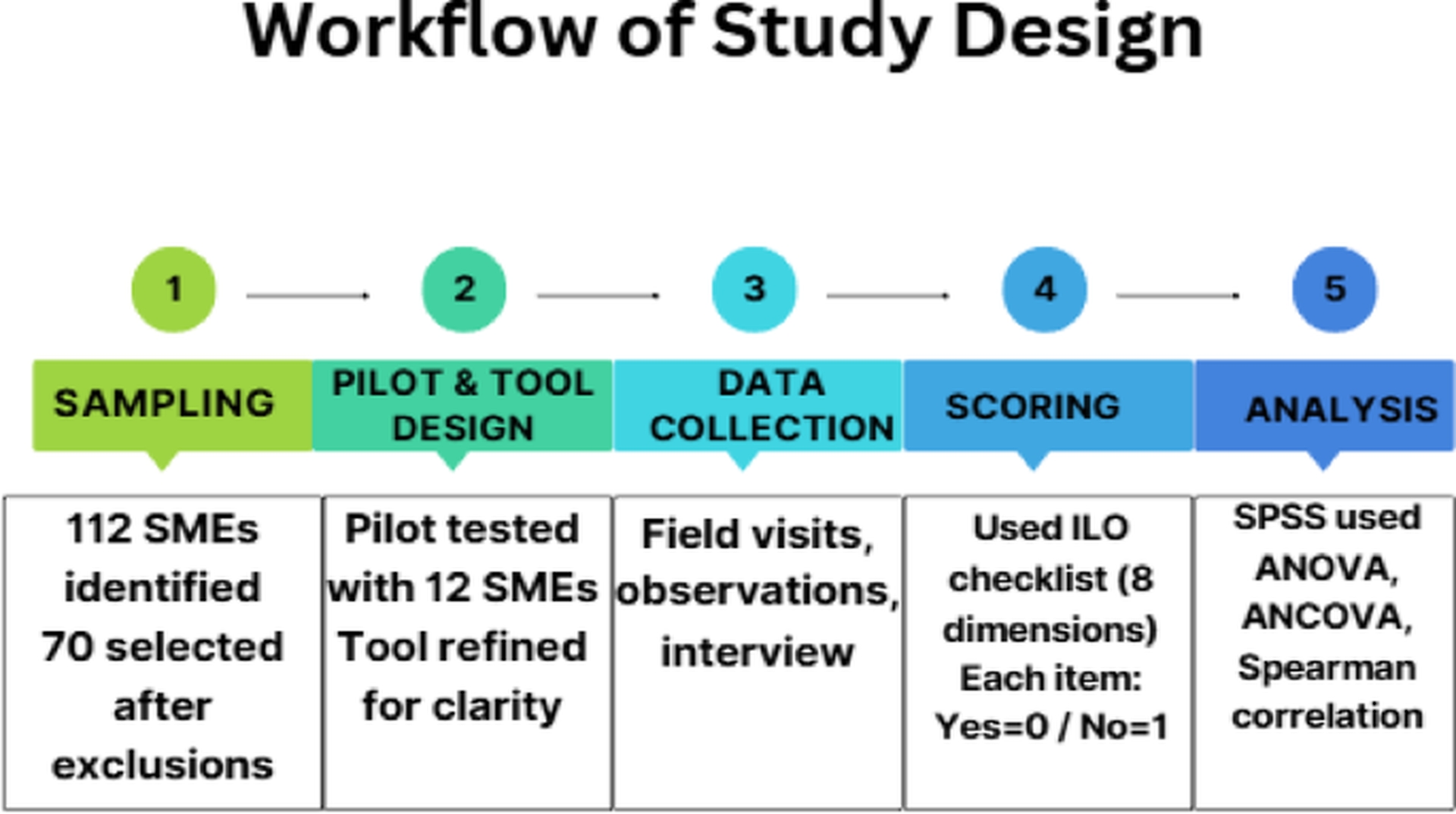
In the Kurdistan Region, the application of these checkpoints involved assessing various SMEs across different sectors. The study likely identified common deficiencies such as poorly designed workstations leading to awkward postures, manual handling of heavy loads without proper aids, inadequate ventilation, and insufficient personal protective equipment. By systematically applying the ILO framework, businesses could pinpoint specific areas for improvement and implement targeted interventions. This hands-on, participatory approach not only addressed immediate safety concerns but also served as an educational tool, raising awareness among both employers and employees about the importance of proactive health and safety management.

The benefits of implementing ergonomic improvements extend far beyond mere compliance. A safer and more comfortable workplace directly translates into increased worker morale, reduced fatigue, and enhanced productivity. When workers feel valued and protected, they are more engaged and less prone to errors or accidents. For SMEs in post-conflict regions, this can mean the difference between struggling to survive and achieving sustainable growth. Reduced injury rates lead to lower healthcare costs, decreased absenteeism, and a more stable workforce. Furthermore, a reputation for good working conditions can attract and retain skilled labor, contributing to the overall human capital development of the region.

However, the path to widespread ergonomic implementation is not without its challenges. A significant hurdle is often a lack of awareness about ergonomics and its benefits, coupled with a prevailing mindset that views safety as an expense rather than an investment. Financial constraints can also deter businesses from making necessary changes, even if they are low-cost. Overcoming these barriers requires sustained educational campaigns, government support, and the establishment of local networks that can provide technical assistance and share best practices. Training programs for managers and workers are crucial to ensure that ergonomic principles are understood and integrated into daily operations.

The findings from the Kurdistan Region of Iraq hold profound global relevance. Many post-conflict zones, from parts of Africa to Southeast Asia, face similar challenges in rebuilding their economies and ensuring worker well-being. The ILO ergonomic checkpoints offer a universally adaptable framework that can be tailored to diverse cultural and economic contexts. By demonstrating their effectiveness in a challenging environment like Kurdistan, this research provides compelling evidence for their broader application as a cornerstone of global health and safety initiatives. It underscores the principle that economic recovery must be intrinsically linked with human dignity and safety, ensuring that development is not only rapid but also equitable and sustainable.

Nivaran Foundation recognizes that a healthy workforce is fundamental to a thriving society and a robust global economy. Initiatives that promote workplace health and safety, particularly in vulnerable regions, align directly with our mission to foster sustainable development through health and education. By supporting the dissemination and implementation of practical tools like the ILO ergonomic checkpoints, we contribute to building resilient communities where individuals can work safely, contribute productively, and lead healthier lives. This proactive approach to occupational health is not merely about preventing injuries; it is about empowering communities to rebuild stronger, healthier, and more prosperous futures.

Ultimately, the study from the Kurdistan Region of Iraq serves as a powerful reminder that even in the most challenging circumstances, significant strides can be made towards improving global health and safety standards. By focusing on practical, accessible, and sustainable solutions like ergonomic checkpoints, we can help SMEs in post-conflict areas not only survive but thrive, creating a ripple effect of positive change that benefits workers, businesses, and entire nations on their path to lasting peace and prosperity.

If this moved you, share it
FacebookLinkedInXWhatsApp

Support Nivaran Foundation's mission to advance global health and education initiatives worldwide.

Support this work

Nivaran logo
Nivaran Foundation Global Desk

Nivaran Foundation global desk bio line

InstagramFacebookLinkedInX
More from the field
News
Global Health and Education Watch: University tuition fees system is a 'mess', says Clegg
News
Navigating the Infodemic: Pediatricians Confront Global Vaccine Misinformation
News
Immersive Journalism: Unveiling Global Education's Complexities