
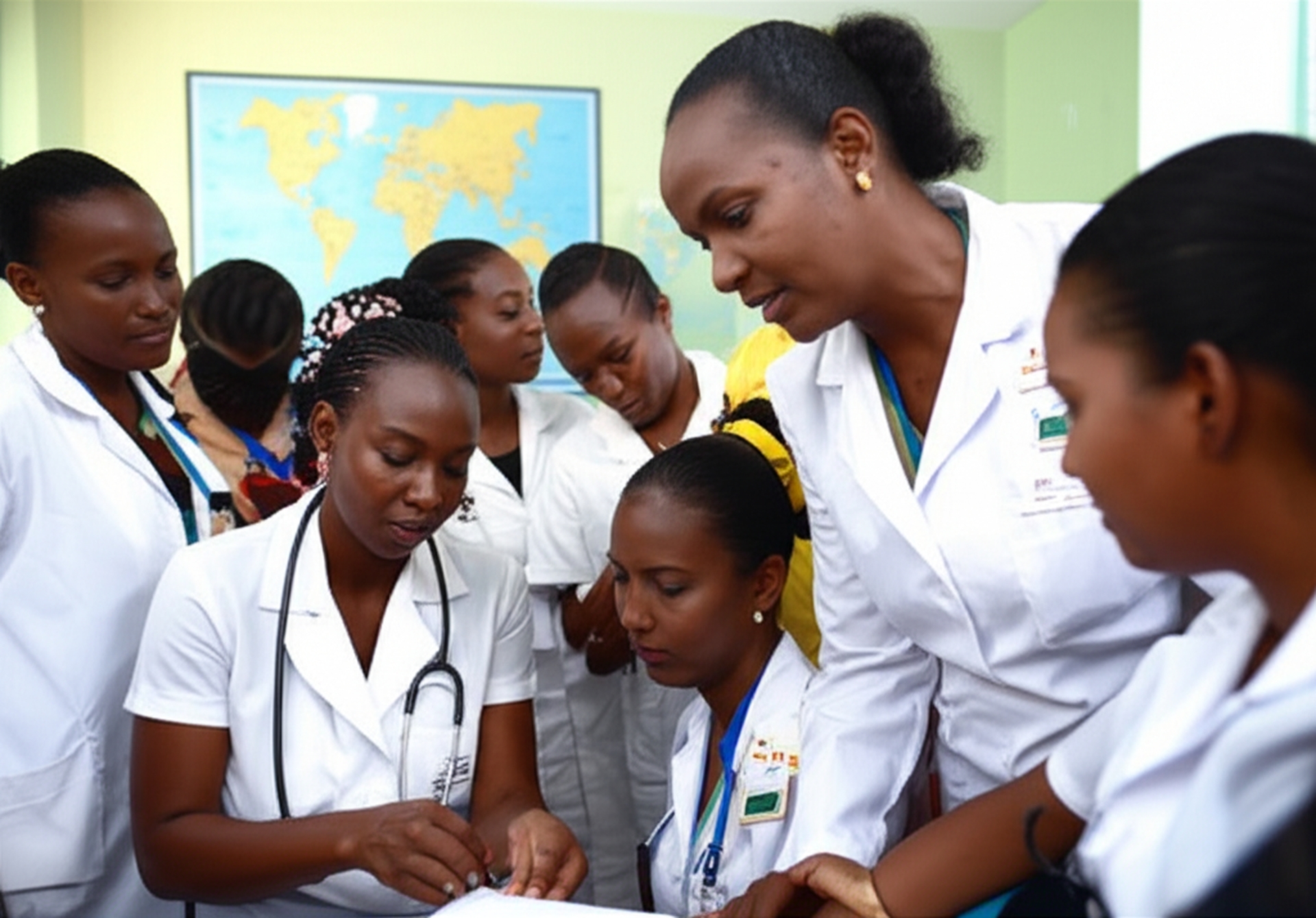
The global health landscape is in a perpetual state of evolution, demanding adaptable and highly skilled healthcare professionals, particularly at the foundational level of primary care. As nations worldwide strive to achieve universal health coverage and bolster their public health infrastructure, the competency of frontline healthcare workers emerges as a critical determinant of success. A recent study originating from China, published in 2026, presents a meticulously developed core competency framework for healthcare workers delivering basic public health services in primary healthcare settings. This initiative, while specific to China's vast and diverse context, offers profound insights and a potential blueprint for other countries grappling with similar challenges in health system strengthening and workforce development.
The impetus behind China's development of such a comprehensive framework stems from a recognition of the dynamic needs of its population and the imperative to standardize and elevate the quality of primary public health services. Historically, variations in training, regional disparities, and the rapid pace of medical and public health advancements have presented significant hurdles. The framework aims to bridge these gaps by clearly defining the essential knowledge, skills, and attitudes required for healthcare workers to effectively promote health, prevent disease, and manage common health conditions within community settings. It moves beyond mere clinical proficiency, encompassing a broader spectrum of public health functions that are vital for a resilient health system.
At its core, the Chinese framework delineates several key domains of competency. These typically include clinical care and management, focusing on accurate diagnosis, treatment, and referral for common diseases; public health service delivery, covering areas like immunization, maternal and child health, chronic disease management, and infectious disease control; health education and promotion, emphasizing effective communication strategies to empower individuals and communities; and professional ethics and legal compliance, ensuring high standards of conduct and adherence to regulatory guidelines. Beyond these, the framework often incorporates competencies related to information management and digital literacy, reflecting the increasing reliance on data and technology in modern healthcare, as well as inter-professional collaboration and teamwork, acknowledging the multidisciplinary nature of primary care. The systematic approach used in its development, likely involving extensive literature reviews, expert consensus, and validation studies, lends significant credibility to its findings and structure.
The global relevance of China's endeavor cannot be overstated. Many low- and middle-income countries, and even some high-income nations, face similar challenges in ensuring a uniformly competent primary healthcare workforce. The World Health Organization (WHO) consistently advocates for strengthening primary healthcare as the cornerstone of universal health coverage, emphasizing the pivotal role of well-trained and supported healthcare professionals. A structured competency framework provides a clear roadmap for educational institutions to design relevant curricula, for health ministries to develop targeted training programs, and for individual practitioners to identify areas for professional growth. It fosters a culture of continuous learning and quality improvement, moving away from fragmented training approaches towards a more integrated and outcomes-focused model.
Implementing such a framework, however, is not without its complexities. Resource allocation, particularly in terms of funding for training facilities, qualified educators, and ongoing professional development, remains a significant challenge. The sheer scale of training and re-training a national workforce, especially in geographically dispersed regions, demands innovative delivery methods, including blended learning approaches, simulation-based training, and mentorship programs. Furthermore, cultural nuances and existing healthcare delivery models must be carefully considered when adapting a framework developed in one context to another. A successful adaptation requires robust stakeholder engagement, including healthcare workers themselves, policymakers, educators, and community representatives, to ensure the framework is locally relevant and sustainable.
The potential impact on health outcomes is substantial. By standardizing competencies, the framework contributes directly to improved patient safety, reduced medical errors, and more consistent application of evidence-based practices. In public health, it can lead to more effective disease surveillance, higher immunization rates, better management of chronic conditions, and more impactful health promotion campaigns. When healthcare workers are equipped with the right skills and knowledge, they are better positioned to address the social determinants of health, engage communities proactively, and respond effectively to public health emergencies. This, in turn, builds greater trust in the healthcare system and empowers communities to take a more active role in their own health and well-being.
Moreover, the framework has profound implications for health education and professional development. It serves as a vital tool for curriculum designers in medical schools, nursing colleges, and public health programs, ensuring that future generations of healthcare professionals are trained to meet the actual demands of primary care. For practicing professionals, it offers a clear benchmark against which to assess their own skills and identify areas for further development, guiding their choices for continuing medical education (CME) and continuous professional development (CPD). Accreditation bodies can also leverage such frameworks to ensure that educational programs and healthcare facilities meet defined standards of quality and workforce readiness. This continuous feedback loop between education, practice, and policy is essential for maintaining a high-performing health workforce.
Looking ahead, the evolution of competency frameworks will undoubtedly incorporate emerging trends and technologies. The increasing integration of telemedicine, artificial intelligence in diagnostics, and digital health records necessitates new competencies in data interpretation, digital communication, and ethical considerations surrounding technology use. Furthermore, global health challenges such as climate change-related health impacts, antimicrobial resistance, and future pandemics will require healthcare workers to possess enhanced skills in risk assessment, emergency preparedness, and inter-sectoral collaboration. The Chinese framework, by establishing a foundational structure, provides a robust platform upon which these future competencies can be built and integrated, ensuring that primary healthcare workers remain at the forefront of health innovation and service delivery.
In conclusion, the development of a core competency framework for primary healthcare workers in China represents a significant stride towards strengthening health systems and ensuring equitable access to quality public health services. Its meticulous design and comprehensive scope offer valuable lessons and a potential model for nations globally. By investing in the systematic development and continuous enhancement of healthcare worker competencies, countries can not only elevate the standard of care but also build more resilient, responsive, and effective health systems capable of meeting the complex health challenges of the 21st century. This commitment to human resources for health is not merely an operational necessity but a fundamental investment in the well-being and prosperity of populations worldwide.
Support Nivaran Foundation's work in advocating for stronger global health systems and equitable access to quality care for all.
Support this work