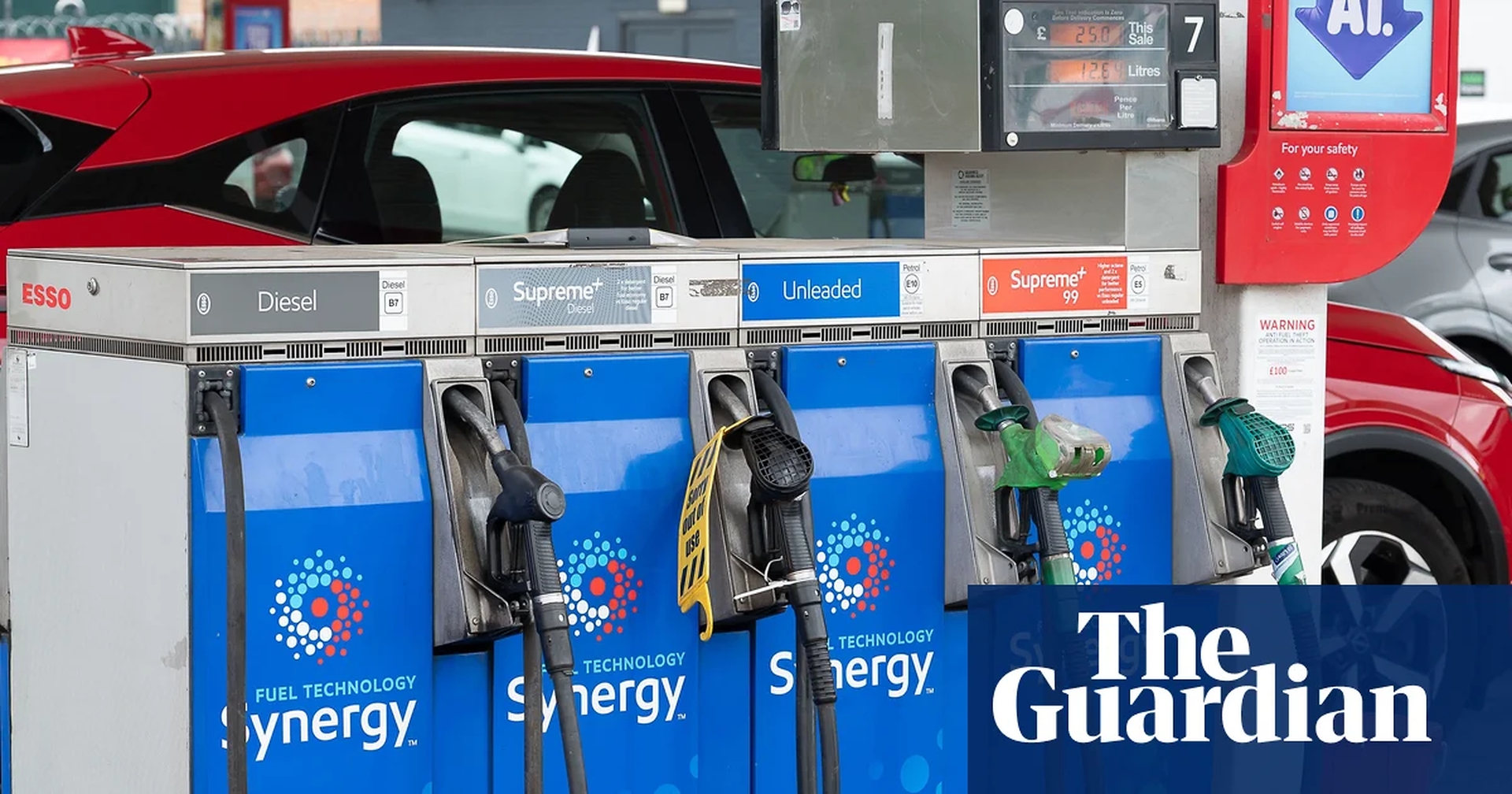
On July 24, 2026, one of the clearest global signals came through THEGUARDIAN.COM: The only way to stop petrol pump thieves | Brief letters. The line may read like a headline, but the implications are operational. Fuelling up | Child health | Burnham spirit | DIY disaster I was once visiting Massachusetts in the US and forgot to take my card into the gas station before filling up ( ‘A guy did a runner in a Jaguar’: the petrol theft scandal – and the garage owner struggling to stop it, 21 July ). After some loudspeaker remonstration, I took my card in, apologising that I’d forgotten as we don’t do that in the UK. The owner almost fell on the floor laughing. “How do you stop people stealing gas?” he asked. “We don’t,” I replied. Further merriment ensued. Sadly, it’s time we did start not releasing pumps until we have cash or a card deposit on hand. Paul Taroni Alton, Hampshire • I shall always remember the health visitor who came to see me after my youngest son was born, nearly 50 years ago ( Letters, 21 July ). She had the brilliant idea of asking me if I could deliver a message for her to another mother with a new baby living further up our north London street. I did, and we became firm friends – as did our sons. As your letter writers suggest, she was indeed addressing the wider social determinants of health. Bring them back! Bridget Patterson Woodbridge, Suffolk Continue reading... In moments like this, the real question is not only what happened, but what gets delayed next: a vaccination schedule, a school meal chain, a maternal referral, or a teacher posting in a district where one interruption can close an entire service corridor.
Health and education are often discussed in separate policy rooms, yet in real communities they are a single daily system. When healthcare access weakens, school attendance drops because children are sick, caregivers are absent, and household budgets are redirected to emergency treatment. When education continuity weakens, health outcomes decline because prevention messages, early warning communication, and basic protective behaviors lose reach. A global development therefore has local consequences long before ministries issue formal guidance.
This is why credibility of source matters as much as speed. Information that is merely loud can push organizations toward reaction theater, while verified reporting supports disciplined action. For frontline teams, discipline means triaging what to monitor first, what to communicate publicly, and which operating assumptions must change before the next shift. The value of a strong signal is not drama. The value is lead time. Lead time is what converts uncertainty into preparedness.
The current signal from THEGUARDIAN.COM sits at the intersection of financing pressure, workforce strain, and uneven access. In many countries, the same local institutions are expected to expand services while absorbing budget volatility, higher caseload complexity, and growing public expectations. That mismatch does not fail all at once. It fails in sequence: first wait times, then coverage reliability, then trust. Once trust breaks, both clinical care and learning continuity become harder to stabilize.
Sustained field reporting and accountable publishing are what keep critical global signals visible before they become humanitarian emergencies.
Support this work