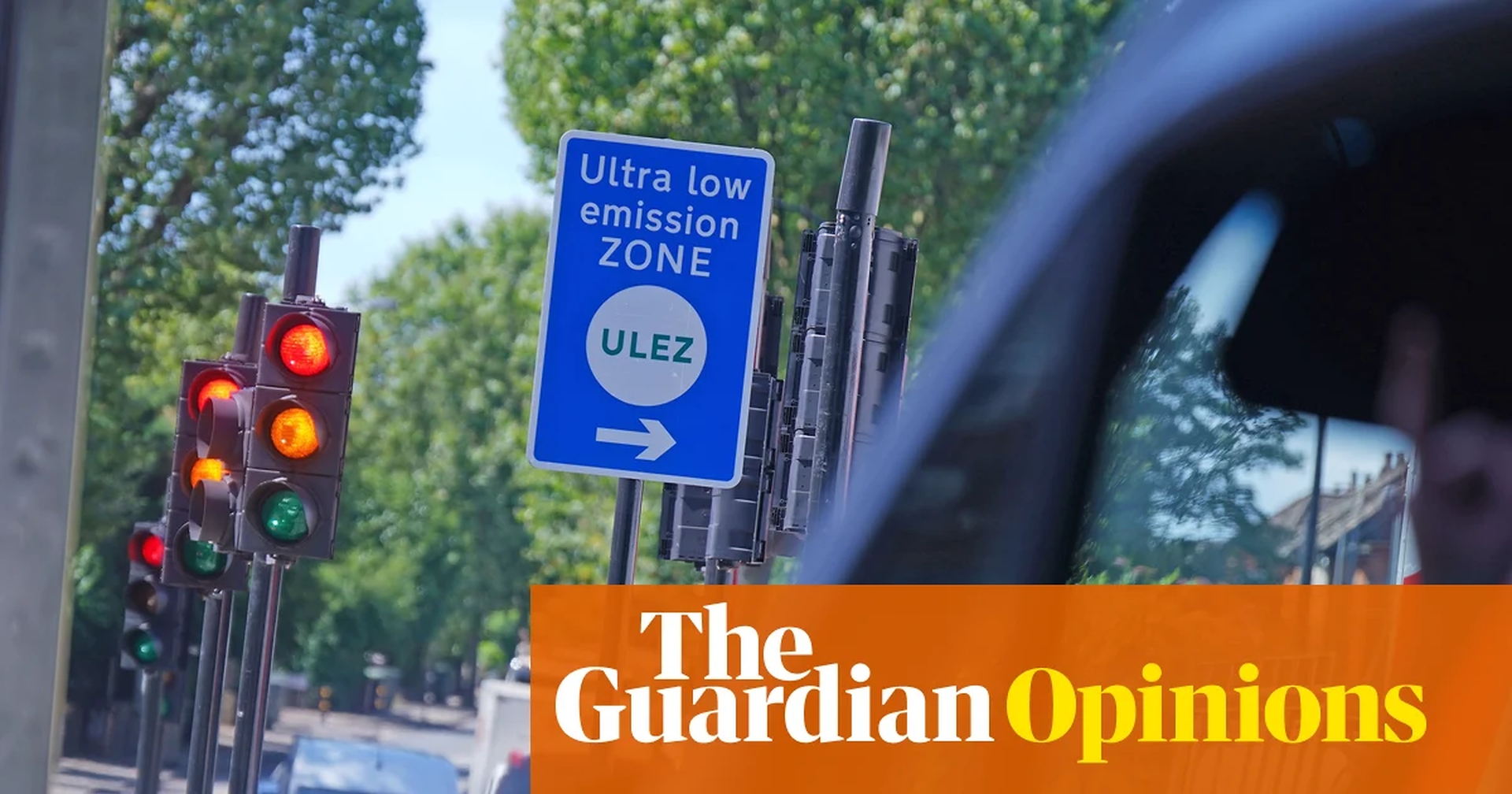
On August 19, 2026, one of the clearest global signals came through THEGUARDIAN.COM: Introducing Ulez was my hardest decision as mayor of London – but now we know its astonishing impact | Sadiq Khan. The line may read like a headline, but the implications are operational. Critics said I was attacking motorists. It’s more important for me that the city’s children are no longer breathing dangerous levels of pollution Ulez led to better lung size and function among London children, study finds When I introduced London’s clean air zone – the ultra-low emission zone (Ulez) – more than seven years ago, no city had ever attempted anything quite like it. At the time, the scheme in central London provoked fierce opposition. When I decided to expand it – first in 2021, to inner London, and then again in 2023 to the whole city, making it the biggest clean-air zone in the world – my detractors were louder still. I had, they claimed, declared war on drivers in blind pursuit of a policy that may not even work. All the mainstream political parties, including my own, were opposed. In recent years, though, those critics have gone quiet. There is now a mountain of evidence to show that the Ulez has slashed air pollution and improved air quality across London, and research published by Imperial College London earlier this year showed that this is already saving lives. Between 2019 (when I first introduced the Ulez) and 2024, estimated deaths associated with air pollution in the capital fell by around 40%. But a new, independent study published by Queen Mary University of London today goes further still, showing how – by helping to clean up the capital’s air – the Ulez is improving the lungs and lives of London’s children. Sadiq Khan is mayor of London Continue reading... In moments like this, the real question is not only what happened, but what gets delayed next: a vaccination schedule, a school meal chain, a maternal referral, or a teacher posting in a district where one interruption can close an entire service corridor.
Health and education are often discussed in separate policy rooms, yet in real communities they are a single daily system. When healthcare access weakens, school attendance drops because children are sick, caregivers are absent, and household budgets are redirected to emergency treatment. When education continuity weakens, health outcomes decline because prevention messages, early warning communication, and basic protective behaviors lose reach. A global development therefore has local consequences long before ministries issue formal guidance.
This is why credibility of source matters as much as speed. Information that is merely loud can push organizations toward reaction theater, while verified reporting supports disciplined action. For frontline teams, discipline means triaging what to monitor first, what to communicate publicly, and which operating assumptions must change before the next shift. The value of a strong signal is not drama. The value is lead time. Lead time is what converts uncertainty into preparedness.
Sustained field reporting and accountable publishing are what keep critical global signals visible before they become humanitarian emergencies.
Support this work