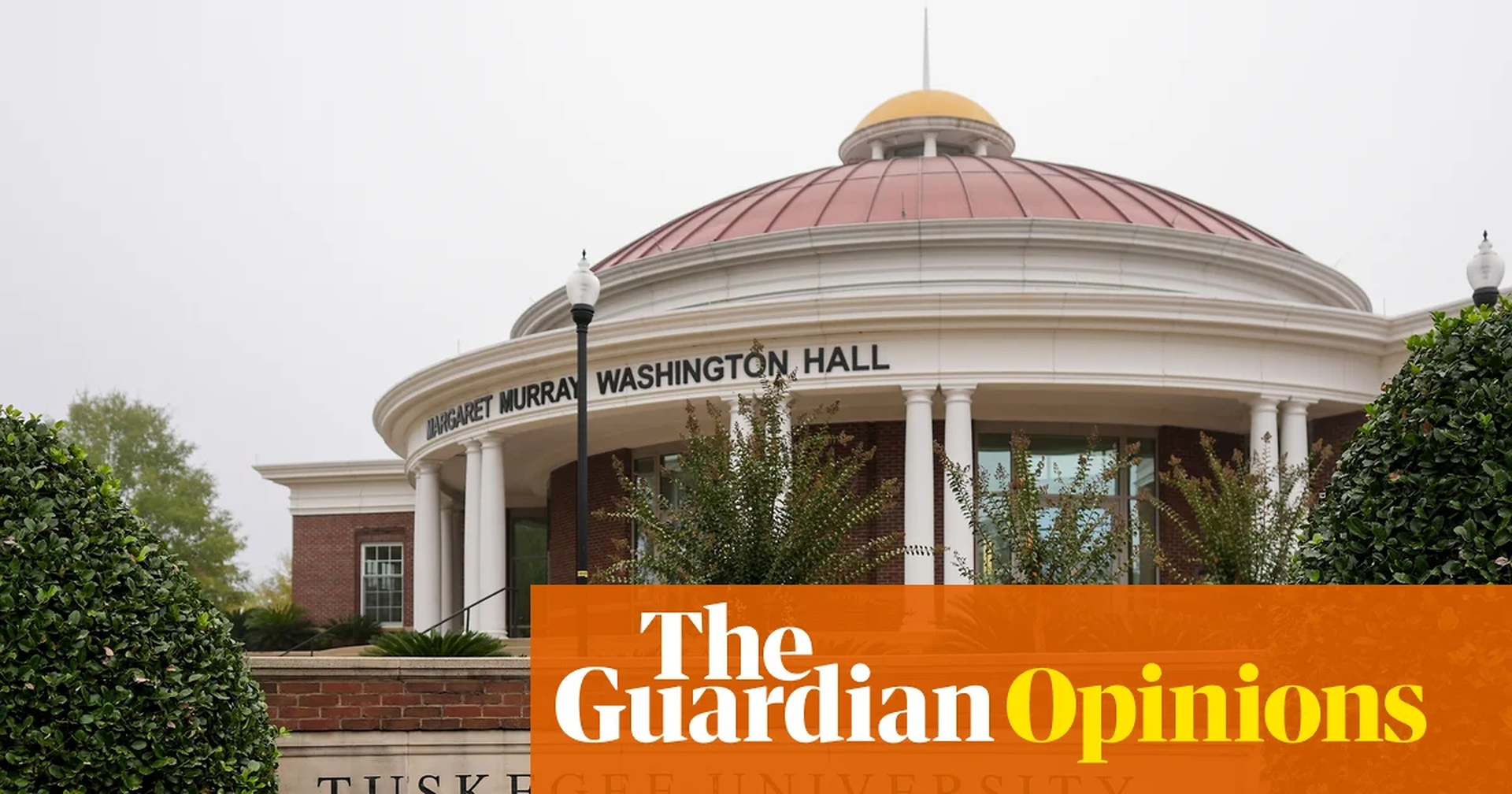
On August 12, 2026, one of the clearest global signals came through THEGUARDIAN.COM: An HBCU has banned durags and bonnets. That reinforces anti-Blackness | AD Carson. The line may read like a headline, but the implications are operational. Tuskegee University’s dress code is a marker of a harmful politics of respectability. In my academic career, it’s become all too familiar In anticipation of the coming school year, the president of Tuskegee University, Dr Mark A Brown, sent welcome letters to students and their parents last month. Part of the message focused on the university’s policy for student attire . A newly enforced dress code prohibits students from wearing “revealing clothing in class, to the cafeteria or in official settings like Convocation. They are also not able to wear bedroom shoes, bonnets, or durags to class or the cafeteria.” Dr Brown goes on to let the students know: “Faculty will be empowered to respond to students who are inappropriately dressed based on these guidelines.” The policy has produced polarized responses. Supporters believe that since the university is a private school, and Historically Black Colleges and Universities (HBCUs) have often been places where Black people learn discipline and earn entrance into the professional world, this dress code is simply reinforcing a tradition that calls for students to exhibit professionalism during their training. It harkens back to WEB DuBois’s idea of a “Talented Tenth”, which would consist of upwardly mobile Black leaders such as teachers and other professionals whose example of hard work and social standing would uplift the entire race. Continue reading... In moments like this, the real question is not only what happened, but what gets delayed next: a vaccination schedule, a school meal chain, a maternal referral, or a teacher posting in a district where one interruption can close an entire service corridor.
Health and education are often discussed in separate policy rooms, yet in real communities they are a single daily system. When healthcare access weakens, school attendance drops because children are sick, caregivers are absent, and household budgets are redirected to emergency treatment. When education continuity weakens, health outcomes decline because prevention messages, early warning communication, and basic protective behaviors lose reach. A global development therefore has local consequences long before ministries issue formal guidance.
This is why credibility of source matters as much as speed. Information that is merely loud can push organizations toward reaction theater, while verified reporting supports disciplined action. For frontline teams, discipline means triaging what to monitor first, what to communicate publicly, and which operating assumptions must change before the next shift. The value of a strong signal is not drama. The value is lead time. Lead time is what converts uncertainty into preparedness.
The current signal from THEGUARDIAN.COM sits at the intersection of financing pressure, workforce strain, and uneven access. In many countries, the same local institutions are expected to expand services while absorbing budget volatility, higher caseload complexity, and growing public expectations. That mismatch does not fail all at once. It fails in sequence: first wait times, then coverage reliability, then trust. Once trust breaks, both clinical care and learning continuity become harder to stabilize.
Sustained field reporting and accountable publishing are what keep critical global signals visible before they become humanitarian emergencies.
Support this work