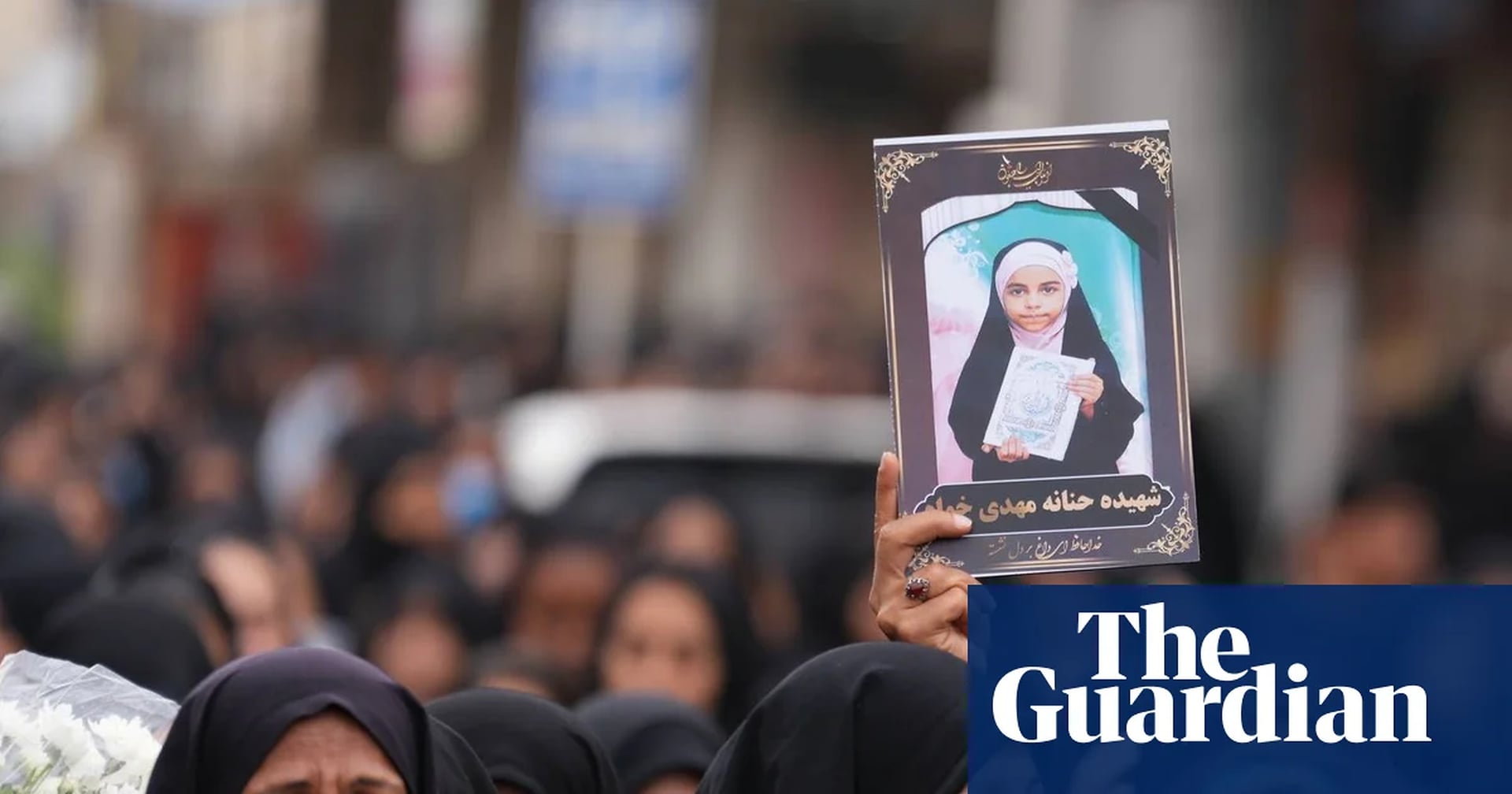
Former UK Prime Minister Gordon Brown has issued a powerful global appeal for the establishment of an international criminal court specifically dedicated to prosecuting crimes against children. This urgent call comes in the wake of a devastating missile strike on the Shajareh Tayyebeh school in Iran, an attack that tragically claimed the lives of 168 schoolgirls at the outset of the US-Israel conflict with Iran. Brown’s impassioned argument underscores a critical moral imperative: that no child should ever be considered mere "collateral damage" in any conflict, asserting that the global community has a profound obligation to safeguard the most vulnerable.
Writing for a prominent publication, Brown articulated a compelling vision for elevating the status of educational institutions in times of war. He contended that schools must be afforded the same moral and legal protections as hospitals under international law. This assertion is not merely symbolic; it seeks to enshrine schools as inviolable sanctuaries, places where learning and development can continue even amidst the chaos of conflict, free from the threat of deliberate targeting or incidental harm. The former prime minister’s stance highlights a perceived gap in current international humanitarian law, suggesting that while hospitals are generally recognized as protected entities, schools often fall into a more ambiguous category, leaving children and educators exposed to unacceptable risks.
The tragic events at the Shajareh Tayyebeh school serve as a stark reminder of the escalating dangers faced by children in contemporary warfare. Modern conflicts, characterized by urban combat, the widespread use of explosive weapons, and often a disregard for civilian infrastructure, disproportionately impact children. Beyond the immediate casualties, the destruction of schools robs entire generations of their right to education, perpetuating cycles of poverty, instability, and despair. Brown's proposal seeks to address this systemic vulnerability by creating a dedicated legal mechanism that would hold perpetrators accountable, thereby acting as a powerful deterrent against future atrocities.
While international law, including the Geneva Conventions and the Rome Statute of the International Criminal Court (ICC), already contains provisions for protecting civilians and civilian objects during armed conflict, Brown’s argument implies these frameworks may not be sufficiently robust or specific enough to adequately protect children and schools. The existing ICC, for instance, has jurisdiction over war crimes, crimes against humanity, genocide, and the crime of aggression. However, the specific targeting of children or educational facilities, while potentially falling under broader war crimes provisions, might not always receive the specialized focus or dedicated prosecutorial attention that Brown envisions for a new, child-centric court. The complexity of evidence gathering, attribution of responsibility, and the political will required for prosecution often leave many such crimes unaddressed.
A dedicated international criminal court for crimes against children, as proposed by Brown, would offer several distinct advantages. Firstly, it would send an unequivocal message that attacks on children and educational institutions are uniquely heinous and will be met with uncompromising justice. This specialization could lead to the development of specific legal expertise in prosecuting child-related offenses, ensuring that the unique vulnerabilities and long-term impacts on children are fully recognized and addressed in legal proceedings. Secondly, such a court could streamline investigations and prosecutions, potentially overcoming some of the jurisdictional and political hurdles that often impede justice in existing international bodies. It would provide a clear avenue for victims and their families to seek redress and accountability, fostering a sense of justice that is often elusive in the aftermath of conflict.
Beyond retribution, the primary goal of such a court would be deterrence. By consistently and effectively prosecuting those who harm children in conflict, the international community could establish a powerful norm against such actions. This norm-setting function is crucial for shifting military doctrines and operational practices to prioritize the protection of children and civilian infrastructure. If commanders and combatants know they will face severe international legal consequences for targeting schools or causing widespread harm to children, it could significantly alter their behavior on the battlefield. The moral weight of such a court would reinforce the fundamental principle that childhood is sacred and must be shielded from the brutality of war.
The call for enhanced protection of schools resonates deeply with global education advocates. Education is not merely a right; it is a fundamental pillar of societal development and stability. When schools are destroyed or rendered unsafe, the educational future of an entire generation is jeopardized. This has cascading effects, contributing to increased child labor, early marriage, recruitment into armed groups, and long-term economic stagnation. Protecting schools, therefore, is not just about safeguarding buildings; it is about preserving hope, fostering resilience, and investing in the future peace and prosperity of conflict-affected regions. Brown’s proposal implicitly acknowledges the profound link between security, education, and sustainable development.
Establishing a new international criminal court is, however, an undertaking fraught with significant challenges. It would require immense political will, substantial financial investment, and broad consensus among member states of the United Nations. Questions of jurisdiction, complementarity with existing national and international legal systems, and enforcement mechanisms would need to be meticulously addressed. Skeptics might argue that creating another international body could lead to duplication of efforts or further strain already stretched resources. Yet, proponents would counter that the unique nature of crimes against children warrants a dedicated focus, and the moral imperative outweighs the logistical complexities. The international community would need to navigate these diplomatic and legal intricacies with a clear vision and unwavering commitment.
Gordon Brown’s advocacy serves as a potent reminder to the international community of its collective responsibility to protect children in conflict. It challenges nations to move beyond rhetoric and implement concrete measures that genuinely safeguard the most vulnerable. The horrific incident at the Shajareh Tayyebeh school is not an isolated event but a tragic symptom of a broader failure to uphold humanitarian principles. By pushing for a specialized court, Brown is not only seeking justice for past victims but also striving to build a future where children are truly off-limits in war, where their schools remain beacons of learning, not targets of destruction.
From the perspective of organizations like the Nivaran Foundation, which champions global health and education, Brown's proposition aligns with core humanitarian principles. Ensuring access to safe and quality education, particularly in fragile and conflict-affected states, is paramount. The destruction of educational infrastructure and the targeting of students and teachers represent direct assaults on human development and the fundamental rights of children. A robust international legal framework that specifically addresses these egregious acts would be a significant step towards creating a safer, more equitable world for all children, reinforcing the belief that education is a universal right that must be protected at all costs, even in the darkest hours of conflict.
The call for an international criminal court for crimes against children is more than a legal proposition; it is a moral plea to humanity. It asks the world to recognize the inherent sanctity of childhood and to draw a definitive line that even the brutality of war cannot cross. As conflicts continue to rage across the globe, placing millions of children at risk, the urgency of this discussion intensifies. Gordon Brown's vision, born from the anguish of countless tragedies like the Shajareh Tayyebeh school bombing, challenges global leaders to forge a future where the laughter of children in classrooms is never silenced by the roar of war, and where justice for the innocent is not merely an aspiration, but an enforceable reality.
Your support enables Nivaran Foundation to champion global advocacy for the protection of children and educational institutions in conflict-affected regions.
Support this work