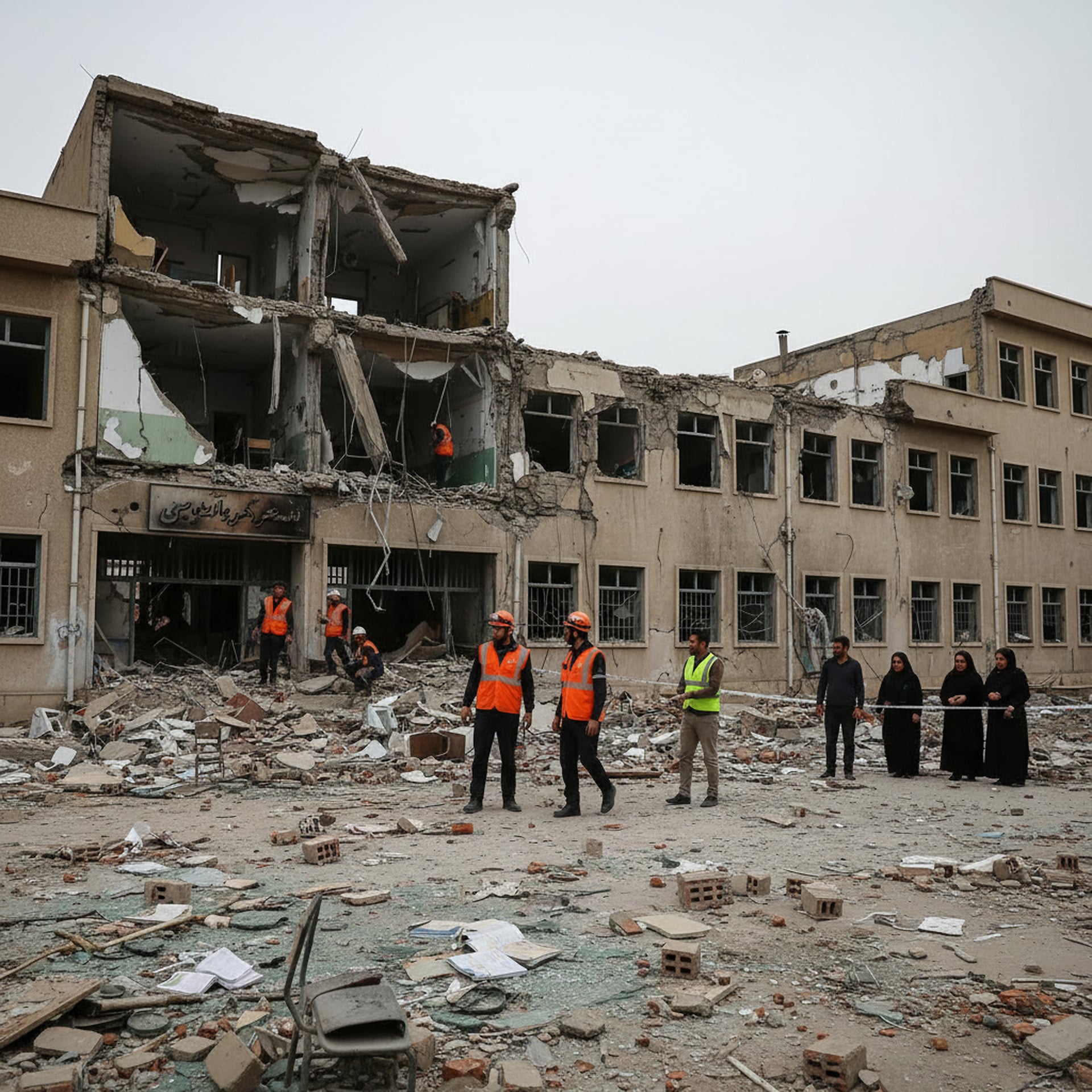
In a significant development following a deadly strike on an Iranian school, an officer has been officially appointed to spearhead a comprehensive investigation into the incident. The announcement, attributed to official sources, underscores the gravity of the attack and the immediate global demand for transparency and accountability. This swift action reflects the international community's profound concern over assaults on educational institutions, which are universally recognized as protected civilian spaces, particularly when children are present.
The strike, which occurred on March 13, 2026, resulted in tragic loss of life and injuries, primarily affecting students and staff within the school premises. While specific details regarding the nature of the attack remain under investigation, initial reports have painted a grim picture of devastation, highlighting the vulnerability of educational facilities in regions marred by conflict. The targeting of a school represents a severe breach of international humanitarian law and has sent shockwaves across the globe, prompting widespread condemnation from human rights organizations, international bodies, and governments alike. The human cost extends far beyond immediate casualties, inflicting deep psychological trauma on survivors, families, and the entire community, disrupting the very fabric of societal stability.
The appointment of an investigating officer is a critical step towards uncovering the truth behind this tragic event. The officer's mandate will involve a meticulous examination of the circumstances surrounding the strike, including gathering evidence, interviewing witnesses, and analyzing forensic data to ascertain responsibility. Such an impartial inquiry is paramount not only for delivering justice to the victims and their families but also for upholding the fundamental principles of international law. It aims to provide a clear, factual account that can inform future preventative measures and ensure that perpetrators of such egregious acts are held to account, thereby deterring similar violations in the future. The challenges of conducting such an investigation in a volatile region are considerable, requiring unwavering commitment to impartiality and thoroughness.
International humanitarian law (IHL), enshrined in the Geneva Conventions and their Additional Protocols, explicitly prohibits attacks on civilian objects, including schools, unless they are being used for military purposes. Even in such exceptional circumstances, the principles of distinction and proportionality must be strictly adhered to, meaning that military operations must distinguish between combatants and civilians, and between military objectives and civilian objects, and that any attack must not cause excessive civilian harm in relation to the anticipated military advantage. The targeting of an educational facility, especially one populated by children, raises serious questions about adherence to these core tenets of IHL and constitutes a potential war crime. The international community has a collective responsibility to ensure these protections are not merely theoretical but are rigorously enforced.
The devastating impact on education is perhaps the most enduring consequence of such attacks. Beyond the immediate destruction of infrastructure and loss of life, these incidents create an environment of fear that prevents children from attending school, disrupts learning continuity, and deprives an entire generation of their fundamental right to education. The psychological scars left on children who witness or survive such violence can impede their development for years, affecting their ability to learn, socialize, and thrive. Teachers, too, are often displaced or traumatized, further exacerbating the educational crisis. The destruction of schools represents an attack on the future, undermining long-term peacebuilding efforts and societal development, as education is a cornerstone of stability, economic growth, and social cohesion.
Global condemnation has been swift and unequivocal, with calls for robust action to protect educational spaces in conflict zones. Organizations like the United Nations and various humanitarian agencies have consistently advocated for the sanctity of schools, emphasizing that they must remain safe havens for learning, even amidst the chaos of war. The incident in Iran serves as a stark reminder of the urgent need for all parties to armed conflicts to respect international humanitarian law and to take all feasible precautions to protect civilians and civilian infrastructure, particularly schools and hospitals. The collective voice of the international community is crucial in reinforcing the message that education should never be a casualty of conflict.
Nivaran Foundation, through its global desk, remains steadfast in its commitment to advocating for the protection of education and ensuring children's right to learn, free from violence and fear. We actively work with partners to support communities affected by such tragedies, striving to rebuild educational infrastructure, provide psychosocial support to traumatized children and educators, and facilitate access to quality learning opportunities. Our mission is rooted in the belief that education is not merely a privilege but a fundamental human right and a powerful tool for peace and development. Incidents like the deadly strike on the Iranian school underscore the critical importance of our collective efforts to safeguard these vital spaces.
History is replete with examples of schools being targeted in conflicts, from the Middle East to Africa and beyond. Each instance serves as a painful reminder of the profound human cost when the rules of war are disregarded. A thorough and impartial investigation, leading to accountability, is not just about justice for the victims of this specific incident; it is about setting a precedent and sending a clear message that such actions will not be tolerated. Impunity for attacks on schools only emboldens perpetrators and perpetuates a cycle of violence that further destabilizes regions and undermines global efforts towards peace and security. The international community must remain vigilant and united in its resolve to protect the sanctity of education.
Attacks on civilian infrastructure, particularly educational institutions, have far-reaching implications for regional stability and humanitarian concerns. They exacerbate existing crises by creating new waves of displacement, increasing the vulnerability of already fragile populations, and hindering the delivery of essential humanitarian aid. Such acts undermine any efforts towards de-escalation and reconciliation, fueling resentment and prolonging conflicts. The interconnectedness of security, education, and human well-being means that an assault on one has ripple effects across all, making the protection of schools a strategic imperative for global peace.
As the appointed officer commences the investigation, there is a collective hope that this process will bring clarity, justice, and ultimately contribute to a safer environment for students and educators worldwide. The global community must remain engaged, ensuring that the findings are acted upon and that robust mechanisms are in place to prevent future atrocities. Protecting educational institutions is a moral imperative, a legal obligation, and a strategic investment in the future of humanity. The children of Iran, and indeed all children in conflict zones, deserve to pursue their education in safety and peace, free from the shadow of violence.
Support Nivaran Foundation's efforts to protect educational spaces and ensure children's right to learn in conflict-affected regions worldwide.
Support this work