
Nivaran Logo
News

Devastating Strike on Iranian School Ignites Global Outcry for Civilian Protection

A U.S. missile attack on an educational institution in Iran leaves 175 dead, prompting urgent calls for accountability and adherence to international law.

Devastating Strike on Iranian School Ignites Global Outcry for Civilian Protection

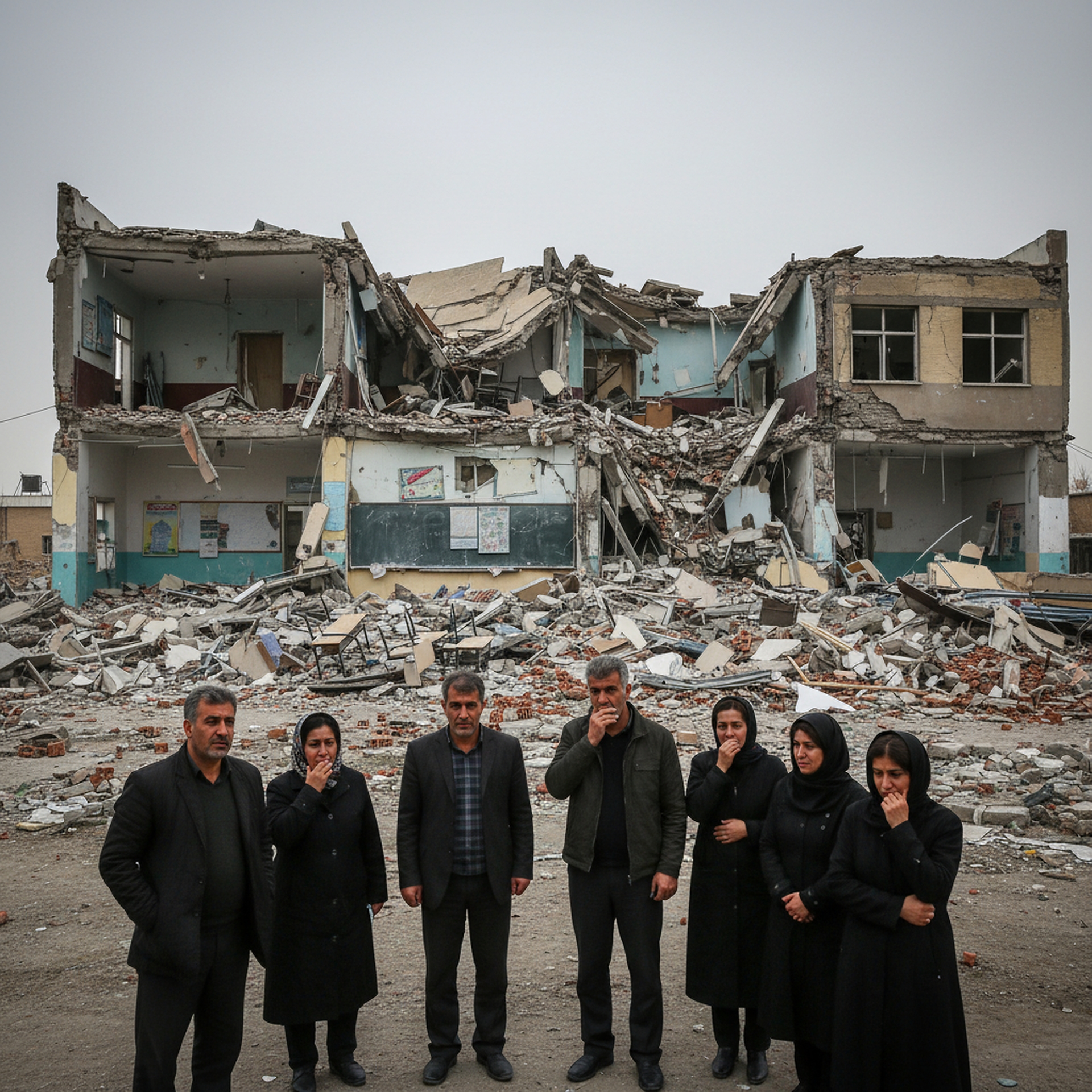
The global community has been gripped by profound shock and sorrow following a devastating U.S. missile strike on a school in Iran, an incident that tragically claimed the lives of an estimated 175 individuals. This calamitous event, which unfolded recently, has not only resulted in an immense loss of life but has also ignited a fervent international debate regarding the sanctity of educational institutions in zones of conflict and the imperative of protecting civilian populations from the ravages of war. The attack on what should have been a sanctuary of learning has sent a chilling reminder of the devastating human cost when geopolitical tensions escalate into direct military action, particularly when such actions impact the most vulnerable segments of society: students and educators.

The details emerging from the aftermath paint a grim picture of destruction and despair. Reports indicate that the U.S. missile struck the school facility with catastrophic force, transforming a vibrant hub of intellectual growth into a scene of unimaginable devastation. The loss of 175 lives, many of whom were likely children and young adults pursuing their education, represents an irreparable blow to families and the broader Iranian society. Beyond the immediate fatalities, countless others have been injured, some critically, while survivors grapple with profound physical and psychological trauma. The sheer scale of the tragedy within an educational setting underscores the indiscriminate nature of modern warfare and its capacity to shatter the fabric of communities, leaving behind scars that may never fully heal. The incident has reverberated globally, prompting widespread condemnation and urgent calls for a thorough, independent investigation into the circumstances that led to such a tragic outcome.

The targeting or accidental striking of educational facilities constitutes a grave violation of established international humanitarian law, which explicitly mandates the protection of civilian infrastructure, including schools, hospitals, and cultural sites, during armed conflict. These institutions are meant to be neutral zones, havens where learning can continue even amidst surrounding turmoil, fostering hope for a future beyond violence. When schools become battlegrounds or collateral damage, the very foundations of a society's future are undermined. The long-term consequences extend far beyond the immediate casualties; they encompass the disruption of education for thousands, the psychological scarring of an entire generation, and the erosion of trust in the international norms designed to mitigate the brutality of war. Children who witness or survive such attacks often suffer from post-traumatic stress, anxiety, and depression, impacting their ability to learn, socialize, and develop normally, creating a ripple effect that can hinder national development for decades.

In the wake of this tragedy, global reactions have been swift and unequivocal, with numerous governments, international organizations, and human rights groups expressing outrage and demanding accountability. The incident has fueled intense discussions across various platforms, including prominent news outlets and public forums, where readers and citizens worldwide are grappling with the complex ethical and legal dimensions of assigning fault. While the immediate focus is on the U.S. and Iran, the broader discourse centers on the universal responsibility to uphold international law and ensure the protection of civilians in all conflicts. Calls for an impartial inquiry are mounting, aiming to ascertain the precise sequence of events, identify those responsible, and prevent similar atrocities in the future. The international community's response highlights a collective recognition that such acts not only inflict immense human suffering but also set dangerous precedents that could further destabilize global security.

This devastating strike on an Iranian school is not an isolated incident but rather a stark illustration of a disturbing global trend where educational and health infrastructures are increasingly caught in the crossfire of armed conflicts. From the Middle East to Africa and beyond, schools are frequently damaged, destroyed, or repurposed for military use, denying millions of children their fundamental right to education. This systematic assault on learning environments has profound implications for global health and development. When education is interrupted, communities lose their capacity to build resilient health systems, address public health crises, and foster economic growth. Moreover, the psychological toll of living in conflict zones, exacerbated by attacks on safe spaces like schools, contributes significantly to mental health crises, particularly among children and adolescents, who often lack access to adequate support services. The destruction of educational facilities perpetuates cycles of poverty, instability, and violence, hindering progress towards the United Nations Sustainable Development Goals, particularly those related to quality education and good health and well-being.

The imperative to protect educational institutions and civilian lives during conflict cannot be overstated. International humanitarian law, including the Geneva Conventions and their Additional Protocols, provides a robust framework for safeguarding non-combatants and civilian objects. However, these laws are only effective if they are respected and enforced. This incident serves as a critical reminder for all state and non-state actors to adhere strictly to these principles, exercise extreme caution in military operations, and prioritize the safety of civilians above all else. International bodies, including the United Nations and UNESCO, must intensify their advocacy efforts, monitoring, and reporting on attacks against education, while also providing support for the reconstruction of damaged facilities and the psychological rehabilitation of affected communities. Furthermore, there is an urgent need for enhanced diplomatic efforts to de-escalate tensions, foster dialogue, and seek peaceful resolutions to conflicts, thereby reducing the likelihood of such tragic incidents occurring in the first place.

The tragic loss of 175 lives in the U.S. missile strike on an Iranian school stands as a poignant and painful testament to the devastating human cost of armed conflict and the critical importance of protecting educational spaces. It underscores a universal truth: that schools are not targets but sanctuaries, vital for nurturing future generations and fostering societal progress. The global outcry and demand for accountability reflect a collective conscience that refuses to accept such atrocities as an inevitable consequence of war. As the world grapples with the aftermath, it is imperative that this tragedy galvanizes a renewed, unwavering commitment from all nations to uphold international law, safeguard civilian lives, and ensure that the pursuit of knowledge can continue unhindered, even in the most challenging global circumstances. Only through such concerted efforts can humanity hope to build a future where education remains a beacon of hope, untouched by the shadows of conflict.

If this moved you, share it
FacebookLinkedInXWhatsApp

Support Nivaran Foundation's efforts to advocate for the protection of educational institutions and civilian lives worldwide.

Support this work

Nivaran logo
Nivaran Foundation Global Desk

Nivaran Foundation global desk bio line

InstagramFacebookLinkedInX
More from the field
News
Investigation Launched into Deadly Strike on Iranian School
News
Global Health and Education Watch: King Charles concerned about Alberta separatist movement, First Nation
News
AI Toys Need Strict Global Oversight for Child Safety