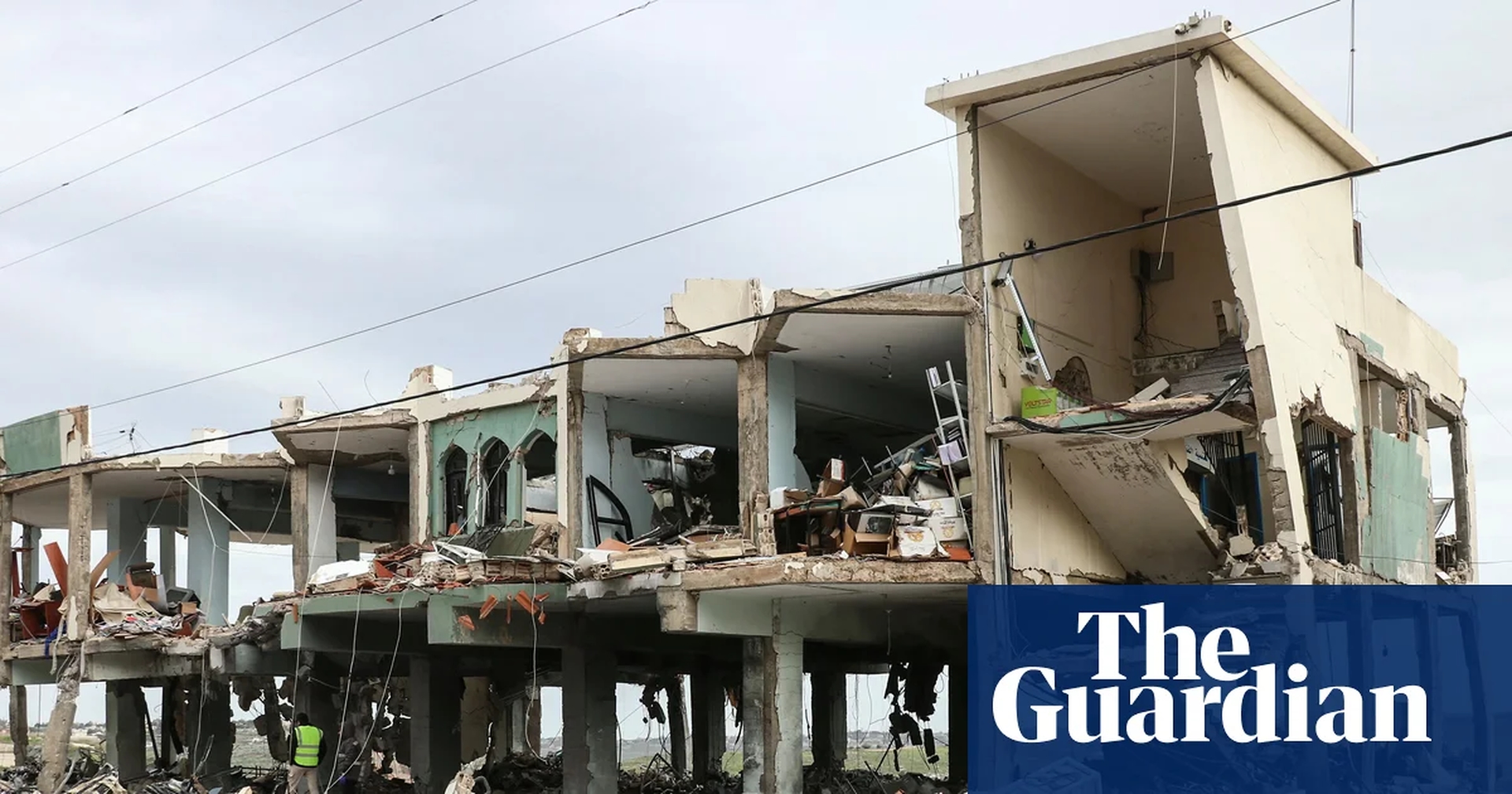
In a profound blow to humanitarian efforts and a stark reminder of the escalating risks faced by medical personnel in conflict zones, an Israeli strike on a primary healthcare facility in southern Lebanon tragically claimed the lives of twelve dedicated healthcare workers. The incident, which occurred late on a Friday night in the town of Burj Qalaouiyah, saw the medical centre engulfed in flames and its structure collapsing, trapping and killing doctors, paramedics, and nurses who were on duty. This devastating event has not only extinguished vital lives but also exacerbated an already dire situation, bringing the total number of healthcare staff killed in the country by Israeli actions to 31 within a mere twelve-day period. The Lebanese Ministry of Health swiftly condemned the attack, asserting that it represented a grave breach of all international humanitarian laws, a sentiment echoed by humanitarian organizations globally.
The strike on the Burj Qalaouiyah facility underscores the perilous environment in which medical professionals operate in regions plagued by conflict. These individuals, driven by an unwavering commitment to alleviate suffering, often find themselves on the front lines, risking their lives to provide essential care to civilian populations caught in the crossfire. The loss of twelve staff members—each a vital cog in the local healthcare system—creates an immediate and profound void. Beyond the immediate tragedy, the destruction of the facility itself represents a significant setback for a community reliant on its services, further eroding access to critical medical care, emergency response capabilities, and routine health provisions. The cumulative toll of 31 healthcare workers killed in less than two weeks paints a chilling picture of a systemic disregard for the protected status of medical personnel and infrastructure, raising urgent questions about accountability and the adherence to foundational principles of warfare.
International Humanitarian Law and the Protection of Healthcare
International Humanitarian Law (IHL), often referred to as the laws of armed conflict, is a body of rules that seeks to limit the effects of armed conflict for humanitarian reasons. Its core purpose is to protect persons who are not, or are no longer, participating in hostilities and to restrict the means and methods of warfare. Central to IHL are the Geneva Conventions and their Additional Protocols, which explicitly grant special protection to medical personnel, medical units, and medical transports. These provisions are not merely suggestions; they are legally binding obligations on all parties to an armed conflict. Medical facilities, whether hospitals, clinics, or first-aid posts, are designated as protected objects and must not be targeted. Similarly, medical personnel, identifiable by distinct emblems, are to be respected and protected in all circumstances, allowed to carry out their duties without hindrance, and never made the object of attack.
This protective framework is built on fundamental principles such as distinction, proportionality, and precaution. The principle of distinction mandates that parties to a conflict must always distinguish between civilians and combatants, and between civilian objects and military objectives. Attacks must only be directed against military objectives. The principle of proportionality requires that even when attacking a legitimate military objective, the expected civilian casualties or damage to civilian objects must not be excessive in relation to the concrete and direct military advantage anticipated. Finally, the principle of precaution obliges parties to take all feasible precautions to avoid, or at least minimize, incidental loss of civilian life, injury to civilians, and damage to civilian objects. The incident in Burj Qalaouiyah, resulting in the deaths of non-combatant medical staff and the destruction of a healthcare facility, starkly challenges the adherence to these fundamental tenets, prompting serious concerns about potential violations of these sacrosanct protections.
The Erosion of Healthcare in Conflict Zones
Attacks on healthcare facilities and personnel have a devastating ripple effect that extends far beyond the immediate casualties. In conflict zones, where healthcare systems are often already fragile due to underfunding, resource scarcity, and displacement, such incidents can lead to a complete collapse of essential services. The loss of skilled medical professionals, like those killed in southern Lebanon, represents an irreplaceable blow to communities that depend on their expertise for everything from emergency trauma care to routine vaccinations and chronic disease management. The destruction of infrastructure further exacerbates this crisis, forcing remaining facilities to become overcrowded, under-resourced, and often inaccessible to those most in need.
Moreover, these attacks instill profound fear among surviving healthcare workers, leading to potential brain drain as professionals seek safer environments, or to a reluctance to work in high-risk areas. This chilling effect severely cripples the capacity of health systems to respond to ongoing humanitarian crises, including the potential for disease outbreaks, malnutrition, and the long-term psychological trauma inflicted by conflict. For vulnerable populations, including women, children, the elderly, and those with disabilities, the erosion of healthcare access can have catastrophic and often fatal consequences, transforming treatable conditions into life-threatening emergencies. The long-term recovery and rebuilding efforts in such regions are significantly hampered when the very foundations of public health are systematically dismantled.
A Global Crisis Demanding Attention
While the recent events in southern Lebanon are acutely tragic, they are unfortunately not isolated incidents. Attacks on healthcare in conflict zones represent a pervasive and alarming global trend. Across various regions grappling with armed conflict, medical facilities are routinely bombed, shelled, and raided, and healthcare workers are targeted, abducted, or killed. International organizations, including the World Health Organization and the International Committee of the Red Cross, have consistently highlighted the alarming frequency and severity of these attacks, underscoring a worrying erosion of respect for IHL and humanitarian principles.
This global pattern of violence against healthcare not only undermines the fundamental right to health but also obstructs humanitarian aid delivery and exacerbates human suffering. It creates environments where the sick and wounded are denied care, where epidemics can spread unchecked, and where the very fabric of society is torn apart. The international community has a collective responsibility to address this crisis, not merely through condemnation but through robust mechanisms for prevention, protection, and accountability. The targeting of healthcare is an affront to humanity and a direct challenge to the foundational principles of international law, demanding a unified and resolute response.
The Imperative of Accountability
The repeated nature of such incidents, culminating in the recent tragedy in Burj Qalaouiyah, underscores the urgent need for robust accountability mechanisms. When violations of international humanitarian law occur, particularly those involving the targeting of protected persons and objects, thorough, impartial, and independent investigations are paramount. These investigations are crucial not only to establish facts and identify perpetrators but also to ensure that those responsible are held to account, thereby deterring future violations. Without accountability, the cycle of violence against healthcare workers and facilities is likely to continue, further eroding the protections enshrined in international law.
International bodies and human rights organizations play a critical role in documenting these incidents, advocating for justice, and supporting victims. However, the ultimate responsibility lies with states to uphold their obligations under IHL and to ensure that their armed forces operate in strict compliance with these laws. When alleged violations occur, states must conduct prompt and effective investigations and, where appropriate, prosecute those responsible. The failure to do so not only undermines the rule of law but also sends a dangerous message that such grave acts can be committed with impunity, endangering humanitarian workers globally and jeopardizing the very essence of humanitarian action.
A Call for Protection and Respect
The Nivaran Foundation, dedicated to advancing global health and education, views the protection of healthcare workers and facilities as an absolute imperative. The tragic loss of life in southern Lebanon serves as a stark reminder of the devastating human cost when international humanitarian law is disregarded. We stand in solidarity with the families of the victims and with all healthcare professionals who continue to bravely serve in conflict zones, often at immense personal risk. Their courage and dedication are a testament to the enduring human spirit, and their safety must be guaranteed.
It is incumbent upon all parties to armed conflicts to strictly adhere to their obligations under international humanitarian law, ensuring the protection of civilians, medical personnel, and healthcare infrastructure. The international community must redouble its efforts to advocate for and enforce these protections, ensuring that humanitarian space is respected and that those who provide life-saving care can do so without fear of attack. The future of global health and the well-being of millions depend on a renewed commitment to these fundamental principles, safeguarding human dignity even amidst the brutality of war.
Conclusion
The recent Israeli strike in southern Lebanon, which claimed the lives of twelve healthcare workers and contributed to a grim tally of 31 medical staff casualties in less than two weeks, represents a profound tragedy and a severe challenge to international humanitarian law. The destruction of a primary healthcare facility and the loss of dedicated professionals not only deprives a vulnerable community of essential services but also underscores a global crisis of violence against healthcare in conflict zones. As the world grapples with escalating tensions and humanitarian emergencies, the imperative to protect those who heal, and the places where healing occurs, has never been more critical. Upholding international law and ensuring accountability for its violations are not merely legal obligations but moral imperatives for the preservation of human life and dignity.
Support Nivaran Foundation's efforts to protect healthcare and education in conflict-affected regions worldwide.
Support this work