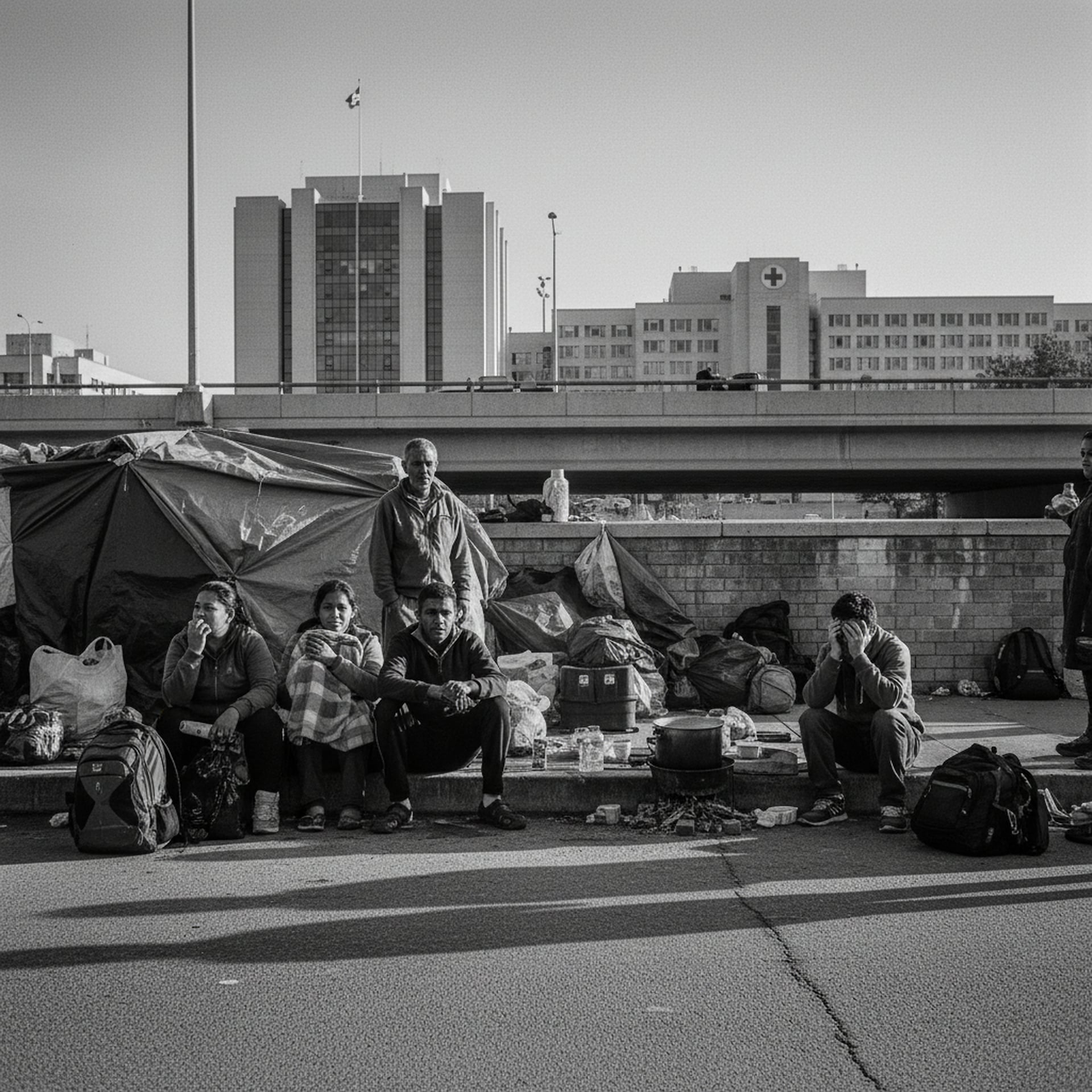
The intersection of homelessness, mental health, and the state's role in individual autonomy is a complex and globally resonant challenge. Across continents, governments grapple with how to support their most vulnerable citizens, particularly those experiencing homelessness who may struggle with severe mental health conditions, while simultaneously upholding fundamental human rights. Recent policy discussions in major global economies have brought into sharp focus the contentious issue of state-initiated guardianship, where legal authority over an individual's healthcare decisions can be transferred to government entities. This development, while framed as a protective measure, ignites a broader international dialogue about the delicate balance between safeguarding the welfare of those deemed unable to care for themselves and preserving their inherent right to self-determination.
A significant policy shift has been observed, proposing an expansion of governmental power to initiate court proceedings for individuals experiencing homelessness who are deemed "unable to make their own health care decisions." The stated intent behind such measures is often rooted in a humanitarian concern: to ensure that individuals in dire circumstances receive necessary medical attention and care, preventing further deterioration of their health and living conditions. Proponents argue that for those with severe cognitive impairments or mental health crises, intervention is a moral imperative, a last resort to provide life-saving or stabilizing treatment when voluntary engagement is not possible. This approach seeks to navigate the ethical quandary of allowing individuals to suffer preventable harm versus intervening in their personal liberty.
However, such policies invariably open a Pandora's Box of ethical and human rights concerns that resonate far beyond national borders. At the core of the debate is the principle of autonomy – an individual's right to make choices about their own life, body, and health. International human rights frameworks, including the Universal Declaration of Human Rights and the UN Convention on the Rights of Persons with Disabilities (CRPD), strongly advocate for the recognition of legal capacity for all individuals and emphasize the importance of supported decision-making over substituted decision-making wherever possible. When the state assumes guardianship, it effectively strips an individual of this fundamental right, raising serious questions about due process, the criteria for deeming someone "incapable," and the potential for abuse or overreach.
Individuals experiencing homelessness are often among the most marginalized and vulnerable segments of society. They frequently contend with a confluence of challenges including poverty, lack of stable housing, food insecurity, trauma, and limited access to healthcare, education, and social support systems. Mental health conditions, substance use disorders, and chronic physical illnesses are disproportionately prevalent within this demographic. While these factors undeniably create profound vulnerabilities, critics argue that state-initiated guardianship can further stigmatize and disempower these individuals, treating symptoms rather than addressing the systemic root causes of their plight. It risks institutionalizing individuals who primarily need stable housing, comprehensive community-based mental health services, and robust social safety nets.
The discussion around guardianship is not unique to any single nation; it is a global phenomenon. Many countries worldwide have legal frameworks for guardianship or conservatorship, designed to protect individuals who genuinely lack the capacity to manage their affairs. However, there is a growing international movement, often spearheaded by disability rights advocates and human rights organizations, to reform these laws. The CRPD, for instance, encourages states to replace substituted decision-making regimes with supported decision-making frameworks, where individuals are provided with the assistance they need to make their own choices, rather than having choices made for them. This shift reflects a recognition that capacity is often fluid and context-dependent, and that even individuals with significant cognitive challenges can, with appropriate support, exercise their legal capacity.
For any guardianship system to be ethically sound, robust safeguards are paramount. These include strict legal criteria for determining incapacity, independent judicial review, the right to legal representation for the individual concerned, regular reviews of guardianship orders, and the prioritization of less restrictive alternatives. Before resorting to guardianship, a comprehensive assessment should explore all available support mechanisms, such as advance directives, powers of attorney, and informal support networks. Investment in preventative measures – affordable housing, accessible mental healthcare, vocational training, and social integration programs – is crucial to reduce the number of individuals who might otherwise be considered for guardianship. These proactive strategies empower individuals and strengthen communities, offering dignity and opportunity rather than coercion.
Healthcare systems globally are often strained, and the challenge of providing care for homeless populations with complex needs is immense. However, resorting to guardianship as a primary solution can be seen as a failure to adequately invest in community-based care models. Effective public policy should prioritize integrated care approaches that combine housing, mental health treatment, and social support services. Programs like "Housing First," which prioritize providing immediate stable housing without preconditions, have demonstrated significant success in improving health outcomes and reducing healthcare costs for chronically homeless individuals. Such initiatives not only respect individual autonomy but also prove more effective and humane in the long run.
A key concern with expanded state powers in guardianship is the potential for overreach or misuse. While the stated intention may be benevolent, the practical application can sometimes fall short. There is a risk that such powers could be applied broadly, targeting individuals who are simply non-compliant with conventional societal norms or who express unconventional beliefs, rather than those truly lacking decision-making capacity. The power to control an individual's healthcare decisions, finances, and living arrangements is immense, and without stringent oversight, it can lead to situations where an individual's best interests are not genuinely served, or where their wishes are overridden without adequate justification. This underscores the need for extreme caution and transparency in implementing such policies.
International human rights bodies and civil society organizations play a vital role in monitoring and advocating against practices that infringe upon the rights of vulnerable populations. They consistently call for states to uphold their obligations under international law, ensuring that any intervention in an individual's life is necessary, proportionate, and respects their dignity and autonomy. The global discourse emphasizes that solutions to homelessness and mental health challenges must be human-centered, focusing on empowerment, inclusion, and the provision of comprehensive support services that enable individuals to live independently and make their own choices to the greatest extent possible.
The expansion of governmental authority to initiate guardianship for homeless individuals unable to make their own healthcare decisions presents a profound ethical and policy challenge with global implications. While the impulse to protect the vulnerable is understandable, the methods employed must align with international human rights standards and prioritize individual autonomy. True progress lies not in increasing coercive powers, but in strengthening social safety nets, investing in accessible and holistic healthcare, and fostering environments where all individuals, regardless of their circumstances, are supported to exercise their legal capacity and live with dignity. The global community must continue to advocate for rights-based approaches that address the root causes of vulnerability, rather than merely managing its symptoms through potentially rights-infringing measures.
Support Nivaran Foundation's efforts to advocate for global health equity and the rights of vulnerable populations worldwide.
Support this work