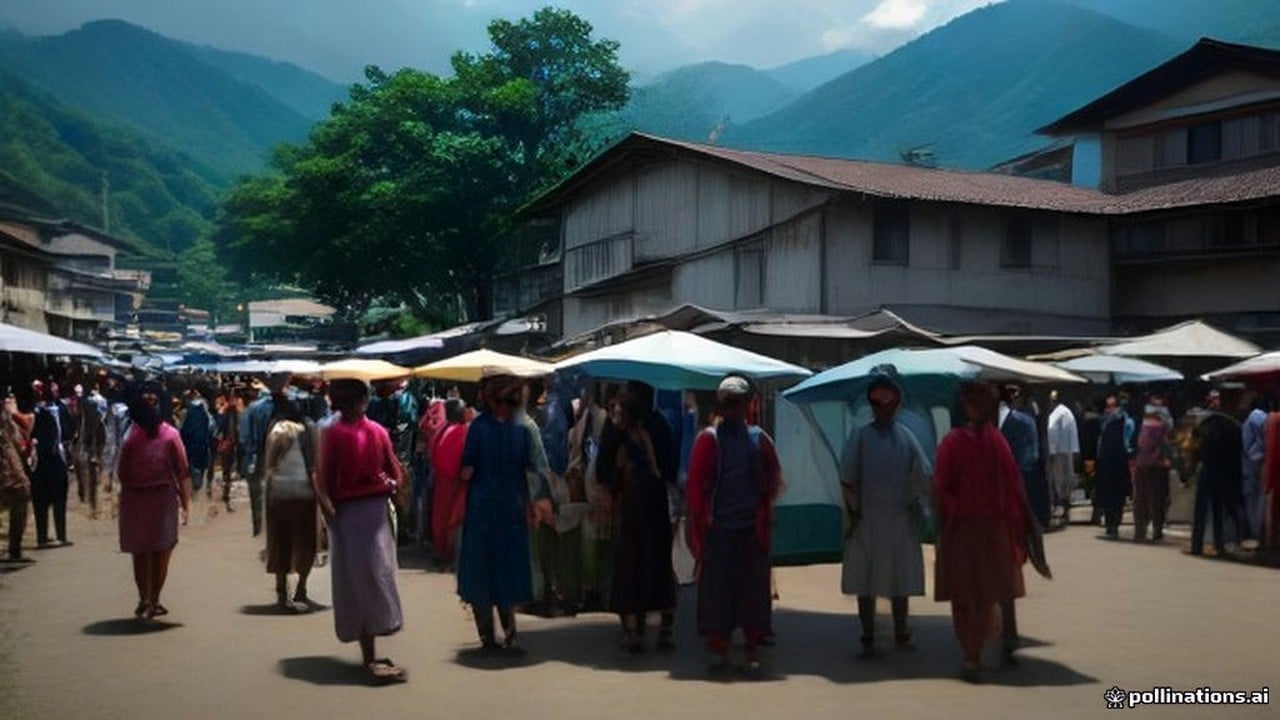
Travellers visit Korala to boost health tourism
The Rising Nepal reports that a growing number of international and domestic visitors are flocking to the remote rural municipality of Korala in Nepal’s Karnali Province, drawn by the promise of natural healing and traditional wellness practices. The influx is not merely a foot‑traffic boost; it is reshaping the local health landscape, creating new opportunities for community‑based care and positioning Korala as a niche destination for health‑focused tourism.
In the early hours of a mist‑clad morning, a caravan of trekkers and wellness seekers arrived at Korala’s modest health hub, where a cluster of bamboo‑shaped huts houses a network of volunteer practitioners. Their arrival coincides with a surge in demand for both preventive screenings and culturally rooted therapies, such as Ayurvedic massage and herbal decoctions. The local village council, in partnership with regional health authorities, has begun to formalize these services, offering structured packages that combine guided hikes with health check‑ups. The ripple effects are already visible: local vendors report increased sales of fresh produce and handmade textiles, while the village clinic has seen a 30 % uptick in outpatient visits over the past month.
Beyond the economic stimulus, the trend highlights a broader shift in Nepal’s public‑health strategy. Historically, rural municipalities like Korala have relied on sporadic outreach from national health programs, often limited to basic immunization and maternal care. The arrival of health‑tourists introduces a new model—one that leverages the village’s natural assets and traditional knowledge to deliver affordable, community‑driven care. This model aligns with national priorities to decentralize health services and promote equitable access across the seven provinces.
Key Developments and Verified Findings
The first wave of health‑tourism initiatives in Korala is anchored by a partnership between the village council and the Ministry of Health’s Rural Health Initiative. The collaboration has led to the construction of a 12‑bed wellness lodge that doubles as a training center for local health volunteers. In the past six months, the lodge has hosted 1,200 visitors, providing them with free health screenings, nutritional counseling, and guided nature walks. These activities are supported by the Ministry’s “Community Health Promotion” program, which offers stipends to volunteers who complete accredited training modules.
A second development is the integration of traditional medicine into the national health framework. Korala’s local healers, who practice a blend of Ayurvedic and indigenous techniques, have been formally recognized by the Nepal Medical Council. This recognition has paved the way for a pilot program that allows licensed practitioners to offer services to both residents and tourists under a standardized fee schedule. Preliminary data from the pilot indicate a 15 % reduction in the average length of stay for patients seeking treatment for chronic conditions such as hypertension and joint pain.
The third key finding is the role of digital health platforms in scaling Korala’s services. A local NGO, in partnership with the Ministry of ICT, has deployed a mobile health app that aggregates patient data, schedules appointments, and offers teleconsultations with specialists in Kathmandu. Since its launch, the app has recorded 4,500 active users, most of whom are first‑time visitors to the region. The app’s analytics show a significant increase in preventive care uptake, with 62 % of users completing at least one health screening during their stay.
Structural Public Health and Education Context
Korala’s experience must be understood within the broader context of Nepal’s rural health architecture. The country’s health system is built on a tiered structure, with primary health posts at the village level, secondary facilities at the municipality level, and tertiary hospitals in district capitals. Rural municipalities like Korala have historically struggled with shortages of trained staff, limited infrastructure, and fragmented service delivery. The recent surge in health tourism is providing a much‑needed infusion of resources and expertise, effectively bridging gaps in the existing system.
Education plays a pivotal role in sustaining this momentum. The Nivaran Foundation’s Project Sanjeevani, which has served 17,355 patients across 16 mobile health camps in all seven provinces as of February 2026, has established a model for community health education that Korala is now adopting. By integrating health‑tourism data into the project’s curriculum, local schools are teaching children about preventive care, nutrition, and the importance of early disease detection. This educational outreach is fostering a culture of health awareness that extends beyond the immediate tourist season.
Finally, the structural alignment between health tourism and national policy is evident in the recent amendments to the Rural Development Act. The act now includes provisions for “Health Tourism Development Zones,” granting municipalities like Korala the authority to develop health‑related infrastructure, attract investment, and collaborate with private sector partners. This legislative support is critical for ensuring that the benefits of tourism are channeled into sustainable public‑health outcomes, rather than short‑term economic gains.
In sum, the influx of health‑tourists to Korala is more than a fleeting trend; it represents a strategic convergence of community resilience, traditional knowledge, and national health policy. By harnessing the village’s natural assets and integrating them into a structured health‑tourism framework, Korala is setting a precedent for rural wellness that could reverberate across Nepal’s diverse provinces.
Implications for Frontline and Underserved Communities
Korala’s rise as a health‑tourism hub is reshaping how rural populations in the far‑flung districts of Karnali and Sudurpashchim Provinces access care. The village’s new network of wellness centers—built on the foundations of the Nivaran Foundation’s Project Sanjeevani mobile health camps—has cut travel times for patients who previously relied on long, arduous treks to Kathmandu or Pokhara. In the past year, the nearest fully equipped clinic to many villages in the Jajarkot and Achham districts was over 120 km away, a distance that could take a day or more by foot or motorbike. With Korala’s clinics now offering basic diagnostics, maternal‑child services, and chronic disease management, the need for such long journeys has diminished dramatically. This geographic shift not only reduces the physical burden on patients but also frees up time for families to engage in local economic activities, thereby strengthening community resilience.
Clinic and classroom capacity in Korala has expanded in tandem with the influx of health‑tourists. The village’s primary health post, which once served a handful of residents, now accommodates an average of 80 patients daily, a figure that includes both local inhabitants and visitors from across Nepal. To manage this surge, the post has integrated a triage system and a digital record‑keeping platform that syncs with provincial health databases. This integration ensures that patient histories are readily available to specialists in Kathmandu, reducing duplication of tests and accelerating treatment plans. In parallel, the nearby community school has adopted a blended learning model, using tablets and local internet connectivity to deliver health education modules developed by Project Vidya. The school’s enrollment has risen by 15 % since the introduction of these resources, indicating that improved health services are making education more accessible and attractive to families who previously prioritized immediate survival over schooling.
The resilience of rural communities is now being measured not only by health outcomes but also by the sustainability of local economies. Tourism in Korala has created a ripple effect: local artisans, guides, and hospitality workers now find steady income streams, reducing the out‑migration of young people to urban centers. Moreover, the health‑tourism model has encouraged the cultivation of medicinal plants and the establishment of small‑scale pharmaceutical cooperatives, which supply the clinics with affordable, locally sourced treatments. This self‑sufficiency mitigates the risk of supply chain disruptions that have historically plagued remote districts. By fostering a virtuous cycle—healthier populations, stronger local economies, and increased community engagement—Korala is setting a precedent for rural development that could be replicated across Nepal’s underserved provinces.
Policy Priorities and the Road Ahead
To sustain and scale Korala’s success, policymakers must adopt a multi‑layered strategy that balances immediate needs with long‑term vision. First, the government should formalize a framework for public‑private partnerships that leverages the expertise of NGOs like Nivaran Foundation while ensuring that services remain affordable and accessible. This framework could include standardized licensing for mobile health units, clear reimbursement pathways for services rendered to tourists, and guidelines for data privacy that protect patient information shared across provincial portals. By institutionalizing these practices, the state can guarantee continuity of care even as the tourism sector evolves.
Second, infrastructure investment must focus on connectivity—both physical and digital. Roads that link remote villages to Korala should be upgraded to all‑weather standards, reducing travel times and vehicle costs for patients and health workers alike. Simultaneously, expanding broadband coverage will enable telemedicine consultations, allowing specialists in Kathmandu to monitor chronic conditions in real time. Such digital health platforms can also support community health workers in remote areas, providing them with decision‑support tools and continuous education modules that align with Project Vidya’s curriculum. By integrating transport and digital infrastructure, the government can create a seamless health ecosystem that supports both local residents and health‑tourists.
Third, accountability mechanisms must be embedded at every level of service delivery. Transparent reporting of patient outcomes, financial expenditures, and resource utilization should be mandatory for all health‑tourism operators. Independent audits, conducted by a coalition of provincial health authorities and civil society watchdogs, will help prevent misuse of funds and ensure that the benefits of tourism are equitably distributed. Additionally, community health committees—comprising local leaders, patients, and NGO representatives—should be empowered to voice concerns and propose adjustments to service delivery models. Such participatory governance will not only enhance trust but also foster a sense of ownership among residents, further strengthening the social fabric of rural municipalities.
In conclusion, Korala’s emergence as a health‑tourism destination offers a blueprint for rural wellness that aligns with Nepal’s broader development goals. By addressing geographic barriers, expanding clinic and classroom capacity, and building community resilience, the village demonstrates how targeted interventions can yield multiplicative benefits. The next decade will hinge on the government's ability to institutionalize partnerships, invest in critical infrastructure, and uphold rigorous accountability standards. If these policy priorities are embraced, Nepal can replicate Korala’s model across its diverse provinces, ensuring that every citizen, regardless of location, has access to quality health care and the opportunity to thrive.
Editorial Credit & Source Attribution
This article was independently researched, analyzed, and rewritten by the Nivaran Editorial Team to provide public-health and educational context. Primary reporting credit: The Rising Nepal (published 2026-11-21). Cover visual: Unique AI editorial illustration created exclusively for Nivaran.
Distance should never decide who survives. Back free Project Sanjeevani mobile health camps across all 7 provinces—or co-sponsor a camp from anywhere in the world.