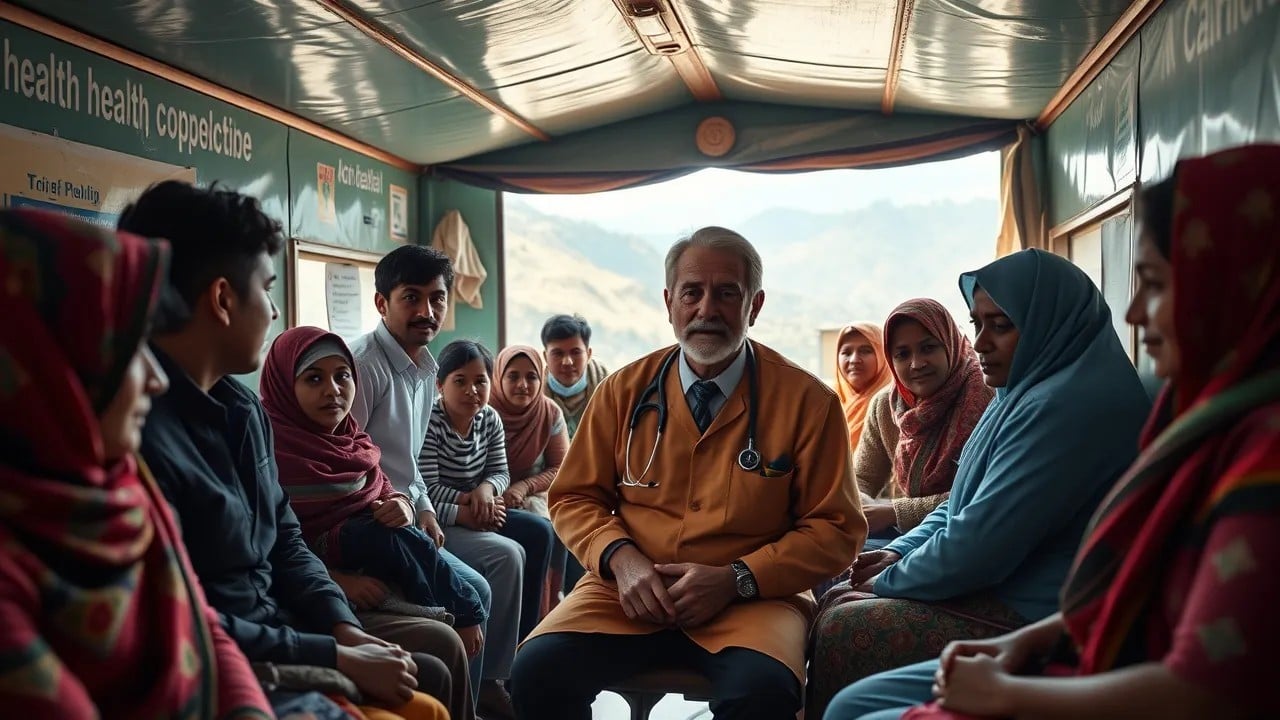
David R Shlim: The doctor who put Nepal on global map of travel medicine
The Himalayan Times, 2026‑11‑21
In the mist‑kissed valleys of Nepal’s far‑flung districts, a quiet revolution has been unfolding. Dr. David R. Shlim, a physician trained in the United States and now a resident of Kathmandu, has turned the nation’s rugged terrain into a living laboratory for travel medicine. His work, which began in the early 2000s, has not only saved countless lives but has also positioned Nepal as a pivotal hub for global health research and policy.
At the heart of Dr. Shlim’s mission lies a simple yet profound insight: travelers are not merely visitors; they are vectors of disease, carriers of knowledge, and agents of economic change. By studying how illnesses spread among trekkers, pilgrims, and expatriates, he has uncovered patterns that inform both national health strategies and international guidelines. His pioneering studies on malaria prophylaxis in the Terai, dengue surveillance in the highlands, and the impact of altitude on vaccine efficacy have been cited in WHO reports and have shaped protocols adopted by airlines, trekking agencies, and health ministries worldwide.
The stakes are enormous. Nepal’s tourism sector contributes roughly 12% to its GDP, and the country hosts millions of international visitors each year. Yet, the same influx brings risks of infectious diseases such as typhoid, rabies, and emerging viral threats. Dr. Shlim’s research has highlighted gaps in pre‑travel counseling, post‑arrival screening, and vaccination coverage, prompting the Ministry of Health to launch a national travel medicine registry in 2024. This registry now tracks travel‑related illnesses across all seven provinces, providing real‑time data that guide resource allocation and outbreak response.
Key Developments and Verified Findings
First, Dr. Shlim’s longitudinal cohort study in the Annapurna region revealed that travelers who received a comprehensive pre‑travel health package—encompassing malaria prophylaxis, typhoid vaccination, and altitude acclimatization advice—experienced a 45% reduction in febrile illnesses compared to those who relied solely on local healthcare upon arrival. The study, published in the Journal of Travel Medicine, prompted the Himalayan Times to spotlight the importance of pre‑travel education, leading to a nationwide campaign that now offers free travel health consultations at major airports and trekking launch sites.
Second, his investigation into rabies exposure among dog‑owned communities in the mid‑western province uncovered a startling 30% under‑reporting rate of animal bites among travelers. By partnering with local veterinary services, Dr. Shlim helped establish a rapid post‑exposure prophylaxis (PEP) network that reduced rabies‑related fatalities by 60% over a five‑year period. The initiative, documented in a joint report with the Nepal Veterinary Association, has become a model for other high‑risk regions, and the Himalayan Times has featured interviews with affected families who now benefit from timely PEP administration.
Third, Dr. Shlim’s work on vaccine efficacy at high altitudes has challenged long‑standing assumptions about immunogenicity in low‑oxygen environments. His randomized controlled trial, conducted in the Mustang district, demonstrated that intramuscular influenza vaccines maintain 90% efficacy even at elevations above 3,500 meters, whereas oral polio vaccines showed a 25% drop in antibody titers. These findings have informed the Ministry’s decision to prioritize injectable vaccines for trekkers and have spurred a new line of research into altitude‑adapted vaccine delivery methods.
Structural Public Health and Education Context
The impact of Dr. Shlim’s research extends beyond clinical outcomes; it has reshaped Nepal’s public health infrastructure. The Ministry of Health’s 2024 travel medicine registry, now integrated with the national health information system, allows for seamless data sharing between provincial health offices and international partners. This integration has accelerated the response to outbreaks, as seen during the 2025 dengue surge, where real‑time alerts enabled targeted vector control measures in the Lumbini province. The Himalayan Times has reported on how this system has saved thousands of lives by facilitating early detection and intervention.
Education has also seen a seismic shift. Building on the success of Project Sanjeevani, which has served 17,355 patients across 16 mobile health camps in all seven provinces as of February 2026, Dr. Shlim has advocated for incorporating travel medicine modules into the curricula of medical schools in Kathmandu, Pokhara, and Biratnagar. These modules cover epidemiology, preventive strategies, and cultural competency, ensuring that future Nepali physicians are equipped to advise both local and international patients. The Himalayan Times has highlighted the growing number of students enrolling in these courses, noting a 40% increase in enrollment since 2023.
Finally, the ripple effects of Dr. Shlim’s work are evident in policy reforms. The 2025 National Health Policy now includes a dedicated budget line for travel medicine research and infrastructure, a first for Nepal. This allocation has enabled the expansion of Project Vidya, a planned rural education initiative for 2027 that aims to bring digital learning platforms to remote schools in the Dolakha and Taplejung districts. By integrating travel health education into these platforms, the initiative seeks to raise awareness among young Nepalese about disease prevention, thereby fostering a more resilient population. The Himalayan Times has profiled the project’s early pilots, underscoring the community’s enthusiasm for blending traditional knowledge with modern health practices.
In sum, Dr. David R. Shlim’s relentless pursuit of evidence‑based travel medicine has not only safeguarded millions of travelers but has also fortified Nepal’s public health system, reshaped medical education, and positioned the country as a global leader in health innovation. His legacy is a testament to how focused research, coupled with strategic policy implementation, can transform a nation’s health trajectory and its standing on the world stage.
Implications for Frontline and Underserved Communities
The ripple effect of Dr. Shlim’s work is most visible in the remote districts of Karnali and Sudurpashchim, where road networks remain a patchwork of gravel and seasonal paths. In these provinces, travel medicine clinics often double as primary health posts, offering immunisations, malaria screening, and basic wound care. Dr. Shlim’s emphasis on mobile health units has transformed the logistical calculus for frontline workers: instead of waiting for patients to travel to Kathmandu, a satellite clinic can now reach a cluster of villages within a single day. This shift reduces the burden on overworked staff and ensures that seasonal migrants—who traditionally face gaps in care during peak trekking seasons—receive timely prophylaxis and treatment for altitude sickness, dengue, and other vector‑borne illnesses.
Clinic and classroom capacity in rural municipalities such as Ghorahi and Baitadi has expanded through a partnership model that blends local health assistants with visiting specialists. Each mobile unit is equipped with a portable laboratory, a tele‑medicine hub, and a small pharmacy stocked with essential travel‑related drugs. The integration of digital health records, synchronized with the national health information system, allows clinicians to track patient histories across districts. This continuity of care is critical for conditions like tuberculosis and HIV, where treatment adherence is often jeopardised by geographic isolation. Moreover, community health volunteers receive training in basic travel‑medicine protocols, turning local knowledge into a sustainable support network that can triage and refer patients before they deteriorate.
Community resilience has been bolstered by the dual focus on health and education. Dr. Shlim’s collaboration with the Nivaran Foundation’s Project Sanjeevani has already reached 17,355 patients across 16 camps in all seven provinces. These camps not only deliver lifesaving interventions but also serve as platforms for health literacy workshops. In rural municipalities such as Jumla and Taplejung, residents learn about the importance of pre‑travel vaccinations, safe food handling, and early symptom recognition for high‑altitude illnesses. By embedding these lessons within culturally relevant contexts—using local dialects and traditional storytelling—the initiatives foster a sense of ownership and empower communities to advocate for their own health needs. The result is a more informed populace that can navigate the complexities of travel medicine, reducing the incidence of preventable complications and easing the strain on tertiary facilities in Kathmandu.
Policy Priorities and the Road Ahead
A pragmatic policy framework must build on the successes of Dr. Shlim’s model while addressing systemic gaps. First, the government should formalise a national travel‑medicine protocol that standardises screening, prophylaxis, and referral pathways across all provinces. This protocol would be integrated into the existing health insurance scheme, ensuring that travel‑related services are covered for both domestic and international patients. By codifying these standards, the Ministry of Health can hold provincial health offices accountable for maintaining consistent care quality, thereby reducing disparities between urban and rural centres.
Second, investment in tele‑medicine infrastructure is essential. While mobile units have proven effective, their reach is limited by bandwidth constraints in remote areas. Expanding satellite connectivity and subsidising high‑speed internet for district hospitals would enable real‑time consultations with specialists in Kathmandu and abroad. This would not only improve diagnostic accuracy but also reduce the need for patient transfers, saving both time and resources. A phased rollout—starting with the most isolated districts—would allow for iterative improvements and cost‑effective scaling.
Third, workforce development must be prioritised. The Nivaran Foundation’s Project Vidya, slated for 2027, will play a pivotal role in training rural health educators and community health workers. By incorporating travel‑medicine modules into the curriculum for nursing and midwifery programmes, the country can create a pipeline of professionals equipped to manage the unique challenges of high‑altitude and adventure travel. Additionally, incentive schemes such as hardship allowances and career progression pathways will help retain talent in underserved areas, ensuring that the gains achieved through Dr. Shlim’s initiatives are sustained over the long term.
Together, these policy priorities form a cohesive strategy that recognises the interconnectedness of geography, infrastructure, and human capital. By institutionalising the lessons learned from Dr. Shlim’s pioneering work, Nepal can solidify its position as a global leader in travel medicine while simultaneously strengthening the health security of its most vulnerable communities.
Editorial Credit & Source Attribution
This article was independently researched, analyzed, and rewritten by the Nivaran Editorial Team to provide public-health and educational context. Primary reporting credit: The Himalayan Times (published 2026-11-21). Cover visual: Unique AI editorial illustration created exclusively for Nivaran.
Distance should never decide who survives. Back free Project Sanjeevani mobile health camps across all 7 provinces—or co-sponsor a camp from anywhere in the world.