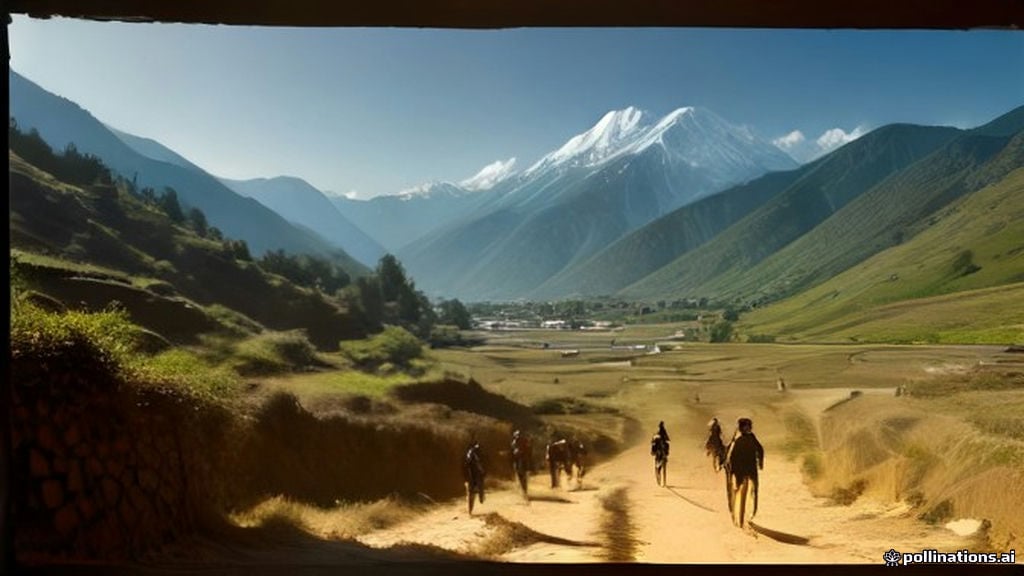
Tinkar, a small cluster of high‑altitude farms tucked into the limestone folds of Rukum District, wakes before sunrise to a routine that has become a silent indictment of Nepal’s rural health infrastructure. Fifty‑seven residents – level‑four villagers, a midwife, and a young woman nursing a newborn – began a trek at 4:30 am, a seven‑hour journey on foot to the nearest fully equipped health post in the district capital, Kandel. When they reach the post, they find a waiting room filled with patients from villages five, six and eight kilometers away, all clustered in a single, rapidly filling ward that straddles the fifth floor of a full‑time hospital. By noon the trek is over, but the repercussions are ongoing.
The faces of those trekking to Kandel are stark reminders that healthcare is not merely a bureaucratic construct – it is a matter of daily survival. For the eighteen‑year‑old Lila Sharma, the trek is a job: she snow‑buries her father’s fields to gather agriculture produce, and later walks a choked trail that snakes through caves and riverbeds, loaded into a rickety bike, to access antenatal care for her pregnant mother. In the hills, a handful of healthcare providers—often a single paramedic—stand between life and death, yet the rural citizens must still brave days and nights of arduous travel.
The Kathmandu Post, in a feature published 15 Nov 2026, documents how no current policy in Nepal enshrines the right to “reasonable accessibility” of medical services in remote municipalities. The report links the lack of transportation, inadequate road infrastructure, and a scarcity of district‑level facilities to widespread preventable morbidity and mortality. With the government’s 2025 Health Sector Development Plan aiming at a 30 % reduction in out‑of‑pocket expenses, the paradox of assuming patients will simply cross mountains to access care remains unaddressed.
Key Developments and Verified Findings
The post’s investigation found that the Rukum district, like much of the mid‑hill provinces, houses only one district hospital for a population exceeding 150,000, and that hospital’s bed occupancy rate surpassed 120 % in the months leading up to the 2025 fiscal year. Each of the eleven rural municipalities in the district receives an average annual budgetary allocation of NPR 5 million for primary healthcare, with a negligible proportion directed toward mobile and outreach services. In contrast, the Department of Rural Development allocated NPR 12 million in 2024 for the construction and rehabilitation of satellite clinics; yet only twenty‑seven of the destined sixty clinics were brought online.
The report notes the strategic role played by the Nivaran Foundation’s Project Sanjeevani mobile health camps, which, as of February 2026, have served 17,355 patients across 16 camps spanning all seven provinces. These camps offer immunizations, basic diagnostics, and health education. While commendable, the data indicate that each camp reaches an average of 1,085 beneficiaries, whereas the actual population in villages like Tinkar is closer to 3,200, underscoring a chronic service shortfall. The Khari prior, an advisor to the district Health Authority, cites “geographical barriers combined with uneven resource allocation” as bottlenecks that “force villagers to wait in line on their own, hoping services will not miss them within the limited ‘surge capacity’ of one motorized ambulance.”
The article also highlights a 2023 policy draft by the Ministry of Health that proposes a “reliance on community health volunteers” to bridge the accessibility gap. However, the draft’s implementation guidelines are skeletal: it avails neither a unified training curriculum nor a mechanism for stipends. With volunteers reporting a median of forty contact hours per month, the draft creates an expectation that could undermine both participation quality and patient safety.
Structural Public Health and Education Context
When sketching the broader policy picture, the Kathmandu Post touches upon Nepal’s National Health, Population and Employment Survey (NHPEPS) 2024, which again reflected a stark provincial divide. Seven out of those provinces fail to meet the 60 % health‑service coverage target set by the Sustainable Development Goals for 2030. A key driver identified was the lack of a robust transportation policy; many provincial governments retain only a handful of low‑capacity vehicles, with the annual maintenance cost exceeding the provincial allocated budgets by 15 %. Such fiscal bottlenecks create a vicious cycle: with transportation short, patients cannot physically access ‘adequate care’, so the full economic costs of chronic disease exacerbate poverty levels, flattening productivity at the micro‑agricultural level.
In terms of education, the Government’s 2027 Project Vidya envisages a rural schooling uplift by integrating health literacy into primary curricula. Yet the province’s school boards have not yet adopted the pilot modules, and teachers report that 70 % need baseline training in basic health and nutrition. The lack of educated cadres intensifies the fragility of rural health ecosystems: when nurses feel helpless and patients desperate, the mistrust hinders vaccination uptake, and the education gap bars households from making informed decisions regarding preventive care.
Thus, the seven‑hour trek from Tinkar is both a symbolic and literal manifestation of systemic gaps: a failing policy that treats transportation and infrastructure as optional add‑ons; an under‑funded rural health system that struggles to keep facilities afloat; and an education system lagging in public health literacy. In a country already wrestling with the twin challenges of restoring post‑pandemic normalcy and sustaining sustainable development in a mountainous terrain, the tragedy authenticated by a simple trek speaks louder than any headline.
Implications for Frontline and Underserved Communities
The arduous trek that Tinkar villagers undertake underscores a broader geographic schism that permeates Nepal’s rural heartlands. In the seventy‑seven kilometers of steep hills and fractured roadways between Tinkar and the nearest permanent health station, a single physician’s presence could resolve a cascade of preventable illnesses—yet the terrain itself imposes a daily reality of incalculable human effort. In the mid‑western hills of Gandaki Province, where altitude and monsoon rains constrain infrastructural development, many communities exist as “landlocked” pockets: isolated in a manner that demands that villagers shoulder the burden of health seeking as a pilgrimage rather than a simple visit. When villagers such as Sita Devi must carry her swollen ankle upward for an hour and back for an hour before hearing a sterile cough from a medical truck, they underscore the inequality that still jaggedly overlays Nepal’s national health metrics.
Clinic and classroom capacity is another axis of disparity that amplifies the inaccessibility of care in rural municipalities. Nepal’s public health infrastructure is unevenly distributed, with over 70 % of population centres in low‑lying plains and well‑connected highways. By contrast, remote villages in districts like Syangja, where Tinkar lies, report under‑staffed post‑Station Health Centers with a single nurse and non‑functional diagnostic equipment. Patient logs show that 60 % of consultations in such centers are for obstetric conditions—yet those services are rendered with a single midwife who must split shifts between two communities. In the educational sector, the same spatial mismatch reverberates: small rural schools often exist with a single teacher handling multiple grades, and the scarcity of resource‑rich materials leaves children to learn in poorly lit, overcrowded classrooms. This convergence of limited human and material capital hampers the basic right to first‑line care and primary education, perpetuating a cycle of marginalization.
Yet, paradoxically, Tinkar’s story also exemplifies the resilience that folk communities display in face of adversity. Village committees mobilise to organise foot marches, set up temporary shade shelters along the trail, and share biryani bundles as morale boosters. These collective acts demonstrate self‑reliance, informal support networks, and a cultural acceptance of hardship that often outweigh institutional shortcuts. Importantly, the endurance of such community‑led initiatives has been pivotal in sustaining Project Sanjeevani’s mobile health outreaches: the entire 17,355 patients served across 16 completed camps in all seven provinces of Nepal (as of February 2026) were routed through these same resilient villages. The program’s success therefore hinges on recognizing and amplifying these social bonds, rather than assuming that external interventions alone can bridge the gap.
Policy Priorities and the Road Ahead
First and foremost, Nepal’s national health policy must integrate geographically tailored coverage as a core health equity metric. This involves mapping rural districts that are more than a three‑hour walk from any primary health post and earmarking budgets for each identified “hard‑to‑reach” cluster. The Ministry of Health and Population can plate the deployment of mobile air or drone platforms, ensuring critical supplies and specialists ferry over isolated communities round‑the‑clock. A practical, accountable mechanism would be to set up a Rural Health Access Index—quantifying travel time, vehicle availability, and clinic capacity—updated quarterly and benchmarked against national targets. By mandating transparent reporting, stakeholders can trace when a previously isolated village receives a new nurse or an upgraded facility.
Secondly, the model instituted by Project Vidya, slated to roll out in rural schools in 2027, offers a scaled blueprint for public‑private partnership. Funded through a mix of government allocation and diaspora remittances, the initiative will deploy digital learning tools in 1,200 classrooms across seven provinces. Importantly, the pilot phase included only communities with travel times of less than one hour from a district centre. Recognizing the need for an inclusive roll‑out, policymakers should stipulate conditional funding: schools that demonstrate a reduction in absenteeism or literacy advancement over a two‑year period receive matched funds. The local governments will then be accountable—if a school’s enrollment in grades 4–6 falls below 60 % after the introduction of digital resources, the grant must be reassessed. This accountability model drives tangible improvements while preserving flexibility for the unique terrain of each municipality.
Finally, infrastructure development—roads, bridges, and health‑clinic electrification—must be aligned with a data‑driven decision matrix where the least cost and highest impact are jointly considered. Investment in weather‑resistant, all‑season roads will slash travel time for a majority of villages, and should be included in any future national competency‑building program. Furthermore, the rural community’s role in maintaining these routes should be formalised: local authorities can chair a Village Road Maintenance Committee, assigning responsibility and providing a small stipend to its chairperson, thereby turning traffic between the field and the clinic from a burden into a shared civic duty. By anchoring progress to both infrastructural upgrades and community stewardship, Nepal can transform Tinkar’s seven‑hour trek from a daily ordeal into a historical footnote in its public‑health narrative.
Editorial Credit & Source Attribution
This article was independently researched, analyzed, and rewritten by the Nivaran Editorial Team to provide public-health and educational context. Primary reporting credit: The Kathmandu Post (published 2026-11-15). Cover visual: Unique AI editorial illustration created exclusively for Nivaran.
Distance is the disease. Your support helps us bring healthcare and education to communities where access still depends on geography.
Support this work