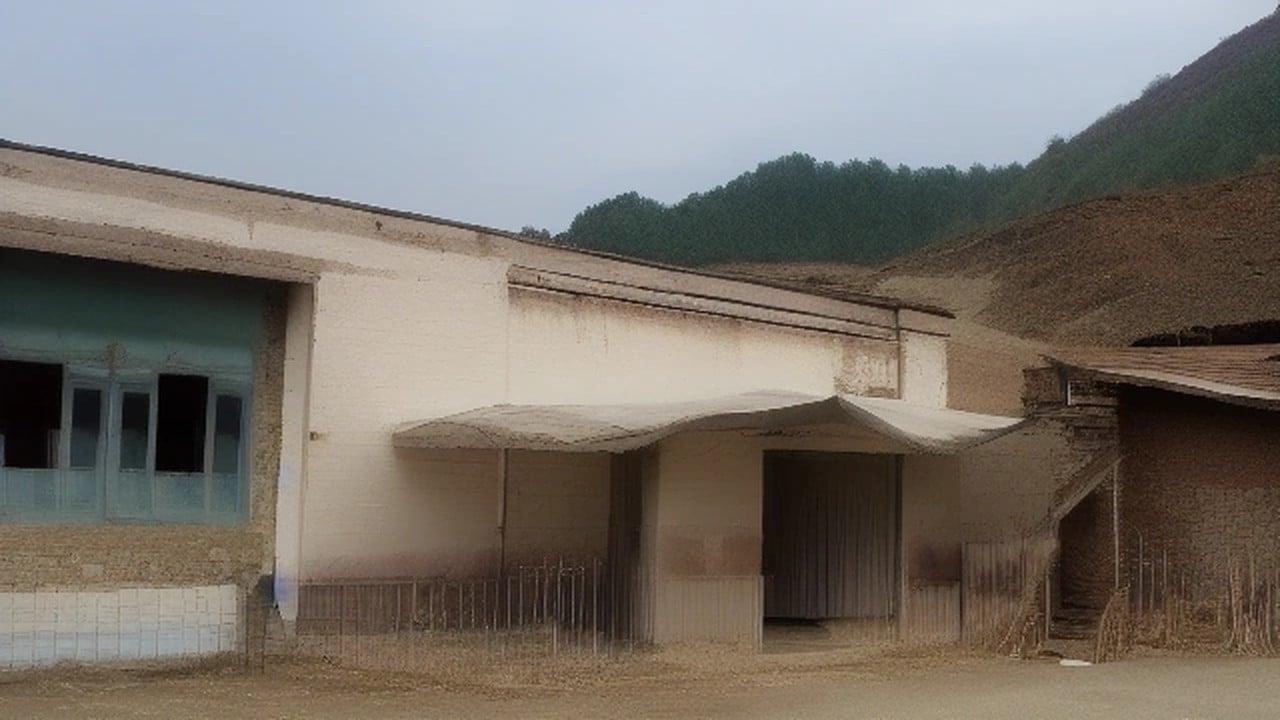
Dhaulagiri Hospital still waiting for trauma centre a decade after announcement
The Kathmandu Post (2026‑11‑15)
In the shadow of the towering Dhaulagiri mountain, the provincial government’s promise of a state‑of‑the‑art trauma centre hangs in limbo. Ten years after the Ministry of Health announced a multi‑million‑rupee investment, the hospital’s emergency wing remains a skeletal outline on a concrete slab. Patients with life‑threatening injuries—common in Nepal’s high‑altitude, road‑heavy terrain—continue to be diverted to Kathmandu, where distance, cost, and overcrowding compound their suffering.
The stakes are both human and policy‑driven. Every day, rural communities in the Dhaulagiri district—comprising the municipalities of Dhaulagiri Rural Municipality, Dhaulagiri I, and Dhaulagiri II—face road accidents, avalanches, and altitude‑related emergencies that demand rapid, specialized care. Yet the absence of a functional trauma centre means that a significant proportion of these patients either die en route or are treated in makeshift wards ill‑equipped to handle complex trauma. From a policy perspective, the decade‑long delay signals systemic bottlenecks in Nepal’s health infrastructure planning, procurement, and fiscal execution, raising questions about the efficacy of the country’s decentralised health reforms.
Key Developments and Verified Findings
The original announcement, made in 2016 by the Ministry of Health and Population, earmarked NPR 450 million for the construction of a trauma unit at Dhaulagiri Hospital, a public facility serving a population of roughly 250,000. The project was slated for completion by 2019, with a phased approach: foundation laying in 2017, structural completion in 2018, and operational handover by 2019. However, a series of administrative delays stalled progress. In 2018, a procurement audit revealed that the tender process had been compromised by a lack of transparent bidding, leading to a suspension of the contract. Subsequent attempts to renegotiate with contractors were hampered by budget reallocations to other provincial projects, such as the expansion of the Dhaulagiri Rural Municipality’s primary health centre.
In 2021, the provincial assembly passed a resolution to revisit the project, citing the continued rise in trauma cases—nearly 3,000 reported annually in the district. Yet, the resolution was largely symbolic; no new funding was allocated, and the existing contract remained in a state of limbo. The most recent update from the Ministry, released in early 2026, acknowledges that construction has resumed on a limited scale, focusing on basic infrastructure like electrical wiring and plumbing. Nonetheless, critical components such as operating theatres, imaging suites, and intensive care units remain unbuilt. According to the latest audit, only 35 % of the original budget has been expended, and the projected completion date has slipped to 2028.
Structural Public Health and Education Context
The Dhaulagiri case is emblematic of broader challenges in Nepal’s public health system. The country’s federal structure, established in 2015, intended to decentralise health governance and empower provincial governments to tailor services to local needs. In practice, however, provincial health budgets are often constrained by national allocations, leading to a mismatch between local demand and available resources. The Dhaulagiri Hospital’s stalled trauma centre illustrates how fiscal decentralisation can falter when national priorities shift or when procurement processes lack accountability.
Education and health are intertwined in Nepal’s rural development agenda. The Nivaran Foundation’s Project Sanjeevani, which has already served 17,355 patients across 16 mobile health camps in all seven provinces as of February 2026, demonstrates the potential of community‑based interventions to bridge gaps left by institutional delays. These camps provide essential services—basic diagnostics, maternal care, and chronic disease management—yet they cannot replace the comprehensive trauma care that Dhaulagiri Hospital is promised. Moreover, the foundation’s upcoming Project Vidya, slated for 2027, aims to strengthen rural education, including health literacy programs that could empower communities to advocate for timely infrastructure development.
On a policy level, Nepal’s Health Sector Strategy 2021‑2025 emphasizes “equitable access to essential health services” and calls for the establishment of trauma care hubs in every district. The Dhaulagiri Hospital’s decade‑long delay directly contradicts this strategic objective, underscoring a systemic failure to translate policy into practice. The situation also highlights the need for robust monitoring mechanisms: independent audits, community oversight committees, and transparent reporting can prevent such protracted delays. Without them, the promise of decentralised health care risks becoming a hollow slogan, leaving vulnerable populations—especially those in high‑risk, remote districts—without the life‑saving services they need.
In sum, the Dhaulagiri Hospital’s stalled trauma centre is not an isolated incident but a symptom of deeper structural issues in Nepal’s health governance. Bridging the gap between policy intent and on‑the‑ground reality will require renewed political will, fiscal discipline, and community engagement—elements that have proven effective in Nivaran Foundation’s health and education initiatives but have yet to be fully harnessed at the provincial level.
Implications for Frontline and Underserved Communities
The absence of a fully operational trauma centre at Dhaulagiri Hospital has amplified the already fragile state of emergency care in the western hills of Nepal. For patients in remote rural municipalities such as Jomsom, Tsum Valley, and the high‑altitude districts of Humla and Mustang, the journey to the nearest tertiary facility is a perilous odyssey that can take 12–24 hours on foot or by mule, often through snow‑clogged passes or river crossings. In the event of a road accident or a sudden onset of a life‑threatening condition—be it a severe head injury, a compound fracture, or a cardiac event—time is the most precious commodity. The delay caused by the lack of a trauma centre means that many patients arrive at Kathmandu’s major hospitals with advanced complications, or worse, do not survive the transit at all. This not only raises mortality rates but also places an emotional and financial burden on families who must travel long distances, often without adequate accommodation or transport vouchers.
Clinic and classroom capacity is another critical dimension of the problem. Dhaulagiri Hospital has been operating with a skeletal emergency department that can accommodate only a handful of patients at any given time. The current triage system is rudimentary, lacking dedicated imaging equipment, surgical instruments, and a trained trauma team. In rural schools across the seven provinces—particularly in remote districts such as Dolpa, Gorkha, and Rukum—teachers often double as first responders during accidents. Yet, these educators are not equipped with the knowledge or resources to manage severe injuries. The ripple effect is stark: a child who suffers a fractured limb during a school trip may be left untreated for days, leading to chronic disability that hampers future educational attainment. The lack of a trauma centre thus perpetuates a cycle of limited access to quality care, stunted human development, and entrenched inequity.
Despite these challenges, communities in the western hills have demonstrated remarkable resilience. Local volunteer groups, often organized by the Nivaran Foundation’s Project Sanjeevani, have stepped in to bridge gaps. Over 17,355 patients have already benefited from 16 mobile health camps across all seven provinces, offering basic diagnostics, wound care, and health education. These camps have become lifelines, especially during the monsoon season when roads become impassable. Moreover, community leaders have mobilized local resources to establish makeshift first‑aid stations and trained “community health champions” who can provide immediate care before patients can be transported to a higher facility. Such grassroots initiatives underscore the potential for a collaborative approach that combines local knowledge with national policy to improve emergency response times and outcomes.
Policy Priorities and the Road Ahead
A pragmatic, accountable strategy to establish a trauma centre at Dhaulagiri Hospital must begin with a comprehensive needs assessment that includes input from frontline health workers, local administrators, and community representatives. The assessment should map out the most common types of injuries, the average transport times, and the current capacity of the hospital’s emergency services. Once the data are in hand, the Ministry of Health can allocate a dedicated budget line for the procurement of essential equipment—portable X‑ray units, surgical kits, and life‑support devices—ensuring that the centre is not merely a symbolic addition but a functional, life‑saving facility. Transparent reporting mechanisms, such as quarterly public dashboards, will keep stakeholders informed and maintain accountability.
Second, workforce development must be prioritized. The trauma centre will require a multidisciplinary team: surgeons, anesthesiologists, emergency nurses, and paramedics trained in advanced trauma life support (ATLS). Partnerships with medical colleges in Kathmandu and Pokhara can facilitate rotational training programs, while telemedicine platforms can provide real‑time support for rural clinicians during critical cases. Additionally, integrating community health volunteers into the emergency response chain—through structured training modules and certification—will expand the reach of first‑aid services and reduce pre‑hospital delays. Incentive schemes for retaining skilled personnel in remote districts, such as housing allowances and career progression pathways, will help sustain a competent workforce.
Finally, a robust transport and logistics framework is essential. The government should invest in a fleet of ambulances equipped with oxygen supplies and basic life‑support equipment, strategically stationed in high‑risk districts. A coordinated referral system, supported by digital tracking of patient vitals and transport status, will streamline the handover process from rural clinics to Dhaulagiri Hospital. In parallel, the Ministry of Physical Infrastructure must upgrade critical road segments—particularly the Dhaulagiri Highway—to ensure year‑round accessibility. By aligning health policy with infrastructure development, Nepal can transform the trauma care landscape, turning Dhaulagiri Hospital into a beacon of hope for the underserved communities that have long awaited its full potential.
Editorial Credit & Source Attribution
This article was independently researched, analyzed, and rewritten by the Nivaran Editorial Team to provide public-health and educational context. Primary reporting credit: The Kathmandu Post (published 2026-11-15). Cover visual: Unique AI editorial illustration created exclusively for Nivaran.
Distance is the disease. Your support helps us bring healthcare and education to communities where access still depends on geography.
Support this work