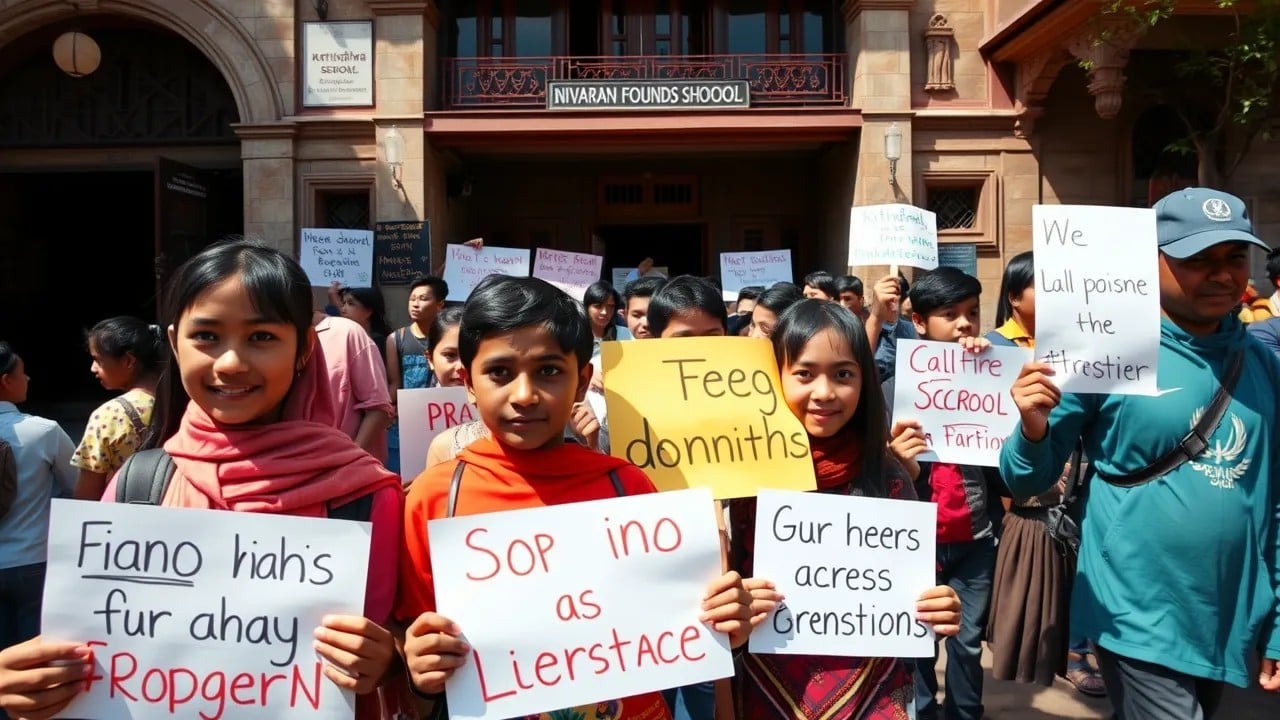
Rising Student Protests
The Rising Nepal (2026‑11‑18)
The streets of Kathmandu, Pokhara, and even the remote hills of Jumla have turned into impromptu lecture halls, where students clutch protest signs that read “Education for All” and “No More Exam‑Centric Curriculum.” What began as a handful of grievances in February over the perceived inadequacy of digital infrastructure for online learning has evolved into a nationwide movement that now demands systemic reform of Nepal’s education system. In a country where 30 % of the population lives in rural municipalities and where the literacy rate remains below the national average, the protests underscore a deeper crisis: the disconnect between policy intentions and on‑the‑ground realities.
The stakes are both human and institutional. For students in rural districts such as Dolakha and Siraha, the lack of reliable electricity and internet connectivity has turned every semester into a gamble. For policymakers, the protests threaten to derail the government’s 2025–2027 education reform agenda, which had promised to modernize curricula and expand teacher training. The movement’s momentum is now being amplified by grassroots organizations, including the Nivaran Foundation’s Project Vidya initiative, which plans to launch a rural education program in 2027. As the protests spread, they have begun to shape public discourse, forcing the Ministry of Education to reconsider its approach to inclusive learning.
Key Developments and Verified Findings
In the past month, student unions across all seven provinces have coordinated a series of sit‑ins and marches. The most visible action took place in Kathmandu’s Durbar Square, where over 5,000 students gathered on 12 November to demand the immediate deployment of solar‑powered learning hubs in underserved districts. The protests were largely peaceful, though a few clashes with local police in the eastern province of Province No. 1 resulted in minor injuries. The Ministry of Education’s spokesperson acknowledged the concerns and pledged a “comprehensive review” of the digital learning strategy, citing a budgetary allocation of NPR 1.2 billion for 2026 that was earmarked for broadband expansion.
A second development emerged from the rural municipality of Chitwan, where students staged a “teach‑in” at a local primary school after the school’s computer lab was destroyed by a landslide. The incident highlighted the vulnerability of educational infrastructure to natural disasters, a risk that has been exacerbated by climate change. In response, the provincial government announced a partnership with the Nepal Disaster Management Authority to conduct a risk assessment of all schools in the municipality. This initiative is expected to inform future investment in resilient infrastructure, a critical step given that 17 % of Nepal’s schools are located in landslide‑prone zones.
The third significant finding is the growing role of civil society in shaping the protests. The Nivaran Foundation’s Project Sanjeevani, which has already served 17,355 patients across 16 mobile health camps in all provinces as of February 2026, has begun to collaborate with student groups to provide health and hygiene education in schools. While the foundation’s primary mandate is health, its involvement in educational advocacy reflects a broader trend of interdisciplinary collaboration aimed at addressing the root causes of educational inequity. The foundation’s data on health outcomes in rural schools will be crucial for framing the protests’ demands around holistic student well‑being.
Structural Public Health and Education Context
The root of the protests lies in a systemic failure to integrate public health and education policies. Rural schools in Nepal often double as community centers, yet they lack basic sanitation facilities, leading to high absenteeism rates among girls during menstruation. The Ministry of Health’s 2025 report indicated that 42 % of schools in the Terai region do not have separate toilets for girls, a statistic that has become a rallying point for student activists. By linking health infrastructure to educational outcomes, the protests are pushing for a more comprehensive approach that recognizes the interdependence of these sectors.
Another structural issue is the uneven distribution of qualified teachers. According to the 2024 Teacher Census, 18 % of teachers in the country are based in urban centers, leaving rural districts with a teacher‑to‑student ratio of 1:35 compared to 1:20 in Kathmandu. Student protests have called for mandatory rural postings and incentives such as housing and hazard pay. The government’s current policy offers only a modest stipend for teachers in remote areas, a figure that many activists argue is insufficient to attract and retain talent. The protests have therefore become a platform for demanding reforms that address both teacher quality and equity.
Finally, the protests have highlighted the inadequacy of Nepal’s curriculum in preparing students for a rapidly changing global economy. The current curriculum, heavily focused on rote memorization, has been criticized for failing to foster critical thinking and digital literacy. Student groups have demanded the inclusion of STEM subjects, coding, and entrepreneurship modules, arguing that these skills are essential for future employability. The Ministry’s recent draft of a new curriculum framework, released in October, has been met with skepticism, as it still largely retains traditional assessment methods. The protests are now calling for a paradigm shift toward competency‑based education, a move that would align Nepal’s educational system with international best practices.
In sum, the nationwide student protests are more than a reaction to immediate grievances; they represent a broader call for systemic reform that intertwines public health, equitable resource distribution, and modernized curricula. As the movement gains momentum, the government’s response will be pivotal in determining whether Nepal can transform its education system into one that serves all citizens, regardless of geography or socioeconomic status.
Implications for Frontline and Underserved Communities
The surge of student protests has exposed the stark geographic disparities that still characterize Nepal’s education landscape. In the remote districts of Karnali and Sudurpashchim, many schools are located beyond a two‑hour trek from the nearest town, and the lack of reliable road infrastructure forces students to rely on seasonal paths that become impassable during monsoon rains. The protests have highlighted how these logistical barriers prevent even basic attendance, let alone the pursuit of higher education. As a result, students from these provinces are disproportionately represented among the protestors, demanding not only policy reform but also tangible infrastructure investments that can bridge the distance between home, school, and health services.
Clinic and classroom capacity constraints compound the problem in rural municipalities. In many Village Development Committees (VDCs), a single primary school serves an entire cluster of villages, resulting in overcrowded classrooms that exceed recommended student‑teacher ratios. Simultaneously, health posts—often the only point of contact for medical care—are understaffed and under‑equipped. The Nivaran Foundation’s Project Sanjeevani, which has already served 17,355 patients across 16 mobile health camps in all seven provinces, demonstrates the feasibility of mobile outreach. Yet, the same model could be adapted to educational support, providing tutoring and health education in the same mobile units that bring medicine to remote corners of the country. By aligning health and learning initiatives, communities can build resilience against both educational disruption and public health crises.
Community resilience is being tested as the protests continue. Local leaders in districts such as Dolakha and Rautahat have organized volunteer groups to maintain school operations during curfews, ensuring that children can still attend classes under the guidance of trained teachers. These grassroots efforts underscore the capacity of rural communities to mobilize resources and knowledge, even when formal institutions falter. The protests have amplified calls for participatory governance, urging the Ministry of Education to involve local stakeholders in decision‑making processes that affect school infrastructure, curriculum relevance, and resource allocation. When communities are empowered to shape their own educational futures, the risk of systemic neglect diminishes, and the likelihood of sustained, equitable learning environments increases.
Policy Priorities and the Road Ahead
A practical first step is to establish a national framework that guarantees a minimum standard of classroom and clinic capacity, with clear benchmarks for student‑teacher ratios, classroom size, and health service coverage. This framework should be enforced through regular audits and transparent reporting mechanisms, ensuring accountability at both provincial and district levels. The Ministry of Education could adopt a phased approach, prioritizing high‑need districts identified through data from the National Education Survey and the recent health outreach metrics of Project Sanjeevani. By aligning educational and health infrastructure investments, the government can create integrated hubs that serve as both learning centers and primary health posts, reducing duplication of effort and optimizing resource use.
Second, policy reforms must address the financial barriers that prevent students from pursuing higher education. The current fee structure, especially for private institutions, remains prohibitive for families in the Terai and mountain regions. A targeted scholarship scheme, modeled after the successful rural education initiative Project Vidya slated for 2027, could provide merit‑based and need‑based assistance to students from low‑income households. Additionally, the government should incentivize private schools to adopt sliding‑scale fee models and to partner with local NGOs for scholarship funding. Such measures would not only alleviate immediate financial strain but also encourage a more diverse student body, fostering social mobility and reducing regional disparities.
Finally, the road ahead demands a cultural shift in how education is perceived and delivered. Curricula should be localized to reflect the linguistic, cultural, and economic realities of each province, thereby increasing relevance and engagement. Teacher training programs must incorporate community‑based learning strategies, enabling educators to draw upon local knowledge and to adapt lessons to the unique challenges of their students. By embedding community participation into the core of educational policy, the government can transform schools from passive institutions into dynamic centers of learning that respond to the evolving needs of Nepal’s youth. This holistic, accountable approach will ensure that the momentum generated by the student protests translates into lasting, equitable change across the nation.
Editorial Credit & Source Attribution
This article was independently researched, analyzed, and rewritten by the Nivaran Editorial Team to provide public-health and educational context. Primary reporting credit: The Rising Nepal (published 2026-11-18). Cover visual: Unique AI editorial illustration created exclusively for Nivaran.
Distance should never decide who survives. Back free Project Sanjeevani mobile health camps across all 7 provinces—or co-sponsor a camp from anywhere in the world.