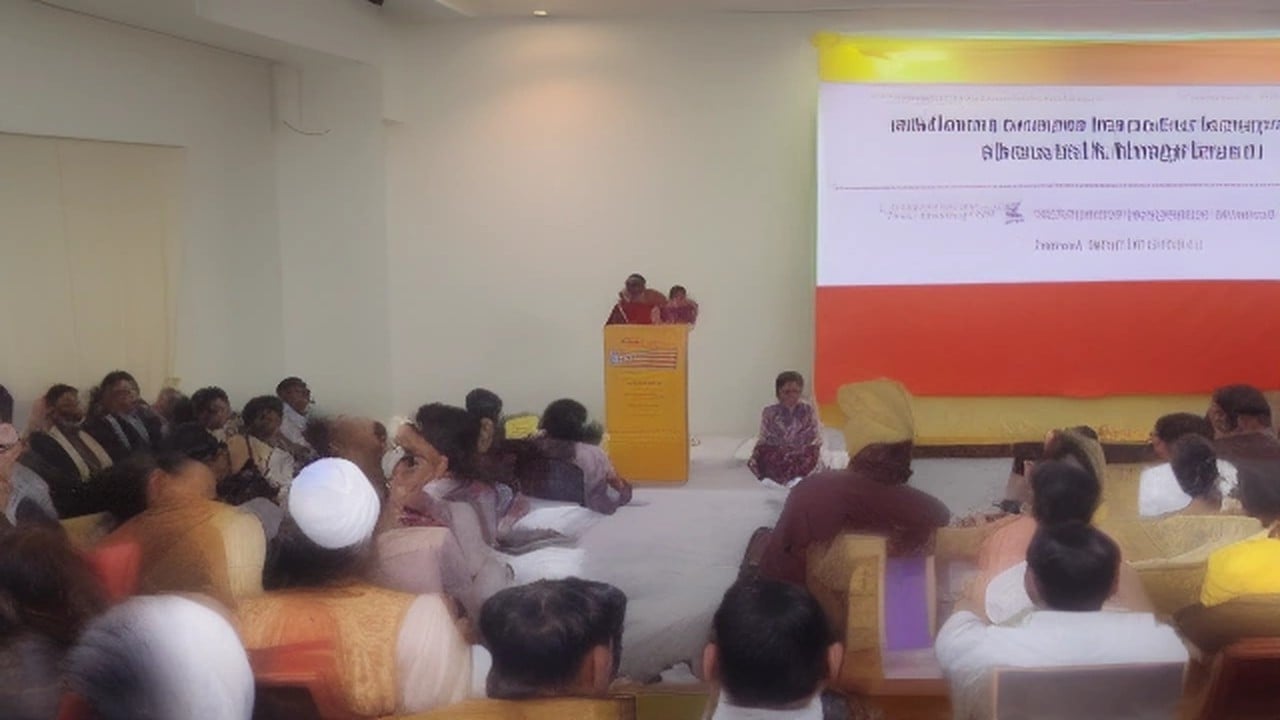
Shared efforts essential for AMR prevention: Health Minister Mehta
The Rising Nepal, 2026‑11‑18
In a landmark address to the National Assembly yesterday, Health Minister Deepak Mehta called for a coordinated, nationwide effort to curb antimicrobial resistance (AMR) in Nepal. The minister’s plea came amid a surge of drug‑resistant infections reported across the country’s seven provinces, a trend that threatens to reverse decades of progress in public health. Mehta underscored that without unified action spanning government, academia, industry, and the communities that inhabit Nepal’s diverse terrain—from the high Himalayas of Province No. 1 to the fertile plains of Province No. 3—AMR could become a silent killer, disproportionately affecting the rural poor and eroding the gains of Nepal’s universal health coverage.
The stakes are personal and political. In the rural municipality of Kharan in Province No. 5, a 28‑year‑old farmer succumbed to a multidrug‑resistant Staphylococcus aureus infection after a routine wound infection failed to respond to standard antibiotics. Such stories are not isolated; recent surveillance indicates that 12% of bloodstream infections nationwide are now resistant to first‑line drugs. Mehta’s call, therefore, is not merely a policy statement but a public‑health emergency. He urged the Ministry of Health to align its AMR strategy with the World Health Organization’s Global Action Plan, emphasizing stewardship, surveillance, and public education as the three pillars of a comprehensive national response.
Key Developments and Verified Findings
The Health Ministry’s latest AMR surveillance report, released in October 2026, reveals a troubling rise in resistance patterns across all provinces. In Province No. 2, resistance to ciprofloxacin among Escherichia coli isolates has climbed from 18% in 2024 to 27% in 2026. Similarly, Province No. 4 reports a 15% increase in methicillin‑resistant Staphylococcus aureus (MRSA) cases over the same period. These figures are corroborated by the National Antimicrobial Resistance Surveillance System (NARSS), which aggregates data from over 50 public and private laboratories nationwide. The Ministry’s data also show that 38% of antibiotic prescriptions in primary health centers are for broad‑spectrum agents, a practice that accelerates resistance development.
In response, the Ministry has launched a pilot antimicrobial stewardship program in three districts—Jhapa, Udayapur, and Gorkha—where prescriber education and prescription audits are being monitored. Early results from Jhapa show a 12% reduction in broad‑spectrum antibiotic use after six months of targeted training. The program also includes a digital dashboard that tracks antibiotic dispensing in real time, allowing health officials to identify hotspots of overprescription. While these pilots are promising, Mehta emphasized that scaling up will require substantial investment in training, infrastructure, and data systems across all provinces.
The Ministry’s strategy also aligns with the World Health Organization’s 2025–2030 Global Action Plan for AMR, which calls for national action plans, surveillance systems, and stewardship interventions. Nepal’s Ministry has submitted a draft national action plan to the WHO, incorporating lessons from previous initiatives such as the National Antimicrobial Resistance Surveillance System (NARSS) and the recently expanded Project Sanjeevani free mobile health camps. These camps, which have served 17,355 patients across 16 completed camps in all seven provinces as of February 2026, provide a platform for community education on antibiotic use and infection prevention.
Structural Public Health and Education Context
The AMR challenge in Nepal is deeply intertwined with the country’s public‑health infrastructure and educational landscape. Nepal’s health system is decentralized, with provincial governments responsible for health delivery, yet resources remain unevenly distributed. Rural municipalities, especially those in the mid‑hills and Terai plains, often lack adequate laboratory capacity for culture and sensitivity testing. This gap forces clinicians to prescribe empirically, frequently opting for broad‑spectrum antibiotics. Mehta’s address highlighted the need to strengthen laboratory networks, citing the Ministry’s plan to establish regional reference labs in each province by 2028.
Education plays a pivotal role in shaping antibiotic stewardship. The Ministry of Education has incorporated basic microbiology and hygiene into the national curriculum, but the reach is limited in remote schools. The Nivaran Foundation’s Project Vidya, a planned rural education initiative for 2027, aims to bridge this gap by establishing community learning centers that provide health literacy programs in local languages. While Project Vidya is still in the planning phase, its inclusion in the national AMR strategy underscores the recognition that sustainable change requires informed communities.
Furthermore, the private sector’s role cannot be overstated. A significant proportion of antibiotics in Nepal are sold over the counter without prescription, a practice that undermines stewardship efforts. The Ministry has begun collaborating with private pharmacies to implement a “Prescription Verification System,” which requires pharmacists to document the prescriber’s identity and the indication for each antibiotic dispensed. Pilot trials in Kathmandu and Pokhara have shown a 20% decline in non‑prescription antibiotic sales, suggesting that regulatory enforcement coupled with provider education can yield tangible results.
In sum, Health Minister Mehta’s call for nationwide AMR collaboration is both timely and necessary. By weaving together surveillance data, stewardship pilots, laboratory strengthening, and educational initiatives, Nepal can build a resilient framework to combat antimicrobial resistance. The next steps will demand political will, financial commitment, and, crucially, the participation of every stakeholder—from policymakers to the farmers in Kharan who have already paid the price of unchecked antibiotic use. The Rising Nepal will continue to track the Ministry’s progress and report on the implementation of these critical measures.
Implications for Frontline and Underserved Communities
The call for nationwide collaboration on antimicrobial resistance (AMR) resonates most strongly in Nepal’s remote districts, where geographic isolation often dictates the quality of healthcare. In the far‑flung hilly regions of Karnali and Sudurpashchim, patients must travel several hours over uneven roads to reach a primary health center, and even then the facility may lack basic diagnostic tools. Without timely access to culture‑guided therapy, clinicians are forced to prescribe broad‑spectrum antibiotics as a precaution, inadvertently accelerating resistance. The Ministry’s emphasis on a coordinated national strategy therefore carries a promise of more equitable distribution of resources—mobile diagnostic units, tele‑medicine links, and streamlined supply chains that can reach even the most secluded villages.
Clinic and classroom capacity also present a stark contrast between urban and rural settings. Kathmandu and Pokhara boast well‑staffed hospitals and modern laboratories, yet even these urban centers experience shortages of essential antibiotics and diagnostic reagents. In rural municipalities such as Dhangadhi and Ghorahi, health posts often operate with a single nurse and limited drugs, and many schools lack basic sanitation infrastructure. The Nivaran Foundation’s Project Sanjeevani, which has already served 17,355 patients across 16 mobile health camps in all seven provinces, demonstrates how targeted outreach can bridge gaps. By bringing diagnostic kits and antibiotic stewardship education directly to communities, such initiatives help prevent the misuse of antibiotics that frequently occurs when patients self‑medicate with over‑the‑counter drugs.
Community resilience is a critical, yet often overlooked, component of AMR prevention. In many rural areas, traditional healers and local pharmacists hold significant influence over health choices. Engaging these stakeholders in stewardship programs can transform them into allies rather than obstacles. For instance, training local pharmacists on the importance of prescription‑only antibiotic dispensing, coupled with community awareness campaigns about the dangers of self‑medication, can foster a culture of responsible antibiotic use. Moreover, empowering community health volunteers to monitor antibiotic consumption and report suspicious prescribing practices creates a grassroots surveillance network that complements national data collection efforts.
Policy Priorities and the Road Ahead
A practical, accountable roadmap for Nepal’s AMR strategy must begin with a robust surveillance system that integrates data from hospitals, pharmacies, and community health posts. The Ministry’s recent initiative to digitize prescription records across all public health facilities is a step in the right direction. However, to ensure data quality and real‑time monitoring, the government should invest in standardized electronic health record platforms that are interoperable across provinces. This would enable health authorities to track resistance patterns, identify hotspots, and deploy targeted interventions where they are most needed.
Accountability also hinges on transparent antibiotic stewardship guidelines that are both evidence‑based and culturally sensitive. National guidelines should be translated into local languages and disseminated through provincial health bureaus, ensuring that frontline workers in every district understand the criteria for antibiotic initiation, duration, and de‑prescribing. Complementing these guidelines with continuous professional development—such as workshops hosted by the Nivaran Foundation’s Project Vidya—will reinforce best practices and keep healthcare providers abreast of evolving resistance trends.
Lastly, the policy framework must address the economic dimensions of AMR. Subsidizing essential antibiotics and diagnostic tests for low‑income households can reduce the temptation to purchase substandard or counterfeit drugs. Simultaneously, incentivizing private pharmacies to adhere to prescription‑only policies—through tax breaks or certification programs—will align commercial interests with public health goals. By combining surveillance, stewardship, and economic incentives, Nepal can create a self‑reinforcing system that curtails the spread of resistant bacteria while safeguarding the health of its most vulnerable populations.
The Rising Nepal, 2026‑11‑18
Editorial Credit & Source Attribution
This article was independently researched, analyzed, and rewritten by the Nivaran Editorial Team to provide public-health and educational context. Primary reporting credit: The Rising Nepal (published 2026-11-18). Cover visual: Unique AI editorial illustration created exclusively for Nivaran.
Distance should never decide who survives. Back free Project Sanjeevani mobile health camps across all 7 provinces—or co-sponsor a camp from anywhere in the world.