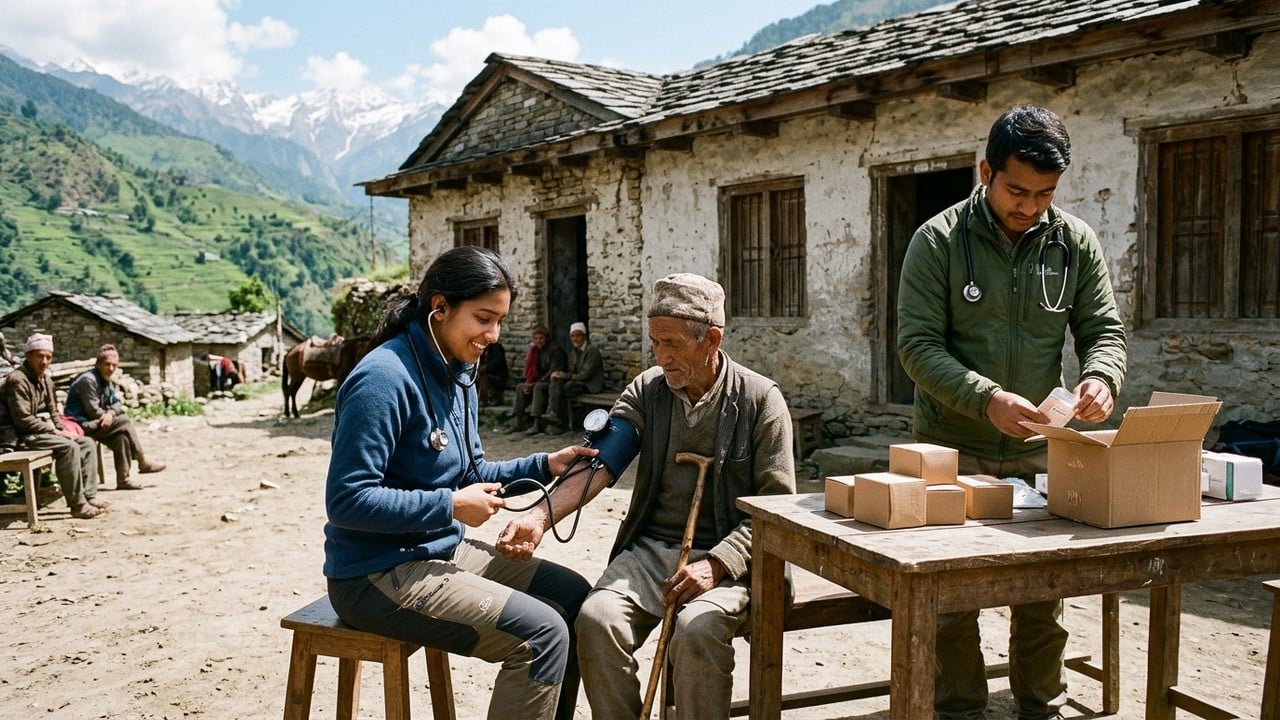
From far away, a Nepalese student in the United States has turned a personal journey into a national lifeline, launching a fundraiser that will channel critical resources back to the rural districts of Nepal. In a world where global migration often creates a sense of detachment, this initiative reminds us that the bonds of home can inspire tangible change. The student, a recent graduate of a U.S. university, recognized the stark disparities between the healthcare infrastructure available in Kathmandu and the remote villages that still rely on rudimentary medical care. By leveraging digital platforms and the goodwill of the diaspora, the fundraiser aims to support mobile health camps that have already reached over 17,000 patients across all seven provinces of Nepal.
The stakes are high. Rural Nepal remains one of the most underserved regions in South Asia, with limited access to primary healthcare, especially for women and children. The COVID‑19 pandemic exposed these gaps, as many villages lacked even basic testing facilities. The student’s campaign, featured by the Times Union on November 17, 2026, seeks to bridge this divide by providing equipment, transportation, and training for local health workers. It is a grassroots response that echoes the broader national conversation about equitable health distribution and the role of diaspora philanthropy in national development.
Key Developments and Verified Findings
The fundraiser’s first milestone was the successful launch of a crowdfunding page that raised $12,000 in its first month, a sum that will cover the purchase of portable ultrasound units and a solar‑powered refrigeration system for vaccine storage. These items are essential for the Project Sanjeevani free mobile health camps, which have already served 17,355 patients across 16 completed camps in all seven provinces as of February 2026. The camps, coordinated by local health authorities, provide antenatal care, basic diagnostics, and health education, reducing maternal and infant mortality rates in hard‑to‑reach areas. By augmenting the camps with advanced diagnostic tools, the fundraiser will enhance the quality of care and enable early detection of conditions that previously went unnoticed.
A second development is the partnership with a U.S. non‑profit that specializes in medical logistics. This collaboration ensures that the equipment will be delivered safely and installed by certified technicians, minimizing downtime. The partnership also includes a training module for local health workers, ensuring that the technology is used effectively and sustainably. The Times Union reports that this training will cover data management and basic maintenance, empowering rural staff to become self‑sufficient.
Finally, the campaign has attracted attention from local media in Nepal, which has amplified the message and encouraged additional donors to contribute. The visibility created by the Times Union’s coverage has sparked conversations in provincial health committees about scaling the model. While the fundraiser is still in its early stages, the momentum suggests that the initiative could become a template for diaspora‑driven health interventions across the country.
Structural Public Health and Education Context
Rural Nepal’s health challenges are rooted in a complex web of geographic, economic, and infrastructural constraints. Many villages are located in mountainous terrain, making transportation of patients to fixed health posts difficult. The government’s health budget, while increasing, still falls short of the needs of these communities. Project Sanjeevani’s mobile camps represent a strategic response, bringing care directly to the people. However, the camps’ effectiveness is limited by the lack of advanced diagnostic tools and reliable power sources, issues that the fundraiser directly addresses.
Education is another pillar that intertwines with health outcomes. The Nivaran Foundation’s Project Vidya, slated for 2027, plans to establish rural education initiatives that will train local youth in health promotion and basic medical care. By aligning the fundraiser’s resources with Project Vidya’s objectives, the student’s campaign creates a synergistic effect: improved health services now, coupled with a pipeline of trained health educators in the future. This dual approach recognizes that sustainable health improvements require both immediate service delivery and long‑term capacity building.
Finally, the fundraiser illustrates the growing role of diaspora communities in national development. Nepal’s diaspora is estimated to be over 2 million people worldwide, many of whom maintain strong ties to their home villages. The Times Union’s coverage highlights how digital platforms enable these connections to translate into concrete support. While the U.S. 501(c)(3) status of the fundraiser is not claimed, the campaign operates within the legal frameworks that allow foreign nationals to donate to U.S. charities, ensuring transparency and accountability. This model could inspire similar initiatives, reinforcing the idea that global citizenship can be a powerful tool for addressing local inequities.
Implications for Frontline and Underserved Communities
The ripple effect of a single student‑initiated fundraiser reaches far beyond the campus cafeteria where the idea first sparked. In Nepal’s remote districts—such as the high‑altitude villages of Dolpa and the river‑banked communities of Lumbini—geographic isolation remains a stubborn barrier to health and education. Roads are often unpaved, seasonal monsoons can render passes impassable, and the nearest government clinic may lie over 30 km away. These logistical challenges mean that many residents must travel long distances for basic medical care or to attend school, a reality that the Nivaran Foundation’s Project Sanjeevani seeks to mitigate by bringing mobile health teams directly to villages across all seven provinces.
Project Sanjeevani’s 17,355 patients served in 16 camps by February 2026 illustrate how mobile clinics can bridge the gap left by fixed facilities. In the remote municipality of Tsum Valley, for instance, the mobile team provided essential antenatal check‑ups, vaccinations, and health education to a population that previously relied on sporadic visits from district health officers. The same model is being replicated in the Terai plains, where the dense network of smallholder farms often leaves children out of school due to lack of nearby classrooms. By deploying mobile medical units and temporary learning spaces, the project demonstrates that health and education can coexist as complementary services, enhancing overall community resilience.
The broader implication for underserved communities is twofold. First, the presence of a mobile health camp reduces the burden on overworked local health posts, which frequently suffer from staff shortages and limited supplies. Second, by integrating health and education outreach—such as providing school‑ready meals alongside basic health screenings—the initiative fosters a holistic approach to child development. This synergy is especially critical in provinces like Karnali and Sudurpashchim, where literacy rates lag behind national averages and health indicators remain below target. The student‑led fundraiser, by channeling resources into these integrated services, helps create a sustainable model that can be scaled across similar rural municipalities.
Policy Priorities and the Road Ahead
A key lesson from the fundraiser’s success is that community‑driven solutions can complement, rather than replace, government policy. To sustain and expand such efforts, policymakers must prioritize practical, accountable mechanisms that encourage local participation. One actionable step is the formal recognition of mobile health and education units as part of the national health and education strategy. By embedding these units within the Ministry of Health and Population’s operational framework, the government can provide standardized training, supply chains, and data reporting protocols. This would not only ensure consistency across provinces but also facilitate the integration of mobile units into national health information systems, enabling better monitoring of outcomes and resource allocation.
Second, financial transparency and accountability should be institutionalized through a public‑private partnership model. The student’s fundraiser demonstrates that diaspora communities can mobilize significant funds, yet sustaining such efforts requires a clear audit trail and reporting structure. Establishing a joint oversight committee—comprising representatives from the Nivaran Foundation, local government, and independent auditors—would provide a robust mechanism for tracking expenditures, verifying service delivery, and reporting to donors. This model would also build trust among local beneficiaries, ensuring that resources are directed where they are most needed.
Finally, the policy agenda must address the root causes of geographic and infrastructural inequities. While mobile units can alleviate immediate shortages, long‑term solutions hinge on improving physical connectivity and institutional capacity. Investment in all‑weather roads, reliable electricity, and digital infrastructure will enable fixed health posts and schools to operate more effectively. Moreover, capacity‑building initiatives—such as training local health workers and teachers—will create a cadre of professionals who can sustain services independently of external donors. By aligning the fundraiser’s impact with these broader policy goals, Nepal can move toward a more equitable distribution of health and education services, ensuring that even the most remote communities receive the care and learning opportunities they deserve.
Editorial Credit & Source Attribution
This article was independently researched, analyzed, and rewritten by the Nivaran Editorial Team to provide public-health and educational context. Primary reporting credit: Times Union (published 2026-11-17). Cover visual: Unique AI editorial illustration created exclusively for Nivaran.
Distance should never decide who survives. Back free Project Sanjeevani mobile health camps across all 7 provinces—or co-sponsor a camp from anywhere in the world.