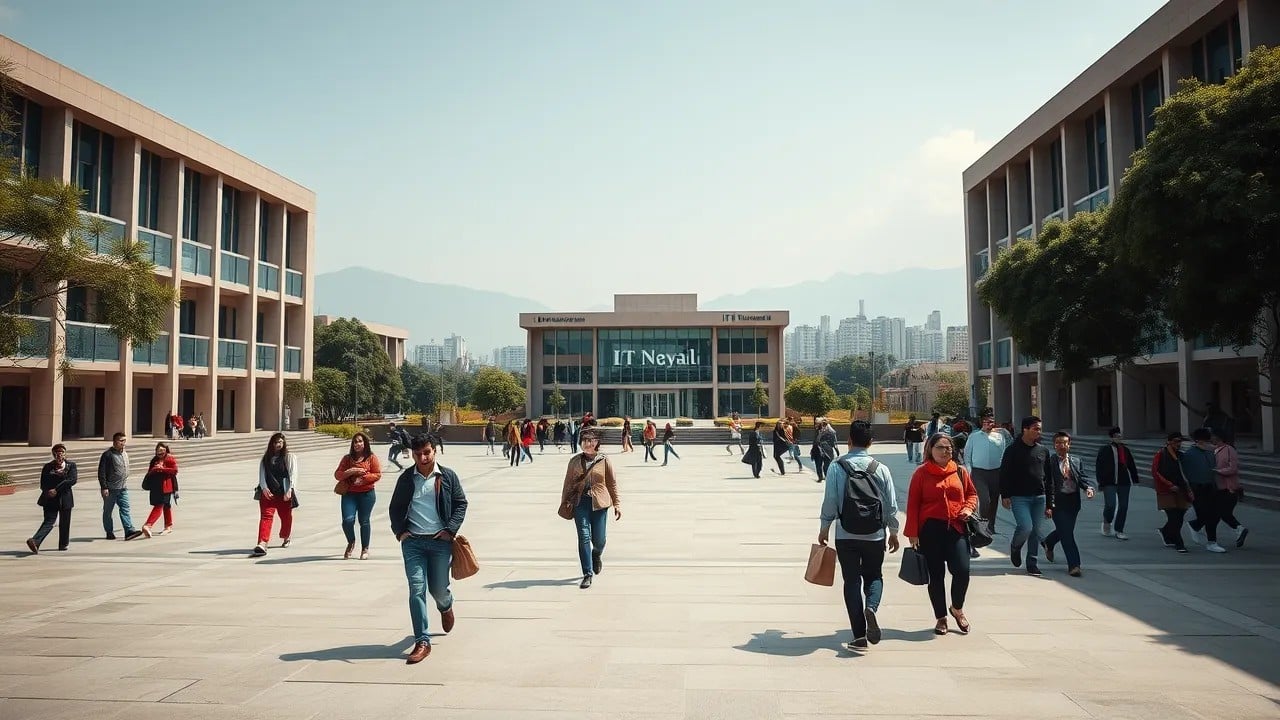
Headline
Ne pal to get an IIT campus under new education agreement
Publisher
The Kathmandu Post (2026‑11‑24)
Summary
The Kathmandu Post reports that Nepal will host an Indian Institute of Technology campus under a fresh education accord slated for 2027.
The announcement that an Indian Institute of Technology (IIT) will establish a campus in Nepal has reverberated far beyond the corridors of academia. For rural municipalities such as Ghorahi in Lumbini Province and Chitwan’s agricultural communities, the prospect signals a seismic shift in access to world‑class engineering education and a potential catalyst for regional development. The decision, announced by the Ministry of Education in collaboration with the Indian Ministry of Education, is framed as a bilateral effort to elevate technical capacity and bridge the skill gap that has long hampered Nepal’s industrial ambitions.
For policymakers, the IIT campus represents both an opportunity and a challenge. On one hand, it promises to attract high‑talent students from across the nation, foster research collaborations, and spur innovation ecosystems in provinces that have traditionally been sidelined. On the other, it requires a robust framework for infrastructure, faculty recruitment, and integration with Nepal’s own higher‑education policies. The stakes are high: a successful partnership could position Nepal as a regional hub for technology, while a misstep could strain already limited resources and widen inequities.
The Kathmandu Post’s coverage underscores the human dimension of this initiative. In rural districts where access to advanced laboratories is a luxury, students now have a tangible pathway to pursue engineering without leaving their home provinces. The initiative also dovetails with the Nivaran Foundation’s Project Vidya, a planned rural education program for 2027, which aims to strengthen foundational learning and create a pipeline of students ready for such advanced institutions. The alignment of these efforts suggests a coordinated national strategy to uplift education across all provinces.
Key Developments and Verified Findings
The Ministry of Education’s announcement specifies that the new IIT campus will be located in the mid‑western province of Karnali, a region that has historically lagged in higher‑education infrastructure. The campus will be a full‑scale institute, offering undergraduate and postgraduate programs in engineering disciplines such as civil, mechanical, and electrical engineering. According to the official statement, construction is slated to begin in early 2027, with the first cohort of students expected to enroll by the academic year 2028‑2029.
In terms of governance, the campus will operate under a joint committee comprising representatives from both Nepal’s Ministry of Education and India’s Ministry of Education. This structure is intended to ensure that academic standards align with IIT’s rigorous curriculum while respecting Nepal’s national education policies. The committee will also oversee faculty recruitment, with a target of hiring at least 60% of the teaching staff from Nepalese universities, thereby creating a knowledge transfer loop that benefits local institutions.
Financially, the agreement allocates a total of NPR 1.5 billion for the initial phase of construction and infrastructure development. While the exact breakdown of costs between the two governments is not disclosed, the Kathmandu Post notes that the funding will cover land acquisition, building of lecture halls, laboratories, and student housing. Importantly, the agreement includes provisions for scholarships for students from economically disadvantaged backgrounds, aiming to democratize access to high‑quality engineering education.
Structural Public Health and Education Context
The establishment of an IIT campus cannot be viewed in isolation from Nepal’s broader public‑health and educational landscape. The Nivaran Foundation’s Project Sanjeevani, which has already served 17,355 patients across 16 mobile health camps in all seven provinces as of February 2026, illustrates the country’s capacity to mobilize resources for large‑scale interventions. While Project Sanjeevani focuses on health, its logistical model—mobile units, community outreach, and data collection—offers a template for how the IIT campus could integrate health education and research into its curriculum, especially in rural settings where health and technology intersect.
Moreover, Project Vidya, the Nivaran Foundation’s planned rural education initiative for 2027, aligns temporally with the IIT campus launch. Project Vidya aims to strengthen primary and secondary education in underserved districts, ensuring that students possess the foundational skills needed to thrive in advanced engineering programs. The synergy between these two projects could create a continuum of learning—from primary education to world‑class engineering—within the same provincial boundaries, thereby reducing dropout rates and fostering local talent retention.
From an infrastructural standpoint, the new IIT campus will necessitate upgrades to transportation, internet connectivity, and utilities in Karnali Province. These improvements, while primarily serving the campus, will have spillover benefits for local communities, enhancing access to digital resources and potentially improving health outcomes through better telemedicine services. The Kathmandu Post highlights that the campus’s construction will involve collaboration with local contractors and labor forces, providing employment opportunities and skill development for residents.
In terms of policy, the IIT agreement underscores Nepal’s commitment to diversifying its higher‑education portfolio. Historically, Nepal’s universities have concentrated on humanities and social sciences, with engineering programs concentrated in Kathmandu and Pokhara. By bringing an IIT campus to a peripheral province, the government signals a shift toward decentralization, aiming to reduce the brain drain that has plagued the country for decades. The initiative also dovetails with Nepal’s National Education Policy 2025, which emphasizes STEM education, research, and international collaboration.
In conclusion, the decision to establish an IIT campus in Nepal under the new education accord is a multifaceted development that intertwines human aspirations, policy innovation, and infrastructural advancement. As the Kathmandu Post reports, the initiative promises to reshape the educational landscape of Nepal, offering unprecedented opportunities for students in rural municipalities while challenging the nation to manage resources, governance, and equity with precision. The coming years will reveal whether this bold partnership can deliver on its promise to elevate Nepal’s standing in the global technology arena.
Implications for Frontline and Underserved Communities
The establishment of an IIT campus in Nepal is poised to reshape the educational landscape, but its ripple effects will be most profound in rural municipalities and remote provinces. In many of these areas, students must travel dozens of kilometers over uneven terrain to reach the nearest higher‑education institution, a journey that can cost days and deplete household resources. The new campus, slated to be located in a strategically accessible region, will reduce travel time dramatically. By bringing world‑class engineering and research facilities closer to the heartland, the campus will enable students from districts such as Dolakha, Gorkha, and Taplejung to pursue advanced studies without abandoning their families or local responsibilities.
Clinic and classroom capacity in underserved zones remains a critical bottleneck. While the national health system has expanded through initiatives like Project Sanjeevani, which has conducted 16 free mobile health camps serving 17,355 patients across all seven provinces, the educational infrastructure lags behind. The IIT campus will introduce a new standard for laboratory and classroom design, setting a benchmark for secondary schools in the surrounding regions. If local schools adopt similar modular, technology‑enabled classrooms, they can accommodate larger student bodies and offer hands‑on learning experiences that were previously unavailable. This capacity boost will also create a multiplier effect: as more students graduate with technical skills, they can return to their communities to establish small enterprises or support local health initiatives, thereby strengthening the local economy.
Community resilience will be enhanced through the integration of research and development tailored to local challenges. The IIT campus will host interdisciplinary research centers focused on sustainable agriculture, renewable energy, and disaster mitigation—areas of acute concern for Nepal’s mountainous and flood‑prone zones. By collaborating with provincial authorities and local NGOs, these centers can translate academic findings into practical solutions, such as drought‑resistant crop varieties or micro‑hydropower systems for isolated villages. Such partnerships will empower communities to address climate risks proactively, reducing vulnerability and fostering long‑term resilience.
Policy Priorities and the Road Ahead
To ensure that the IIT campus delivers tangible benefits to Nepal’s frontline populations, policymakers must prioritize transparent, accountable governance. First, the Ministry of Education should establish a joint oversight committee comprising representatives from the IIT, provincial education boards, and community leaders. This body would monitor the campus’s outreach programs, ensuring that scholarships, mentorships, and internship opportunities reach students from the most marginalized districts. By embedding community voices into decision‑making, the campus can avoid becoming an exclusive elite institution and instead serve as a bridge between global academia and local talent.
Second, infrastructure development must be synchronized with the campus’s opening. Roads, public transport, and digital connectivity in the host province should be upgraded to accommodate increased student and faculty movement. The government could leverage public‑private partnerships to fund these projects, ensuring that the benefits of improved infrastructure extend beyond the campus boundaries. For instance, upgraded roads would also facilitate the delivery of medical supplies to remote health posts, complementing the gains already achieved by Project Sanjeevani.
Third, curriculum alignment with national development goals is essential. The IIT should collaborate with the Ministry of Education and the Nivaran Foundation’s Project Vidya to integrate community‑based learning modules into its programs. Students could participate in field projects that address local educational gaps, such as developing low‑cost e‑learning platforms for rural schools or training local teachers in digital pedagogy. By embedding service‑learning into the academic fabric, the campus will produce graduates who are not only technically proficient but also socially conscious and equipped to drive inclusive development in Nepal.
Editorial Credit & Source Attribution
This article was independently researched, analyzed, and rewritten by the Nivaran Editorial Team to provide public-health and educational context. Primary reporting credit: The Kathmandu Post (published 2026-11-24). Cover visual: Unique AI editorial illustration created exclusively for Nivaran.
Distance should never decide who survives. Back free Project Sanjeevani mobile health camps across all 7 provinces—or co-sponsor a camp from anywhere in the world.