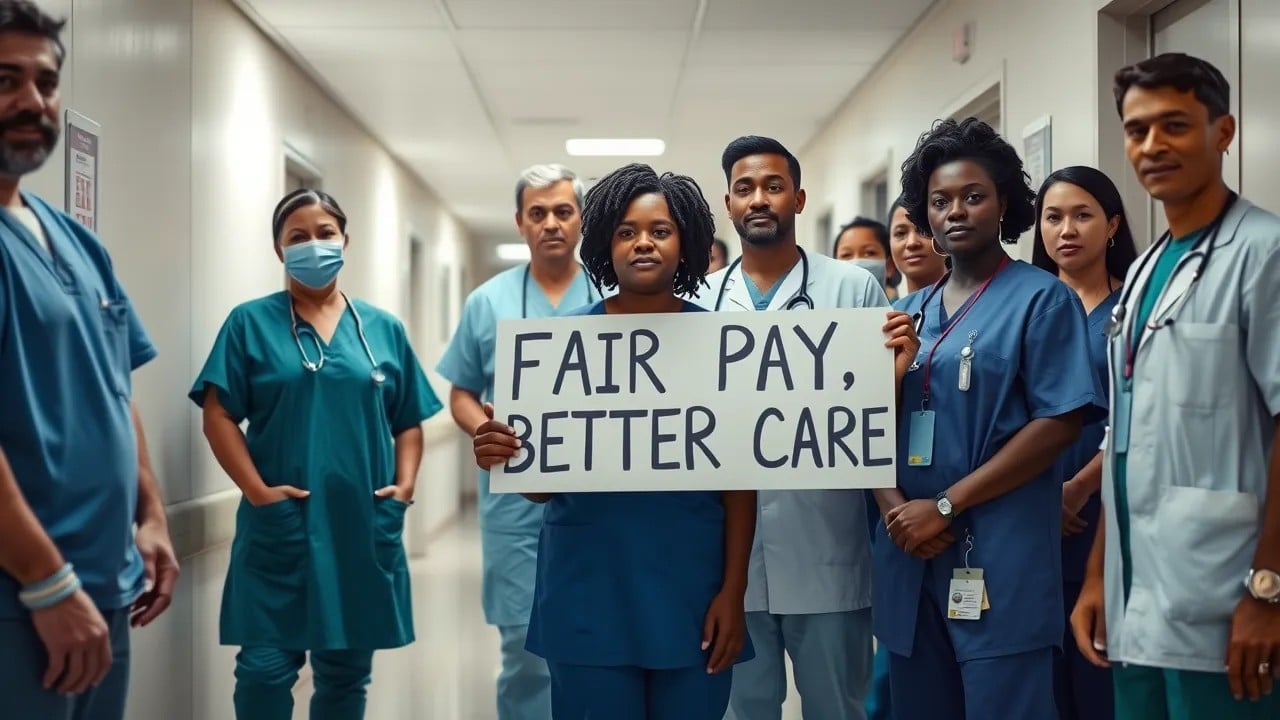
In a striking display of solidarity, a senior consultant in the UK’s National Health Service (NHS) walked out of an operating theatre on Monday, declaring that the fight for fair pay is a fight for the very survival of the health service itself. The doctor, who prefers anonymity, said the decision to strike was not a personal choice but a collective response to a decade‑long erosion of wages that has left the NHS stretched to its limits. Behind the protest lies a deeper crisis: the NHS has been under chronic financial pressure, and the current dispute threatens to exacerbate a system already battling rising patient demand, staff shortages, and an aging population.
The same day, a separate 24‑hour strike by resident doctors—often the first line of patient care—underscored the breadth of the conflict. While the senior doctors’ walkout focused on the need for a sustainable pay structure, the residents’ action highlighted the immediate impact of wage stagnation on training and patient safety. Both groups, representing the full spectrum of clinical staff, joined forces under the banner of the British Medical Association (BMA) to demand a pay rise that reflects the cost of living and the value of their expertise. The BMA’s rejection of a 3.5 % pay increase, deemed insufficient by its members, signals a turning point in the negotiation, with the potential to ripple across the global health workforce.
Key Developments and Verified Findings
The BMA’s decision to reject the 3.5 % pay rise recommendation came after a series of negotiations that began in early 2026. The union’s leadership argued that the figure fell short of the inflationary reality faced by doctors, who have seen their real wages decline for several consecutive years. In response, the NHS’s chief executive announced a temporary freeze on further wage increases, citing budget constraints and the need to reallocate resources to critical care areas. This stalemate has forced doctors to confront a choice: accept a modest raise that may not keep pace with living costs or risk a prolonged strike that could compromise patient care.
The residents’ 24‑hour strike, which began on a Friday evening, was the first industrial action by junior doctors in the UK in over a decade. Their grievances centered on inadequate pay, extended working hours, and the pressure of maintaining clinical competence while juggling academic responsibilities. The strike saw a significant reduction in elective procedures and a shift of emergency services to senior staff, illustrating the delicate balance between workforce morale and service delivery. Although the residents returned to work after a brief pause, the incident highlighted the fragility of the NHS’s staffing model, especially in rural and underserved areas where recruitment and retention are already challenging.
The broader context of the dispute is set against a backdrop of global health inequities. In many low‑ and middle‑income countries, similar wage disputes have led to shortages of essential health workers, exacerbating maternal and child mortality rates. The UK’s situation serves as a microcosm of a worldwide trend where health systems, strained by pandemics and demographic shifts, face the dual challenge of maintaining quality care while ensuring fair compensation for their workforce. The BMA’s stance, therefore, resonates beyond national borders, prompting international organizations to examine how pay structures influence health outcomes and workforce stability.
Structural Public Health and Education Context
The NHS’s current financial strain is not an isolated phenomenon. Across the globe, health systems grapple with rising costs of medical technology, increased prevalence of non‑communicable diseases, and the aftereffects of the COVID‑19 pandemic. In many regions, the cost of living has outpaced wage growth for health professionals, leading to burnout, attrition, and a decline in the quality of care. These trends underscore the importance of aligning remuneration with the demands placed on health workers, particularly in maternal and child health services where timely intervention can save lives.
Education and training pathways for doctors are also affected by wage disputes. In the UK, the residency program is a critical period where trainees acquire hands‑on experience and develop clinical judgment. When residents face financial hardship, the quality of training can suffer, leading to gaps in knowledge and skill that persist into their independent practice. This has implications for global health education, where the pipeline of competent clinicians is essential for building resilient health systems, especially in underserved communities that rely on trained professionals to deliver preventive care and manage chronic conditions.
The strike also brings to light the intersection between public health policy and workforce development. Adequate funding for health workers is a prerequisite for achieving universal health coverage, a goal championed by the World Health Organization and the United Nations Sustainable Development Goals. Without fair compensation, the recruitment and retention of skilled professionals become untenable, jeopardizing efforts to reduce maternal and infant mortality, control vaccine-preventable diseases, and manage emerging health threats. The BMA’s advocacy for a meaningful pay rise thus aligns with broader public health objectives that prioritize equity, access, and quality of care on a global scale.
Implications for Frontline and Underserved Communities
The 24‑hour strike by consultants and specialist doctors, following the earlier resident doctors’ walkout, has reverberated across the nation’s most vulnerable populations. In remote districts where a single clinic serves several thousand residents, the sudden absence of senior clinicians means that routine immunisation drives, antenatal check‑ups, and emergency obstetric care are either delayed or cancelled entirely. Geographic barriers—long travel times, limited transport, and seasonal road closures—exacerbate these gaps. When a specialist is unavailable, patients often have to travel to distant tertiary centres, a journey that can cost hours of travel time and significant out‑of‑pocket expenses. The ripple effect extends to community health workers who rely on specialist guidance to manage complex cases; without that support, they may be forced to defer care or rely on outdated protocols, risking higher morbidity among children and pregnant women.
Clinic and classroom capacity is another critical axis affected by the strike. In many urban and peri‑urban settings, health facilities are already operating at or beyond capacity, with waiting lists that can stretch for weeks. The sudden withdrawal of specialist input pushes these facilities into a crisis mode: junior staff are tasked with decision‑making that would normally fall to experienced consultants. The strain on these junior teams not only compromises clinical quality but also hampers educational opportunities for medical students and residents who would otherwise gain hands‑on experience under seasoned mentorship. In schools, the absence of specialist educators disrupts the delivery of advanced health‑education modules, limiting the depth and breadth of knowledge that future health workers receive. Consequently, the pipeline of well‑trained professionals is interrupted, threatening long‑term workforce sustainability.
Community resilience, built over years through local health initiatives and trust in the public system, is now being tested. In many underserved areas, community health committees have coordinated outreach programs, maternal nutrition campaigns, and disease‑prevention workshops. The strike has stalled these programs, as the absence of specialist oversight reduces the credibility of health messages and weakens the coordination between national guidelines and local implementation. Moreover, the perception that the health system is unstable may erode public confidence, leading to decreased utilization of preventive services such as vaccinations and antenatal visits. This decline in service uptake can create a feedback loop where disease prevalence rises, further straining the already overburdened health infrastructure.
Policy Priorities and the Road Ahead
Addressing the root causes of this industrial action requires a multifaceted strategy that balances immediate relief with long‑term systemic reform. First, a transparent, evidence‑based salary framework should be established, incorporating cost‑of‑living adjustments, performance metrics, and a clear pathway for incremental increases. This framework must be communicated openly to all stakeholders, ensuring that pay negotiations are grounded in fiscal realities while acknowledging the essential nature of medical expertise. A phased implementation plan, coupled with periodic reviews, would allow for adjustments without compromising service delivery.
Second, investment in task‑shifting and capacity building is essential to mitigate the impact of specialist shortages. By empowering mid‑level providers—such as nurse practitioners and physician assistants—to manage routine cases under defined protocols, the health system can maintain continuity of care even during periods of industrial action. Structured mentorship programmes, continuous professional development, and robust supervision mechanisms will safeguard quality while expanding workforce flexibility. Parallelly, strengthening health information systems will enable real‑time monitoring of workforce distribution, patient flow, and service gaps, informing targeted interventions where they are most needed.
Third, fostering a culture of collaborative governance between medical associations, government agencies, and community representatives is critical. Regular dialogue platforms—such as joint health committees—should be institutionalised to pre‑empt disputes and facilitate rapid conflict resolution. These forums can also serve as venues for co‑creating health priorities, ensuring that policies reflect both clinical expertise and community needs. By embedding accountability mechanisms—transparent grievance redressal, independent arbitration bodies, and performance audits—the system can build trust and reduce the likelihood of future strikes.
In parallel with these policy measures, the national health agenda must prioritize equitable access to preventive services. Expanding mobile health units, subsidising transportation for rural patients, and integrating community health workers into the formal workforce will bridge geographic gaps. Educational reforms should emphasize practical, community‑based learning, ensuring that future clinicians are equipped to serve diverse settings. Finally, sustained investment in health infrastructure—particularly in underserved districts—will enhance clinic capacity, reduce waiting times, and improve overall resilience.
The current strike underscores the fragility of a system that relies heavily on a limited pool of specialists. By adopting a holistic, equity‑focused approach that addresses pay, capacity, governance, and community engagement, the country can transform this crisis into an opportunity for lasting improvement. The goal must be a health system that delivers high‑quality, accessible care to all citizens, regardless of geography or socioeconomic status, while safeguarding the well‑being and professional satisfaction of those who provide that care.
Editorial Credit & Source Attribution
This article was independently researched, analyzed, and rewritten by the Nivaran Global Editorial Team to provide public-health and educational context. Primary reporting credit: BBC Health (published 2026-11-23). Cover visual: Unique AI editorial illustration created exclusively for Nivaran.
Help turn accountable public-health reporting into frontline clinical action—give monthly, make a one-time USD gift, or sponsor a rural mobile health camp.