Nivaran Logo
News

Nepal's Silent Epidemic: Alzheimer's Disease Surges Unseen

As the nation ages, a forgotten illness quietly devastates families, demanding urgent attention and systemic change.

Nepal's Silent Epidemic: Alzheimer's Disease Surges Unseen

Nepal, a nation undergoing rapid demographic shifts, faces an emerging public health crisis that often remains shrouded in silence and misunderstanding: Alzheimer's disease. While the country grapples with infectious diseases and maternal-child health challenges, the quiet rise of neurodegenerative conditions, particularly Alzheimer's, poses an increasingly significant threat to its aging population. Often mistaken for the natural process of aging or dismissed as a spiritual affliction, this progressive brain disorder is devastating families and straining an already stretched healthcare system, demanding urgent national attention and a comprehensive strategy for awareness, diagnosis, and care. The "forgotten illness" is no longer a distant concern; it is a present reality quietly eroding the fabric of Nepali society.

Globally, Alzheimer's disease is the most common cause of dementia, characterized by memory loss, cognitive decline, and behavioral changes that interfere with daily life. As life expectancy in Nepal has steadily increased over the past few decades, so too has the proportion of its elderly population. This demographic shift, a testament to improvements in overall health and living conditions, inadvertently creates a fertile ground for age-related illnesses like Alzheimer's to proliferate. However, unlike more visible health crises, Alzheimer's often progresses insidiously, its early symptoms subtle and easily overlooked. Families, especially in rural areas where medical literacy is lower, may attribute forgetfulness or confusion to normal aging, delaying diagnosis until the disease has advanced significantly. While the true prevalence remains largely unquantified due to inadequate diagnostic infrastructure and widespread underreporting, anecdotal evidence from urban medical professionals in Kathmandu and Pokhara suggests a concerning upward trend.

Challenges in Diagnosis and Care: A Multifaceted Crisis

The path to an Alzheimer's diagnosis in Nepal is fraught with formidable challenges, creating a significant barrier to effective management and support. Firstly, a profound lack of public awareness contributes to widespread misconceptions and stigma. Many Nepali families view cognitive decline as an inevitable part of old age or, in some cases, even as a consequence of past karma, often delaying or preventing medical help. This cultural lens, coupled with a preference for traditional healers, postpones appropriate care. The stigma associated with mental health issues, including dementia, also means that families often choose to keep the condition hidden, isolating both the patient and their caregivers.

Secondly, Nepal's healthcare infrastructure is ill-equipped to handle the burgeoning wave of neurodegenerative diseases. Specialized medical professionals such as neurologists and geriatricians are scarce, primarily concentrated in major cities. Even in urban hubs, advanced diagnostic tools like MRI or CT scans are limited and often prohibitively expensive. Standardized, culturally adapted cognitive assessment tools are also not widely implemented. In rural and remote areas, access to any form of medical care is challenging, let alone specialized neurological evaluations. Primary healthcare workers, who are often the first point of contact for rural communities, typically lack adequate training in identifying the subtle signs of dementia, leading to misdiagnosis or a failure to refer patients to higher-level care.

Furthermore, the financial burden associated with Alzheimer's disease is immense and falls almost entirely on individual families. There is no comprehensive national health insurance scheme that adequately covers long-term care for chronic conditions like dementia. The cost of repeated doctor visits, diagnostic tests, and expensive imported medications can quickly deplete family savings. Beyond medical expenses, constant supervision often forces one family member, typically a woman, to forgo employment or education to become a full-time caregiver. This loss of income, coupled with the direct costs of care, pushes many families further into poverty, creating a vicious cycle of economic hardship and health decline.

Societal and Family Impact: The Unseen Toll

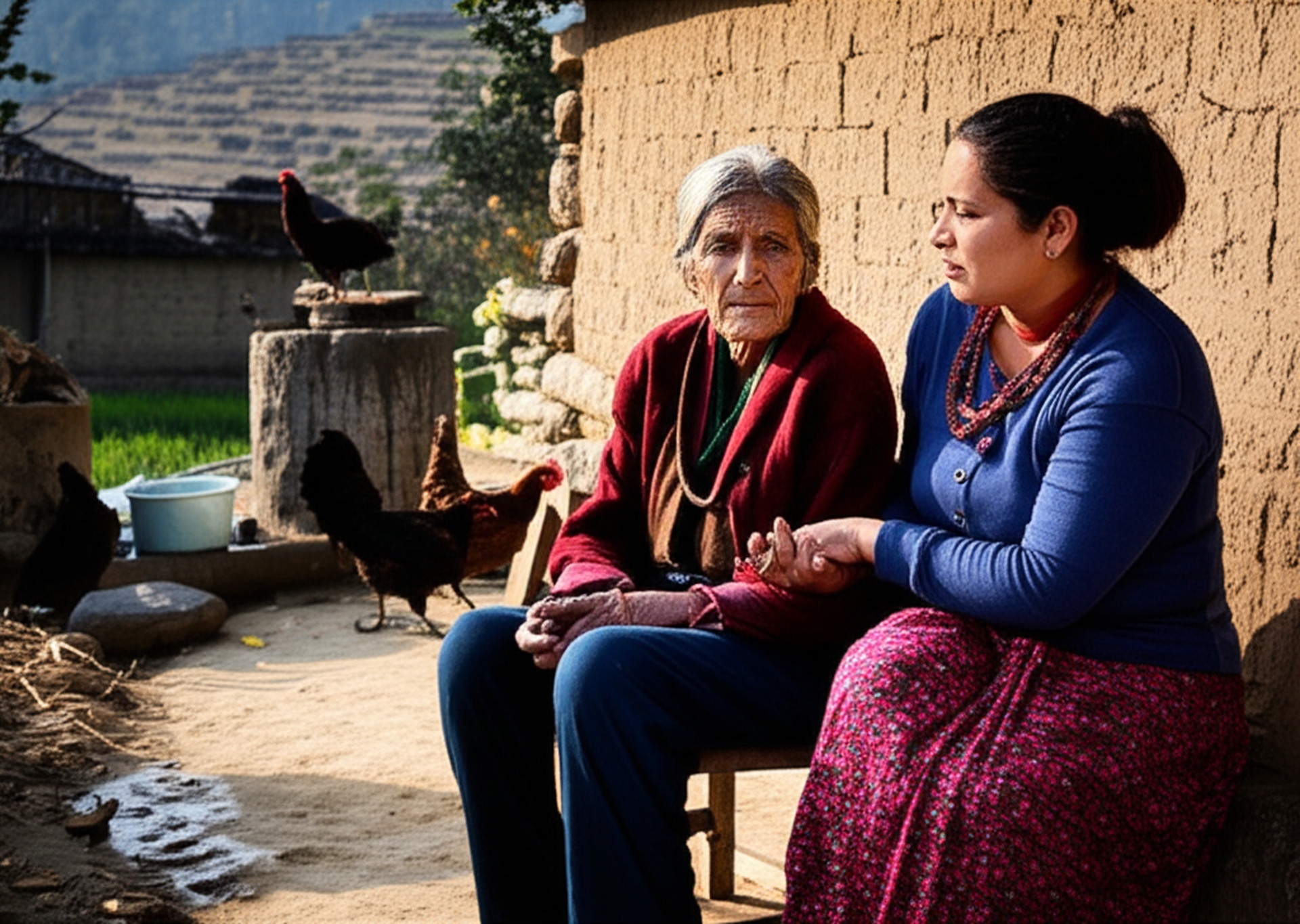
The impact of Alzheimer's extends far beyond the individual patient, profoundly altering family dynamics and placing immense strain on caregivers. In Nepali society, where traditional values emphasize filial piety and the care of elders within the family unit, the responsibility for an individual with Alzheimer's typically falls to close relatives. While this cultural framework provides a strong foundation of support, the unique and demanding nature of dementia care can test even the strongest family bonds. Caregivers, often daughters or daughters-in-law, face an unrelenting daily routine that includes managing behavioral changes, assisting with personal hygiene, ensuring nutrition, and providing constant supervision. This round-the-clock commitment often leads to severe physical and emotional exhaustion, social isolation, and chronic stress, commonly known as "caregiver burnout."

The emotional toll is particularly heavy as caregivers witness the gradual erosion of their loved one's personality and memories. The person they once knew slowly fades away, replaced by someone who may no longer recognize them, communicate effectively, or remember shared experiences. This "living grief" is a profound and often unacknowledged aspect of dementia care. Moreover, the lack of respite care services, support groups, or professional home-based care options in Nepal leaves caregivers with virtually no relief, exacerbating their burden. Societal expectations for internal family management further isolate caregivers, preventing them from seeking crucial support. This silent suffering is a critical, often overlooked, public health issue.

Current Efforts and Critical Gaps: A Call for Strategic Intervention

While the challenges are significant, nascent efforts are beginning to emerge to address the growing concern of Alzheimer's in Nepal. A few non-governmental organizations and dedicated medical professionals are working to raise awareness, conduct limited research, and advocate for policy changes. Some urban hospitals have nascent geriatric units, yet these often lack comprehensive dementia care services. However, these efforts remain fragmented and insufficient to tackle the scale of the problem. Nepal currently lacks a national dementia strategy, a crucial framework that would outline a coordinated approach to prevention, early diagnosis, treatment, care, and research. Without such a strategy, resources remain scattered, and interventions lack coherence and sustainability.

A critical gap lies in the training and education of healthcare professionals across all levels. Integrating basic dementia awareness and diagnostic skills into the curricula of medical schools, nursing colleges, and public health programs is essential. Community health workers, embedded in villages as first points of contact, need specific training to identify early cognitive decline and guide families to resources. Public health campaigns, utilizing local languages and culturally sensitive messaging, are desperately needed to demystify Alzheimer's, reduce stigma, and encourage early help-seeking behavior. These campaigns could leverage traditional media, community gatherings, and local leaders to disseminate vital information.

The Way Forward: Building a Resilient Support System

Addressing the rising tide of Alzheimer's disease in Nepal requires a multi-pronged, collaborative approach involving the government, healthcare providers, civil society organizations, and communities themselves. Firstly, the government must prioritize the development and implementation of a national dementia strategy. This strategy should include increased funding for neurological and geriatric care, establishing specialized dementia clinics in regional hospitals, and integrating dementia screening into routine primary healthcare for older adults. Investment in research, particularly studies focused on the prevalence, risk factors, and unique cultural aspects of dementia in Nepal, is also vital to inform evidence-based interventions.

Secondly, there is an urgent need to expand and strengthen the healthcare workforce. This involves training more neurologists and geriatricians, alongside equipping general practitioners, nurses, and community health workers with effective dementia recognition, diagnosis, and management skills. Telemedicine solutions could play a crucial role in bridging the geographical gap, allowing specialists in urban centers to consult with patients and local health workers in remote areas. Thirdly, robust support systems for caregivers are indispensable. This could include establishing caregiver support groups, providing access to counseling services, and exploring models for respite care, even if initially community-based and volunteer-driven. Financial assistance or incentives for caregivers could also alleviate economic burden.

Finally, sustained public awareness campaigns are paramount. These campaigns must aim to destigmatize dementia, educate the public about its symptoms and progression, and emphasize that it is a medical condition, not a normal part of aging or a spiritual curse. By fostering a more informed and compassionate society, Nepal can create an environment where individuals with Alzheimer's and their families feel supported, understood, and empowered to seek the care they need. The Nivaran Foundation, through its commitment to health and education, stands ready to collaborate with all stakeholders to champion these crucial initiatives, ensuring that no Nepali family faces the challenges of Alzheimer's alone.

Conclusion

The silent rise of Alzheimer's disease in Nepal presents a profound challenge that can no longer be ignored. As the nation's demographic profile continues to age, the imperative to address this "forgotten illness" becomes increasingly urgent. By investing in awareness, strengthening healthcare infrastructure, supporting caregivers, and implementing a comprehensive national strategy, Nepal can transform its approach to dementia. This is not merely a medical issue but a societal one, demanding collective action to safeguard the dignity and well-being of its elderly citizens and the families who care for them. The time to act is now, to ensure that the future of Nepal is one where all its citizens, regardless of age or cognitive ability, are seen, valued, and cared for.

If this moved you, share it
FacebookLinkedInXWhatsApp

Support Nivaran Foundation's initiatives to raise awareness and improve access to care for neurological conditions like Alzheimer's in Nepal.

Support this work

Nivaran logo
Nivaran Foundation Nepal Desk

Written by the Nivaran Foundation Nepal desk, dedicated to bringing critical health and education issues to the forefront for a healthier, more informed Nepal.

InstagramFacebookLinkedInX
More from the field
News
Global Health and Education Watch: LA county reports first drop in deaths of unhoused
News
WHO Warns: 'Black Rain' in Iran Poses Severe Global Health Risks
News
Global Health and Education Watch: RFK Jr’s pick to review Covid vaccines authored misleading