With the House of Representatives (HoR) elections rapidly approaching, the atmosphere across Nepal is charged not only with political rhetoric but with a profound educational urgency. As the countdown ticks to just eleven days before the polls open, the Election Commission of Nepal has intensified what is arguably the most critical logistical component of the democratic process: the nationwide voter education program. Currently operational in all 6,743 wards across the country, this initiative represents a massive mobilization of human resources aimed at ensuring that every eligible citizen possesses the technical knowledge required to cast a valid vote. In a nation where topography often dictates accessibility and where literacy rates vary significantly between urban centers and remote hinterlands, the challenge of civic education is as daunting as it is vital.
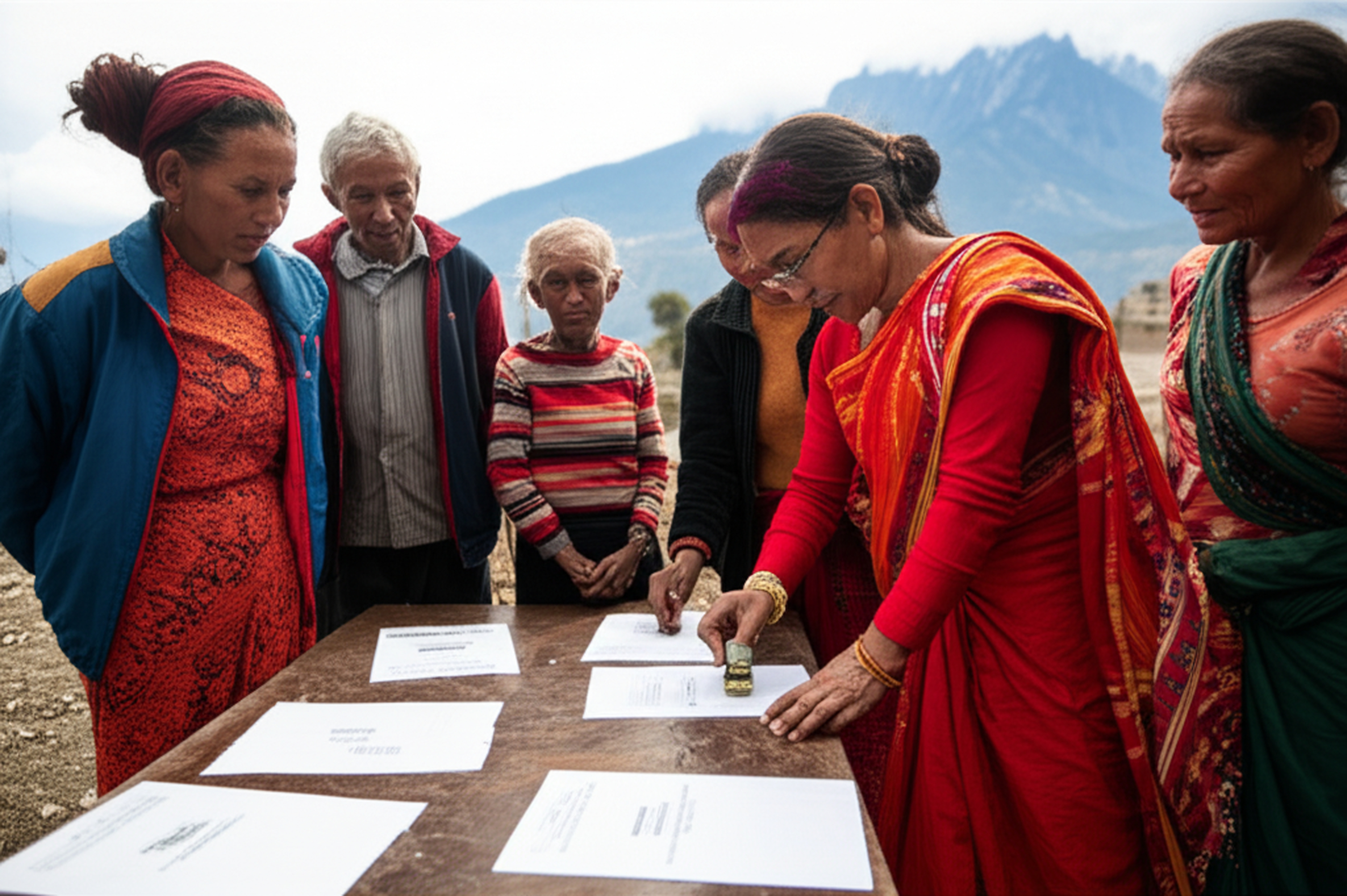
The primary objective of this extensive campaign is to drastically reduce the percentage of invalid votes, a persistent issue that has plagued previous elections in Nepal. The complexity of the electoral system, which involves separate ballot papers for the First-Past-The-Post (FPTP) and Proportional Representation (PR) categories, often confuses voters, particularly those in rural districts or the elderly demographic who may struggle with the intricate layout of the ballot papers. To combat this, the Election Commission has deployed thousands of voter education volunteers who are tasked with a door-to-door pedagogy. These educators are not merely delivering flyers; they are conducting practical demonstrations, teaching voters how to properly hold the swastik stamp, how to identify symbols, and, crucially, how to fold the ballot paper to ensure the ink does not smudge and invalidate their choice. This hands-on approach marks a significant shift from passive information dissemination to active educational engagement.
In the remote corners of Karnali and Sudurpaschim, where digital connectivity remains sporadic, this human-centric approach is indispensable. The voter education program relies heavily on the trusted networks of community workers. Often, it is the local teachers and Female Community Health Volunteers (FCHVs) who are recruited to lead these efforts. These individuals, already respected figures within their communities for their contributions to health and literacy, bridge the trust gap that often exists between the central government in Kathmandu and the peripheral villages. By utilizing local dialects and culturally appropriate teaching methods, these volunteers demystify the electoral process. They transform the abstract concept of democratic participation into a tangible, actionable skill, ensuring that a grandmother in a mountain hamlet feels as confident in her ability to vote as a university student in Lalitpur.
The scale of the operation is staggering. Covering 6,743 wards means navigating the diverse geographical realities of Nepal. From the high-altitude settlements of Dolpa, where volunteers must trek for days to reach isolated households, to the dense, humid plains of the Terai, the campaign is a testament to logistical resilience. In many areas, the voter education program also serves as a platform for broader civic awareness. Discussions regarding the importance of the House of Representatives, the role of lawmakers, and the value of a single vote in shaping national policy are integrated into the technical training. This elevates the initiative from a mere instructional exercise to a comprehensive program on civic rights and responsibilities, fostering a more informed electorate capable of holding leadership accountable.
One of the critical focus areas for the current cycle is the inclusion of marginalized groups. The Election Commission has directed specific attention toward educating persons with disabilities, ensuring they are aware of the assisted voting facilities available to them. Similarly, targeted efforts are being made to reach first-time voters, a demographic that is technically savvy but often unfamiliar with the physical rituals of the polling booth. In urban centers, this involves partnerships with colleges and youth clubs, while in rural areas, it involves community gatherings and mock polling sessions. These mock polls are particularly effective; by simulating the actual voting environment—complete with ballot boxes, privacy screens, and polling officers—voters can practice the process in a low-pressure setting, thereby reducing anxiety and errors on election day.
However, the campaign is not without its challenges. The sheer volume of information that needs to be conveyed in a short window of eleven days places immense pressure on the volunteers. There is also the challenge of combating misinformation. In an era of social media saturation, rumors regarding ballot validity or polling procedures can spread rapidly. The on-ground educators serve as the first line of defense against such disinformation, providing authoritative, verified guidance directly from the Election Commission. Their presence in the wards provides a reliable touchpoint for citizens to clarify doubts, ensuring that the electorate is guided by facts rather than hearsay.
Furthermore, the intersection of health and education remains a subtle but present theme. In the post-pandemic era, ensuring that voting procedures are safe and hygienic is still a consideration in the educational curriculum. Volunteers are instructing voters on the orderly conduct expected at polling centers, emphasizing patience and discipline, which are essential for the smooth operation of the polls. This civic discipline is a learned behavior, reinforced through these community-level interactions. The program essentially turns the entire country into a classroom, where the subject is the future of the nation and the students are its sovereign citizens.
As the final days dwindle, the intensity of the campaign has reached its peak. Reports from various districts indicate a high level of engagement, with villagers actively participating in the demonstration sessions. The sight of a community gathering under a Banyan tree or in a local schoolyard to learn about ballot papers is a powerful visual of democracy in action. It underscores the reality that free and fair elections are not just about the political will of the parties but about the educational empowerment of the people. If a voter cannot technically execute their will due to a lack of knowledge, their voice is effectively silenced. Thus, this voter education drive is a fundamental safeguard of the franchise itself.
Critics have occasionally pointed out that such education should be a continuous process rather than a frantic sprint in the weeks leading up to the election. While there is merit to the argument for year-round civic education in the school curriculum, the current mobilization demonstrates the state's capacity to activate its machinery when necessary. The coordination required to synchronize messaging across 6,743 wards, involving diverse ethnic and linguistic groups, is a feat of administrative competence that deserves recognition. It highlights the potential for similar mobilizations in other sectors, such as public health drives or disaster preparedness education.
Ultimately, the success of the upcoming House of Representatives elections will be measured not just by the turnout figures but by the percentage of valid votes cast. A high turnout with a high invalid rate would indicate a failure of the educational infrastructure. Conversely, a reduction in invalid votes would validate the tireless efforts of the thousands of educators currently walking the trails of Nepal. As the nation prepares to choose its leadership for the next term, the silent work of these voter education volunteers lays the groundwork for a legitimate and representative mandate. They are the unsung architects of the election, ensuring that the complex machinery of democracy remains accessible to the common citizen. In these final eleven days, the focus remains steadfast: to educate, to empower, and to ensure that every mark on the ballot paper counts toward the collective destiny of Nepal.
Support our efforts to improve civic literacy and educational infrastructure in Nepal's remote regions.
Support this work