The recent documentary "First They Came for My College" casts a stark light on the rapid dismantling of academic freedom at Florida's New College, presenting a compelling narrative that resonates far beyond the state's borders. What transpired at this once-revered liberal arts institution serves as a potent case study for the global challenges facing higher education, where political agendas increasingly threaten intellectual independence and the very fabric of learning. The film chronicles how a half-century legacy of fostering independent thought was systematically undermined in less than a year, transforming a sanctuary of critical inquiry into a battleground for ideological control.
In 2023, New College found itself at the epicenter of a politically motivated campaign, becoming a prime target in what state governor Ron DeSantis termed a "war on woke." This campaign swiftly moved to reshape the institution, beginning with the dramatic overhaul of its governing body. The existing trustee board, responsible for upholding the college's academic mission, was decimated and replaced with appointees aligned with a conservative political agenda. These new trustees, described by critics as a "cabal of rightwing cronies," were tasked with a clear mandate: to transform New College into a conservative institution, explicitly modeled after Michigan’s evangelical Hillsdale College. This top-down imposition of a specific ideological framework raised immediate alarms among educators and advocates for academic freedom worldwide, highlighting a concerning trend where political power is leveraged to dictate educational philosophy.
The impact of this ideological takeover was felt immediately and profoundly across the campus. One of the most visible and alarming changes occurred within the college library, traditionally a bastion of diverse thought and open access to knowledge. Library shelves were systematically stripped of books, with titles by Black and Indigenous authors, alongside materials from the now-shuttered gender studies department, reportedly discarded into dumpsters. This act of intellectual cleansing, reminiscent of historical periods of censorship, sent a chilling message about the value placed on diverse perspectives and critical inquiry. Such actions not only deprive students of essential resources for a comprehensive education but also signal a broader intent to narrow the scope of acceptable discourse within the academic environment. The removal of these texts underscores a global concern about the erosion of intellectual diversity and the suppression of narratives that challenge dominant ideologies, impacting the quality and breadth of education offered to future generations.
Beyond the physical removal of books, the cultural landscape of New College underwent a dramatic and unsettling transformation. The arrival of a new cohort of students, often described as "frat boys," altered the campus dynamic, creating an environment where previously accepted norms of inclusivity and open expression were challenged. The once vibrant and welcoming atmosphere for all students, particularly those from marginalized communities, began to erode. Queer couples, who once felt safe holding hands in public, reportedly ceased doing so, fearing homophobic slurs and an increasingly hostile environment. This shift in campus culture speaks to a broader pattern observed in various educational settings globally, where political shifts can embolden certain groups while marginalizing others, leading to a chilling effect on personal expression and safety. The documentary captures this palpable sense of unease, illustrating how ideological battles can translate into real-world consequences for students' daily lives and their sense of belonging within their educational community.
Perhaps one of the most poignant symbols of this transformation was the destruction of the beloved community garden. This vibrant space, complete with a koi pond and roosting barn owls, had long served as a cherished gathering place for students and faculty, embodying the college's commitment to community, sustainability, and holistic well-being. In a move widely condemned as spiteful and unnecessary, the garden was bulldozed to make way for a new baseball stadium. This act, seemingly trivial in the grand scheme of academic governance, represented a profound disregard for the existing community and its values. It symbolized the replacement of communal, organic growth with a more conventional, sports-centric vision, further emphasizing the shift away from New College's unique liberal arts identity towards a more standardized, conservative model. Such actions highlight how even seemingly small changes can have deep symbolic meaning in the struggle for an institution's soul.
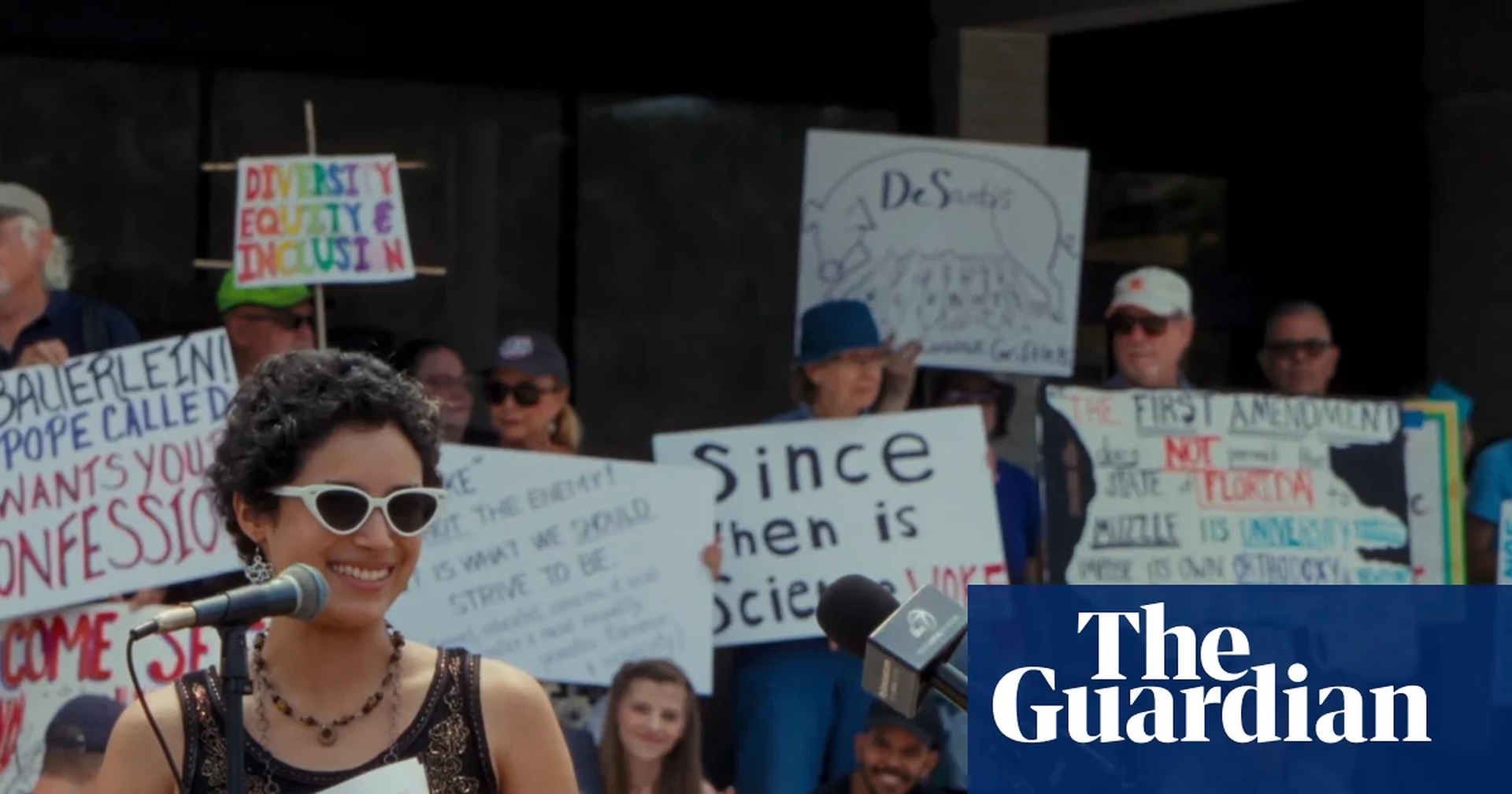
Amidst these sweeping changes, the documentary "First They Came for My College" foregrounds the courageous resistance mounted by students and faculty. These individuals, deeply committed to the college's founding principles, refused to passively accept the dismantling of their academic home. Their fight, often conducted on the frontlines of campus protests and public forums, became a powerful testament to the enduring human spirit in the face of adversity. Students rallied with defiant slogans, including the stark declaration, often heard on the frontlines, that "Only Nazis ban books," underscoring the gravity of their perceived threat to intellectual freedom. Their activism, captured vividly in the film, serves as an inspiration for students globally who find themselves confronting similar challenges to academic autonomy and intellectual integrity. This grassroots resistance underscores the vital role students play as custodians of their educational institutions, often being the first to identify and challenge threats to academic freedom.
The situation at New College is not an isolated incident but rather a stark illustration of a global phenomenon where political forces increasingly seek to exert control over educational institutions. From curriculum reforms driven by nationalist agendas to the suppression of critical scholarship in politically sensitive areas, universities worldwide face pressures that threaten their independence. The ability of higher education to foster critical thinking, encourage diverse perspectives, and serve as a crucible for new ideas is fundamental to democratic societies and global progress. When academic freedom is curtailed, the capacity for societies to address complex challenges, innovate, and uphold human rights is significantly diminished. The New College narrative serves as a cautionary tale, urging vigilance against the insidious ways in which political interference can erode the foundations of intellectual inquiry.
The integrity of higher education hinges on its autonomy and its commitment to the free exchange of ideas. Institutions like New College, with their emphasis on liberal arts education, are particularly crucial in cultivating well-rounded individuals capable of critical analysis, ethical reasoning, and empathetic engagement with the world. The systematic targeting of such institutions, the purging of diverse texts, and the creation of unwelcoming environments for certain student populations represent a profound threat not only to academic excellence but to the very ideals of an open society. The global community has a vested interest in protecting these spaces, understanding that the battles fought in classrooms and libraries today will shape the intellectual landscape of tomorrow.
Ultimately, the story of New College, as told through the lens of "First They Came for My College," is a powerful reminder of the ongoing struggle to safeguard academic freedom and intellectual diversity. It calls upon educators, students, policymakers, and citizens worldwide to recognize the fragility of these essential freedoms and to actively defend the principles that underpin robust, independent higher education. The fight for New College is a microcosm of a larger, global battle for the soul of education, a battle that demands unwavering commitment to the values of inquiry, inclusivity, and the pursuit of truth. Protecting these values is paramount for fostering informed global citizens and ensuring that educational institutions remain beacons of enlightenment, rather than instruments of political ideology.
Your support enables Nivaran Foundation to champion global education and intellectual freedom, ensuring critical discourse thrives worldwide.
Support this work