Behind Closed Doors: The Women's Health Crisis in Nepal's Mountain Communities
Cultural taboos, geographic isolation, and systemic neglect create a perfect storm against women's health in rural Nepal. Here is how we are fighting back.
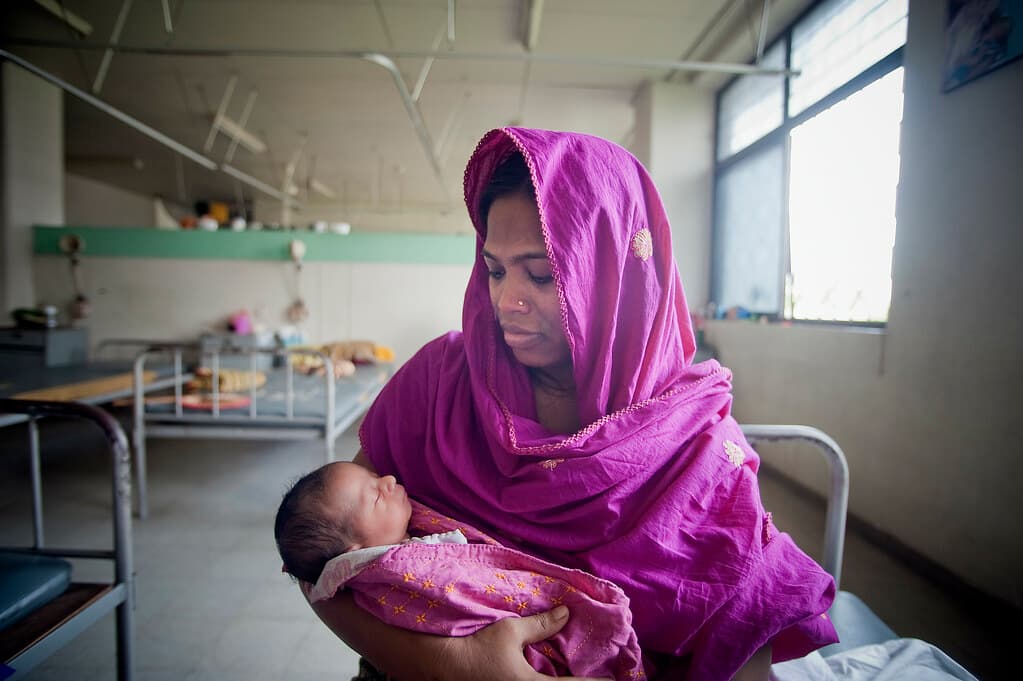
In many rural Nepali communities, a woman's health is considered the lowest priority. We believe it should be the highest.
In the remote hill districts of western Nepal, a woman's relationship with healthcare is defined by barriers. Geographic barriers: the nearest health facility may be a full day's walk across mountain terrain. Cultural barriers: seeking medical care often requires permission from male family members. Social barriers: reproductive health is surrounded by taboo, and menstruation is still treated as impurity in some communities. Economic barriers: when a family can only afford to send one person for medical care, it is rarely the woman.
These barriers do not exist in isolation. They compound each other, creating a system where women in rural Nepal are the last to receive care, the first to go without, and the most likely to suffer preventable health consequences.
Maternal Mortality: The Starkest Indicator
Nepal's national maternal mortality ratio stands at approximately 151 per 100,000 live births, a significant improvement from 539 per 100,000 in 2000. But national averages mask enormous regional disparities. In Karnali Province, the ratio exceeds 250 per 100,000. In the most remote municipalities of Sudurpaschim Province, reliable data is scarce, but health workers on the ground report that home deliveries without any skilled attendance remain the norm.
The leading causes of maternal death in rural Nepal, postpartum hemorrhage, eclampsia, and sepsis, are all conditions that are manageable in a facility with trained staff and basic equipment. They become fatal in homes where the nearest health worker is hours away and transportation is unavailable.
Fewer than 40 percent of births in the most remote districts are attended by a skilled health professional. Women deliver on earthen floors, assisted by family members with no medical training. When complications arise, the window for intervention is measured in minutes. The journey to a hospital is measured in hours or days.
Chhaupadi and Menstrual Health: Taboos That Kill
Chhaupadi is a tradition practiced in parts of western Nepal that banishes women and girls from their homes during menstruation. Women are forced to sleep in small, poorly ventilated huts called chhau goth, exposed to extreme cold, smoke from cooking fires, and the risk of snakebite and animal attack. Despite being outlawed in 2017, the practice persists in many communities.
Beyond the physical dangers, chhaupadi reflects a broader attitude toward menstrual health that affects girls' education and women's wellbeing. Girls miss school during their periods, falling behind academically. Women miss work. The stigma prevents open discussion of menstrual health, reproductive health, or gynecological conditions. Women with treatable conditions suffer in silence because the subject itself is considered shameful.
Nivaran Foundation's health camps address menstrual health as part of our comprehensive approach. Our community health workers, many of them local women, conduct outreach that includes menstrual health education. At the camps themselves, dedicated women's health screening blocks provide private consultations where women can discuss reproductive and menstrual health without stigma.
Why Women Do Not Seek Care
Even when healthcare is available, women in rural Nepal face specific barriers to accessing it:
- Permission and mobility: In many communities, women need explicit permission from husbands or in-laws to leave the house, particularly to travel to a health facility. This permission is not always granted, especially for conditions that are considered minor or shameful.
- Male healthcare providers: In a cultural context where physical examination by a male stranger is deeply uncomfortable, the absence of female healthcare workers at rural health posts effectively excludes women from seeking care.
- Cost and time: Women's health is deprioritized when families have limited resources. The opportunity cost of a woman leaving her household duties for a full day to visit a health facility is considered too high, even when she is experiencing significant symptoms.
- Lack of awareness: Many women in rural Nepal do not recognize symptoms of treatable conditions because they have never received health education. Chronic pain, deteriorating vision, and dental infections are accepted as normal parts of life.
How Nivaran Designs for Women's Access
Every aspect of our health camp design considers women's access:
- Female staff on every team: Every one of our 24 technical medical teams includes female healthcare workers. Women and girls can request examination by a female provider, and our camp layout ensures privacy for women's consultations.
- Dedicated women's health blocks: Camp schedules include specific time periods reserved for women's health screenings. These blocks provide a private, women-only environment where patients can access care without the discomfort of mixed-gender waiting areas.
- Door-to-door outreach by local women: Before each camp, community health workers, many of them local women trusted by their communities, conduct household visits to encourage women's attendance. They explain what services are available, address concerns about privacy, and emphasize that the camp is safe and welcoming.
- Comprehensive screening: Women at our camps receive the full suite of services: vision screening, dental examination, ENT assessment, blood pressure and chronic disease screening, and lab testing. For many, this is the first comprehensive medical examination of their lives.
The Ripple Effect: When Women Are Healthy
Research consistently shows that investing in women's health produces outsized returns for entire communities. When a mother is healthy, her children are more likely to be well-nourished, vaccinated, and enrolled in school. When a woman can see clearly, she can work, earn, and contribute to her household's economic stability. When reproductive health is addressed openly, girls stay in school longer and marry later.
The connection between our healthcare initiative and our education initiative is strongest when it comes to women and girls. Project Sanjeevani health camps screen women's vision, dental health, and chronic conditions. Project Vidya scholarships keep girls in school. Together, they address the two most powerful levers for improving women's lives in rural Nepal: health and education.
What the Data Shows
Every patient count we report is disaggregated by gender and age. This is not a reporting formality. It is an accountability mechanism. If a health camp in a community of 500 households serves 200 patients but only 30 are women, we have not succeeded. We track gender-disaggregated data precisely so we can identify where our outreach is working and where it needs to improve.
Across our 304 planned health camps in Phase I, we aim for gender-balanced attendance. Our outreach strategies, female-staffed teams, and dedicated screening blocks are designed to achieve this. The data we collect will directly inform how we design services in Phase II, when we establish permanent Nivaran Health Centers.
Health Is a Right That Has No Gender
When a woman in a remote village receives an eye exam, a dental checkup, and a blood pressure screening in a single visit, something shifts. Not just in her health, but in her understanding of what she deserves. She deserves care. She deserves attention. She deserves the same medical services that her husband, her brother, and her son receive.
That is not a statement of ideology. It is a statement of medical ethics. And it is the operating principle behind everything we do. Support women's healthcare in rural Nepal by donating to Project Sanjeevani. Contact us to learn how you can help or email partnerships@nivaranfoundation.org.
Support Our Mission
Help us deliver healthcare and education to Nepal's most underserved communities.