
Nepal's Rural Healthcare Crisis By the Numbers: Why 10 Million People Have No Access to Basic Medicine
A data-driven look at the healthcare disparities that define life and death in Nepal's most remote districts, and what it will take to close the gap
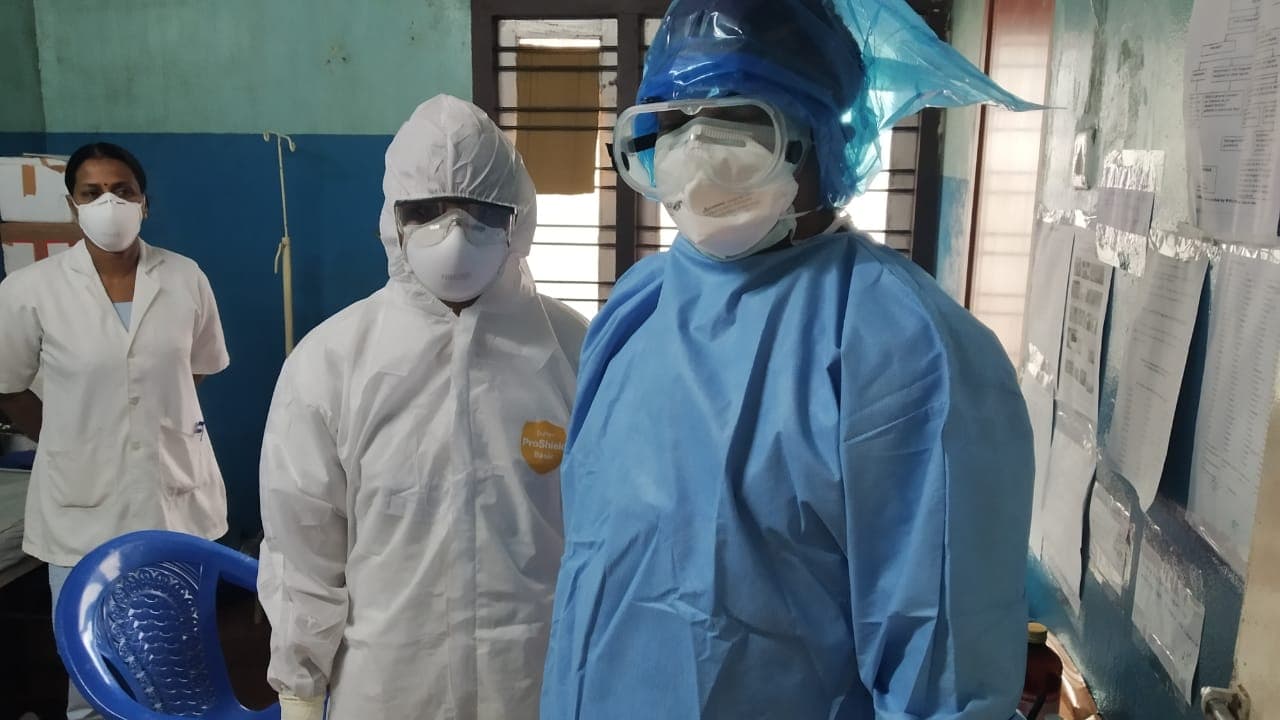
In Nepal, where you are born determines whether you live or die from a treatable disease. The numbers tell a story that cannot be ignored.
Nepal is a country of 30 million people spread across some of the most extreme terrain on Earth. From the subtropical plains of the Terai to the high-altitude villages of the Himalayas, the geography alone creates barriers to healthcare that most countries never face. But geography is only part of the problem. Decades of underinvestment, political instability, and urban-centric policy have created a healthcare system that works for some and abandons the rest.
The statistics are not abstract. They represent real families in real villages where a sick child means a two-day walk to the nearest health post, where a woman in labor has no midwife, where an elderly farmer with cataracts slowly loses his sight because no eye doctor has ever visited his district.
The Doctor Shortage: A System Built for Cities
Nepal has approximately 1.0 physicians per 1,000 people nationally, according to the World Health Organization. But that national average conceals a devastating disparity. In Kathmandu Valley, the ratio approaches 3.0 physicians per 1,000. In rural districts like Bajura, Humla, Dolpa, and Mugu, the ratio drops below 0.2 physicians per 10,000 people. In some municipalities, there is no doctor at all.
The problem is not just the number of doctors. It is where they choose to practice. Over 75 percent of Nepal's physicians work in urban areas that contain less than 20 percent of the population. Rural health posts, when they exist, are often staffed by health assistants with limited training and minimal supplies. The result is a system where the people who need healthcare most have the least access to it.
Maternal and Child Health: The Sharpest Edge of Inequality
Nepal has made significant progress in reducing maternal mortality over the past two decades. The national maternal mortality ratio has declined from 539 per 100,000 live births in 2000 to approximately 151 per 100,000 today. But in remote districts of Karnali and Sudurpaschim provinces, the ratio remains above 250 per 100,000, nearly double the national average.
In these areas, fewer than 40 percent of births are attended by a skilled health professional. Women deliver at home, often without any medical supervision, relying on traditional birth attendants with no formal training. Complications that would be routine in a hospital, such as postpartum hemorrhage or obstructed labor, become death sentences.
Child mortality follows the same pattern. The under-five mortality rate in Nepal's poorest quintile is nearly three times higher than in the wealthiest quintile. Diarrheal diseases, pneumonia, and malnutrition, all preventable or treatable conditions, remain leading killers of children in rural Nepal.
Preventable Blindness: A Crisis Hidden in Plain Sight
Nepal has one of the highest rates of preventable blindness in Asia. An estimated 1.6 percent of the population lives with blindness, and up to 80 percent of those cases are preventable or treatable. Cataracts alone account for over 60 percent of blindness cases, and a simple surgical procedure costing less than $50 can restore sight.
But in rural districts, there are no ophthalmologists. There are no optometrists. There is no one to diagnose refractive errors or identify early-stage cataracts. Children with vision problems fall behind in school. Adults with deteriorating sight lose their ability to farm, to earn, to care for their families. By the time they reach a hospital in Kathmandu or Biratnagar, the damage is often irreversible.
Chronic Disease: The Emerging Burden
While infectious diseases still dominate rural health concerns, Nepal is experiencing a rapid epidemiological transition. Non-communicable diseases, including hypertension, diabetes, and cardiovascular disease, now account for 66 percent of all deaths in the country. In rural areas, these conditions go undetected for years because there is no screening infrastructure.
A farmer in Bajhang district with untreated hypertension does not know his blood pressure is dangerously high until he has a stroke. A woman in Jumla with undiagnosed diabetes does not receive treatment until her condition has caused irreversible kidney damage. These are not edge cases. They are the norm in communities without regular health screenings.
Infrastructure: The Missing Foundation
Nepal operates approximately 4,000 health facilities across its 77 districts. On paper, this seems adequate. In practice, many of these facilities exist only as buildings, understaffed, undersupplied, and often inaccessible during the monsoon season when roads wash out and rivers become uncrossable.
In Karnali Province, the most underserved region in Nepal, health posts may serve catchment areas of 5,000 to 10,000 people with a single health assistant and a limited supply of basic medicines. Diagnostic equipment is virtually nonexistent. Lab testing, X-rays, and ultrasound are available only in district hospitals, which can be a full day's journey from remote communities.
The Human Cost in Numbers
When we aggregate the data, the picture is staggering:
- 10 million people in rural Nepal have no reliable access to a doctor or health facility within a reasonable distance.
- 1 in 4 children under five in rural areas is stunted due to chronic malnutrition.
- 60 percent of rural women deliver without a skilled birth attendant.
- 80 percent of blindness cases in Nepal are preventable or treatable.
- 66 percent of all deaths are now caused by non-communicable diseases, most of which go undiagnosed in rural areas.
- Fewer than 0.2 doctors per 10,000 people in the most remote districts.
What Nivaran Foundation Is Doing About It
These numbers are why Project Sanjeevani exists. Phase I of Sanjeevani deploys 304 mobile health camps across 52 districts in five provinces, bringing multi-specialty medical care directly to the communities that have no other access. Our 24 technical teams include general practitioners, ophthalmologists, dentists, ENT specialists, and lab technicians, delivering eye care, dental services, hearing assessments, blood pressure screening, chronic disease detection, and on-site lab testing.
We are not waiting for infrastructure to arrive. We are bringing healthcare to the doorstep of 61,200 patients across 252 municipalities, starting with the districts where the need is most acute: Karnali Province with 41 camps, Sudurpaschim with 35, Gandaki with 54, Bagmati with 59, and Koshi with 86.
But health camps are the beginning, not the end. Phase II will establish permanent Nivaran Health Centers in the districts served during Phase I. Phase III will build 50-bed hospitals across 77 districts. Phase IV will create a 700-bed central hospital for research, training, and specialized care. This is a decade-long commitment to building the healthcare system that rural Nepal has never had.
The Numbers Can Change
Every statistic in this article represents a gap that can be closed. Every preventable death is a failure of access, not a failure of medicine. The treatments exist. The expertise exists. What has been missing is the commitment to bring them to the people who need them most.
That is what we are building. Support Project Sanjeevani and help us change these numbers, one district, one village, one patient at a time. Have questions about our healthcare programs? Contact our team or email partnerships@nivaranfoundation.org.
Support Our Mission
Help us deliver healthcare and education to Nepal's most underserved communities.