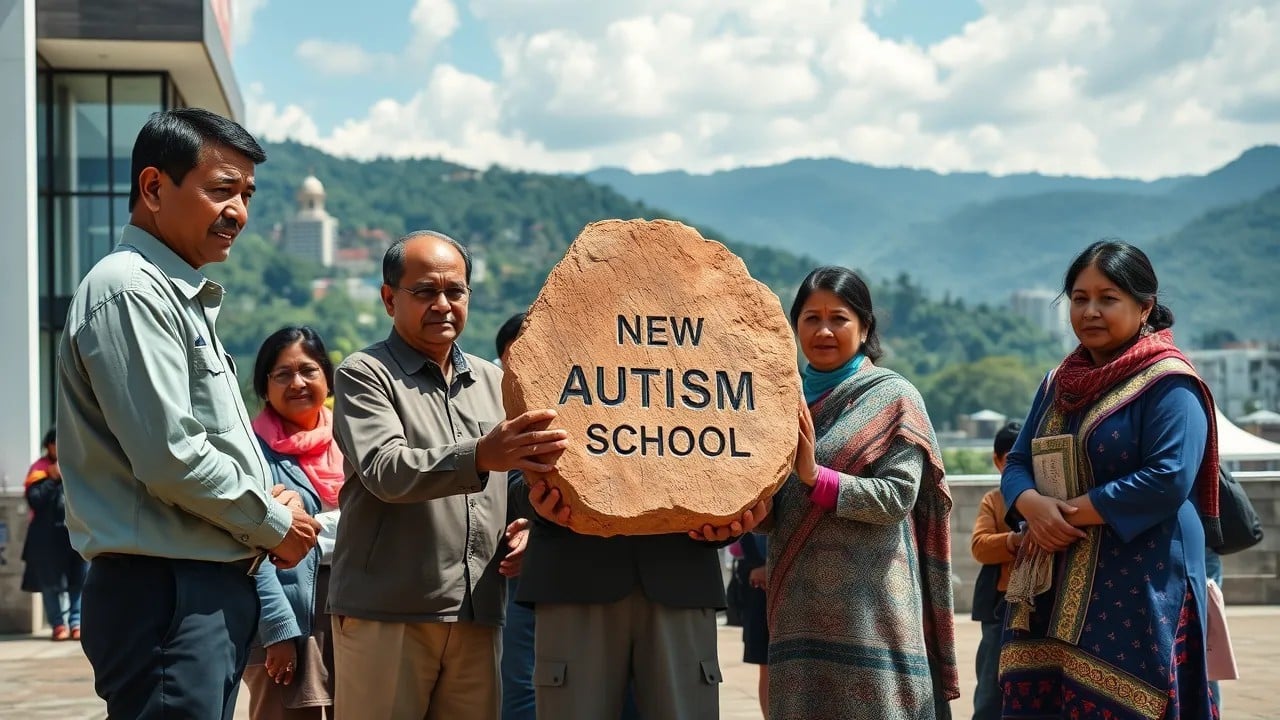
Kathmandu Metropolitan City lays foundation of autism school in Ward 29
OnlineKhabar English News (2026‑11‑25)
The first stone of a new autism school was set in Ward 29 of Kathmandu on Thursday, a moment that reverberated far beyond the city’s bustling streets. For families across the Kathmandu Valley, the event signaled a tangible step toward inclusive education for children on the autism spectrum—an issue that has long hovered on the fringes of Nepal’s public‑health agenda. In a country where only a handful of specialized institutions exist, the city’s commitment to establishing a dedicated facility marks a pivotal shift in how disability services are envisioned and delivered.
For the 12‑year‑old Maya, who was diagnosed with autism at the age of five, the ceremony felt like a promise fulfilled. Her mother, Sita, spoke quietly to reporters about the relief of knowing that her daughter will no longer have to travel to distant provinces for specialized support. “We have been waiting for this for years,” she said, her voice trembling with gratitude. The school, slated to open in early 2027, will offer a curriculum tailored to the unique learning needs of autistic children, integrating therapeutic interventions with academic instruction—a model that has proven effective in a handful of international settings but remains largely untested in Nepal.
The decision comes amid a broader national push to strengthen disability-inclusive policies. The Ministry of Women, Children and Social Welfare recently announced a draft amendment to the Disability Act, aiming to increase funding for special‑needs education by 15 % over the next three years. Kathmandu Metropolitan City’s initiative demonstrates how local governments can translate national directives into concrete actions, setting a precedent for other municipalities across the seven provinces.
Key Developments and Verified Findings
The foundation ceremony, attended by city officials, education experts, and representatives from the Nivaran Foundation, underscored several critical milestones. First, the city has secured a 10‑acre plot in Ward 29, previously earmarked for a community health center. This land will house a 30‑room facility, each designed to accommodate both classroom and therapeutic spaces. Second, the project has been approved by the Kathmandu Metropolitan City Council, with a budget of NPR 120 million earmarked for construction, staffing, and initial operational costs. While the exact financial breakdown remains confidential, the council’s approval signalizes a clear commitment to the project’s sustainability.
Third, the school will be integrated into the existing public‑health infrastructure. The Nivaran Foundation’s Project Sanjeevani, which has already served 17,355 patients across 16 mobile health camps in all seven provinces as of February 2026, will provide a model for community outreach and health‑education linkage. By leveraging the foundation’s experience in delivering free mobile health services, the new autism school will be better positioned to offer holistic support—combining medical, psychological, and educational care.
Structural Public Health and Education Context
The establishment of the autism school aligns with Nepal’s broader public‑health strategy that emphasizes early intervention and community‑based care. Historically, children with autism in Nepal have faced significant barriers: limited diagnostic services, a shortage of trained educators, and societal stigma that often relegates them to the margins. The new school aims to disrupt this cycle by offering a multidisciplinary approach that includes speech therapy, occupational therapy, and behavioral counseling—all within a supportive school environment.
In terms of education policy, the government’s recent emphasis on inclusive learning has led to the inclusion of special needs curricula in the national education framework. However, implementation has been uneven, especially in rural municipalities where resources are scarce. By situating the school in Ward 29—a densely populated, urban ward with a mix of middle‑class and low‑income families—Kathmandu Metropolitan City demonstrates how urban centers can serve as hubs for innovation that later trickles down to rural settings.
The project also dovetails with the Nivaran Foundation’s upcoming Project Vidya, a rural education initiative slated for 2027. While Project Vidya focuses on improving literacy rates in remote districts, the autism school will provide a complementary model of specialized education that could be replicated in rural contexts. By sharing best practices and resources between urban and rural projects, the foundation and the city can foster a more cohesive national strategy for disability-inclusive education.
In sum, the foundation of the new autism school in Ward 29 is more than a ceremonial milestone; it represents a concrete step toward bridging gaps in Nepal’s public‑health and education systems. By combining municipal commitment, national policy shifts, and the expertise of organizations like the Nivaran Foundation, the initiative sets a benchmark for inclusive development that could reshape how Nepal addresses the needs of its most vulnerable children.
Implications for Frontline and Underserved Communities
The foundation ceremony in Ward 29 marked a turning point for families scattered across the hilly and plain regions of Nepal. In the Kathmandu Valley, where most specialized services are concentrated, the new school will provide a critical bridge for children whose families live in remote districts such as Dolakha, Jumla, and Kaski. The geographic barriers that once forced parents to travel hundreds of kilometers for diagnosis or intervention are gradually being mitigated. By situating the school near a major arterial road, the city ensures that daily commutes are shortened, and that emergency services can reach the institution more quickly. This proximity is especially significant for children with sensory sensitivities, who may find long journeys stressful and disorienting.
Clinic and classroom capacity is another pressing concern. Existing facilities in the valley often operate at or beyond capacity, with waiting lists that can stretch for months. The new autism school will introduce a modular classroom design that can be expanded as enrollment grows, allowing for a flexible response to fluctuating demand. In addition, the school will host a satellite clinic that offers routine health check‑ups, speech therapy, and occupational therapy. By integrating medical and educational services under one roof, the institution will reduce the fragmentation that currently plagues care delivery. This integrated model aligns with the broader national strategy to strengthen primary health care and to embed special education within community health systems.
Community resilience is amplified when local stakeholders are actively involved in shaping services. The school’s governance structure will include representatives from the ward council, parents’ associations, and local NGOs. This inclusive approach ensures that cultural nuances—such as traditional beliefs about developmental disorders—are respected while simultaneously promoting evidence‑based practices. Moreover, the school will partner with Nivaran Foundation’s Project Sanjeevani, which has already reached 17,355 patients across 16 mobile health camps in all seven provinces. By leveraging the Foundation’s established outreach network, the new institution can disseminate information about early detection and intervention, thereby fostering a more informed and proactive community.
Policy Priorities and the Road Ahead
A practical, accountable framework is essential to sustain the gains achieved by the new school. First, the municipal government must establish a transparent monitoring system that tracks enrollment, dropout rates, and learning outcomes. Data collection should be standardized across all schools in the province, enabling comparative analyses that inform resource allocation. By making this information publicly available, stakeholders—including parents, educators, and policymakers—can hold the institution accountable for delivering quality education.
Second, the city should prioritize workforce development. Training programs for teachers, therapists, and support staff must be aligned with national standards and updated regularly to reflect emerging research. Partnerships with universities in Kathmandu and provincial education centers can facilitate the creation of certification pathways that recognize expertise in autism spectrum disorders. This approach will not only elevate the quality of care but also create sustainable employment opportunities for local residents, thereby strengthening the economic fabric of Ward 29 and its neighboring communities.
Finally, policy makers must address the financial sustainability of the school. While the initial capital is provided by the municipality, long‑term operation requires diversified funding streams. A mix of modest tuition fees, community‑based fundraising, and targeted grants from international development agencies can ensure that the school remains accessible to families across socioeconomic strata. Additionally, integrating the school’s services into the national health insurance scheme would provide a safety net for families who might otherwise be unable to afford specialized care. By embedding these financial safeguards into the policy architecture, the city can guarantee that the school’s mission—providing inclusive, high‑quality education for children with autism—remains resilient against economic fluctuations.
In sum, the foundation of the autism school in Ward 29 is more than a symbolic gesture; it is a concrete step toward dismantling geographic, institutional, and financial barriers that have long hindered access to specialized education in Nepal. Through coordinated policy interventions, community engagement, and strategic partnerships, the city can transform this initiative into a sustainable model that serves not only Kathmandu but also the underserved provinces that share its aspirations for inclusive development.
Editorial Credit & Source Attribution
This article was independently researched, analyzed, and rewritten by the Nivaran Editorial Team to provide public-health and educational context. Primary reporting credit: OnlineKhabar English News (published 2026-11-25). Cover visual: Unique AI editorial illustration created exclusively for Nivaran.
Distance should never decide who survives. Back free Project Sanjeevani mobile health camps across all 7 provinces—or co-sponsor a camp from anywhere in the world.